Researchers used samples from the Ontario Health Study to make a discovery that could enable a whole new approach to screening for common cancers.
Scientists have used blood tests to find warning signs of breast and prostate cancers as early as eight years before patients were diagnosed, paving the way for a potentially game-changing screening tool for two of the most common types of cancer.
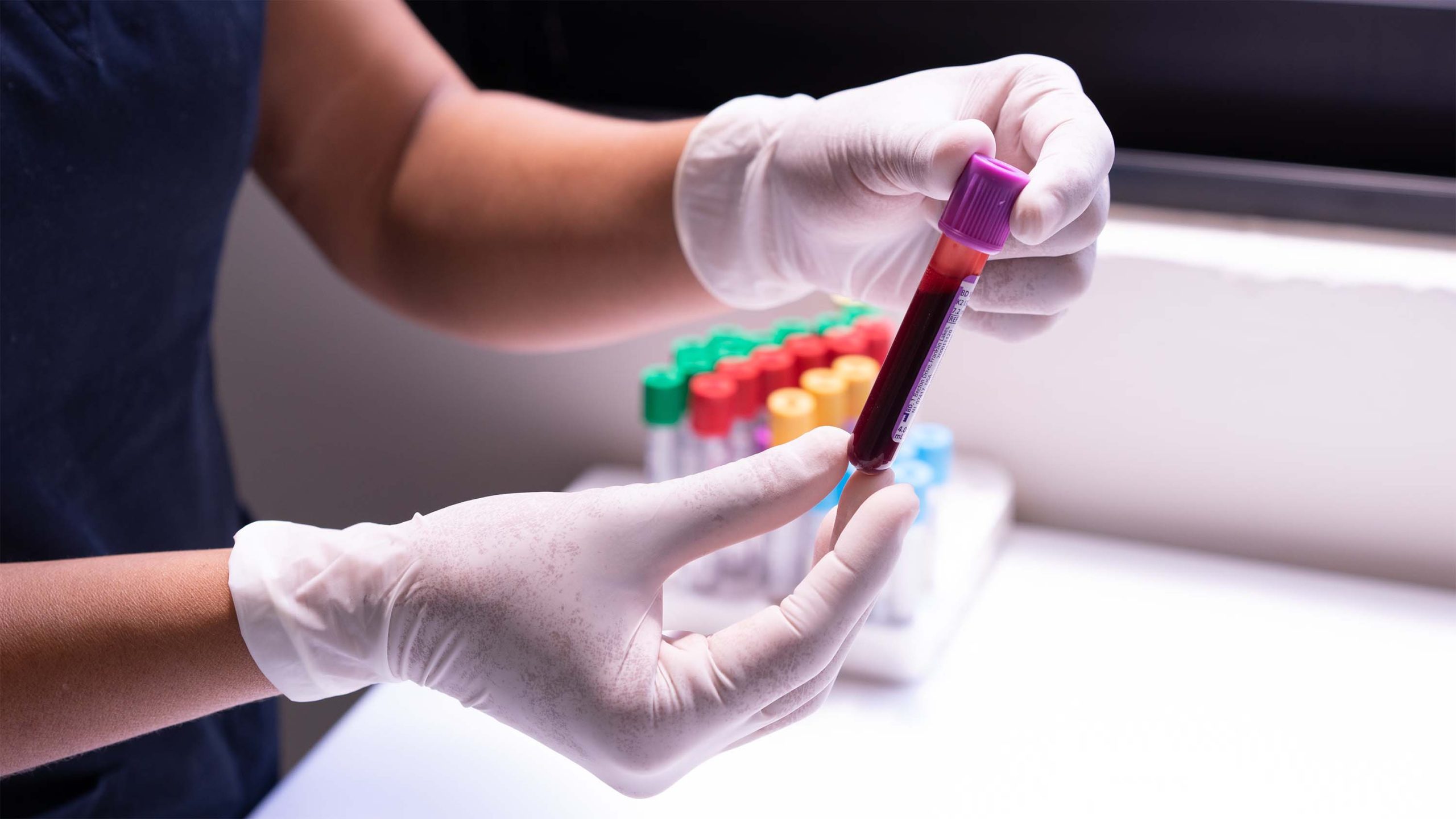
A team of researchers analyzed blood samples from Ontarians who were diagnosed with cancer months and even years after the samples were taken. They found traces of DNA that showed signs of a genetic change called ‘methylation’ that is among the earliest signs of cancer developing.
“Most breast and prostate cancers are detected at Stage 1 or Stage 2, when tumours have had a chance to take hold,” says the study’s senior author Dr. Philip Awadalla, who is Professor of Molecular Genetics at the Nuffield Department of Population Health (UK) and a former OICR Senior Investigator. “This method allows us to see cancers at Stage 0 and even earlier, when they can be treated very successfully or prevented altogether.”
This promising discovery, published in the journal Cell Genomics, was co-led by Awadalla and Dr. Nicholas Cheng, a Machine Learning Scientist at Genairx and former member of Awadalla’s lab at OICR.
They leveraged blood samples from the Ontario Health Study (OHS), a population cohort study involving more than 225,000 Ontarians. OHS participants donate blood samples that are stored in biobanks and accessible to approved research projects, and consent to having their health status followed over time through questionnaires and clinical health records. This gave the study team a unique look at blood samples that were taken when people were apparently healthy but have since developed cancer months or years later.
“The great thing about OHS data is we can track back in time and learn about someone’s biology long before they got sick and find clues about when and how their disease developed,” says Awadalla, who is also former Executive Scientific Director of OHS and current National Scientific Director of CanPath, a Canada-wide study for which OHS it the largest regional cohort.
Having a blood test that can detect so early could open a lot of possibilities for cancer screening, diagnosis and treatment. Unlike tissue biopsies, this “liquid biopsy” only requires a simple blood draw, making it a minimally invasive way to screen otherwise healthy people for cancer. If patients are found to have a high risk of developing cancer in the future, they can be monitored closely with blood tests and imaging. If they are found to have a low risk, they can be spared from more invasive testing.
Awadalla says this research could help inform new treatments and even cancer vaccines by providing a new understanding of how cancer develops at the earliest stages. This approach could also be combined with data about inherited cancer risks and risk factors like smoking to paint an even fuller picture of if and when someone might develop cancer, and what steps they can take to prevent it.
“The potential here goes beyond a stand-alone cancer detection test,” Awadalla says. “It could be a whole new comprehensive approach to risk stratification that changes how we screen for cancer and monitor high-risk patients.”
To help realize this potential, researchers are planning a prospective clinical trial that can validate their findings in other settings. They are also exploring other technologies for analyzing blood samples that could make testing more accurate, faster and more affordable for the health system.