Cancer Research Changed My Life: Julie’s story

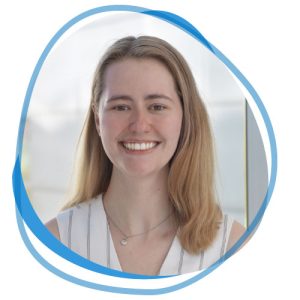
Dr. Julie Deleemans tells the story of how a personal experience with cancer inspired to pursue a fulfilling career in cancer research.
“You have cancer, and we will have to remove your voice box, or you will not live to see your 19th birthday.” 

When my oncologist first said these words I laughed, thinking it was all a big joke. Turns out, it wasn’t. 

I was diagnosed with Stage IV laryngeal cancer in 2006, at the age of 18. I had surgery to remove my voice box (larynx), thyroid, and surrounding lymph nodes, followed by chemoradiation. 

The treatments worked, but the aftermath was devastating. I was left to live with a permanent disability: a tracheotomy and only able to speak with a soft whisper for a voice. 

Physically, I recovered well, but my mental health suffered greatly, and I developed severe depression and post-traumatic stress disorder (PTSD). 

For several years I suffered, not knowing where I fit in this world or what I was supposed to do with my second chance at life. You see, that’s the thing about cancer people don’t tell you; you don’t just get to go back to who you were. It takes a part of you. Maybe it’s your voice, or fertility, or a limb, or your life. Either way, you don’t come through the other side the same. 

There was little psychosocial support available at the time, and eventually I realized no one was coming to save me from my life. I had to make a choice: I could leverage my experience to create change, or I could be the victim of my story and wallow. 

The words of psychologist Dr. Carl Jung became my mantra: “I am not what happened to me. I am what I choose to become”. I realized that despite the hardships life dealt me, I still have the opportunity to decide how I choose to respond. That led me to a career in cancer research focused on psychosocial supportive care for people with cancer.

Our research focuses on using integrative medicine modalities, such as yoga, mindfulness, probiotics, and other therapies to support people affected by cancer. Through my research and patient advocacy work, I’m passionate about helping others with cancer to not only survive, but thrive! 

Cancer research changed my life by giving my experience purpose and allowing me to help others affected by this disease. The huge advancements in cancer therapies, like immunotherapy, have also been a blessing for my younger sister, who is currently navigating her own cancer experience. With the advancements from cancer research, we have been able to access precision oncology solutions to address her tough-to-treat neuroendocrine tumour, and I’m hopeful we will soon find the solution to cure her cancer once and for all. 

I think that’s one of the most important gifts cancer research gives us: HOPE! We know that when patients lose hope, their outcomes are poor. With these continuous advancements in precision oncology, we have hope that the right solution is out there — that a brighter future exists.


Dr. Julie Deleemans is a Canadian Institutes for Health Research (CIHR) funded Postdoctoral Fellow at the University of Calgary in the Department of Oncology, and a 19-year survivor of stage IV laryngeal cancer. She is an experienced patient advocate and lead researcher on the Chemo-Gut Probiotic Trial (www.chemogut.ca). Through her research and advocacy, she’s passionate about helping others affected by cancer.

Let’s Talk About Clinical Trials: A patient’s perspective

The third installment of our series explores clinical trials from the perspective of a cancer patient.

Over the course of the first two installments of Let’s Talk About Clinical Trials, we’ve taken a closer look at why clinical trials are important, and how the safety of trial participants is protected.

For our third installment, we turn our focus to the people who make cancer clinical trials possible: the patients who participate in trials.

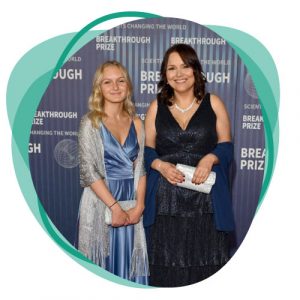
Martina Wood has a unique lens on clinical trials, drawing from her experience as a breast cancer survivor, the wife of a cancer patient, and a longtime patient representative for the Canadian Cancer Trials Group.

How were you first introduced to clinical trials?

My husband was diagnosed with cancer back in 2011. At the time, we didn’t really understand the breadth and scope of trials, and it seemed like something only for ‘lost cause’ patients. Ultimately, we decided not to participate. Two years later, I was also diagnosed with cancer. I was offered a clinical trial but felt it wasn’t right for me.

Are there misconceptions about clinical trials you’d like to clear up?

I think a lot of people shared my incorrect assumption that clinical trials are only a last resort. If a friend or relative tells you they’re in a clinical trial, you might think they’re on their last legs.

But from my own cancer experience and my time as a patient partner in research, I’ve learned that clinical trials are offered for all stages of cancer. They study all sorts of different things, including how to save or prolong a patient’s life, as well as how to make their quality of life the best it can be.

Why should cancer patients ask their doctors about clinical trials?

They should ask about clinical trials because trials may offer new meds or treatments that have the potential to cure patients or, for patients with advanced cancer, give a new lease on life. People can and do live longer thanks to being part of a trial. For stage 4 patients who have exhausted standard treatments, a clinical trial may help them stay alive for just long enough that a new potentially life-saving trial could extend their life yet again.

What else would you like people to know about clinical trials?

The research done through clinical trials in recent decades has helped make huge advancements in treatments that have prolonged the lives and improved the quality of life of so many people in our society.

But sadly research is often delayed because clinical trials can take a long time to get enough patients as participants, which translates to longer time to get results, and this delays getting potential advancements to patients. So I believe that patients should stand up and be counted. Consider joining a clinical trial if you have the opportunity, both to further scientific knowledge and potentially to help your own outcomes.


Cancer patients and their families can find more information about clinical trials from the Canadian Cancer Clinical Trials Network (3CTN) at
https://3ctn.ca/for-patients/

Cancer Research Changed My Life: Beth’s story

Beth Ciavaglia talks about how a clinical trial changed the course of her cancer treatment.

I’m a six-year breast cancer survivor, and research changed my life because it allowed me to not have to endure ongoing treatments that brought a lot of negative side effects.

After I was done active treatment — which involved chemotherapy, radiation and surgery —there’s another intervention that’s the standard of care for breast cancer patients. 

It’s an infusion to help decrease the chance of your breast cancer coming back as metastatic. You get it seven times over three-and-a-half years.

With it comes some short-term side effects, and then possibly more serious long-term side effects like death of your jaw bone or spontaneous fractures elsewhere in your body.

But luckily for me, my oncologist was running a study where they were looking at whether those seven treatments were really necessary. Could we get away with less and still have the same outcome?

The idea of avoiding a lot of these side effects and having to go to the cancer center less often was very, very appealing to me. So I jumped in and agreed to participate in the study.

The one treatment that I did have was very unpleasant. So right off the top, I was thankful to be participating.

And I think the best news around it was the study has just completed and has shown that the one-time intervention is as effective as the seven-time intervention.

I am also happy to report that I remain cancer free, and I’m very thankful to the research that helps me to be so today.


Beth Ciavaglia is a physiotherapist turned not-for-profit Executive Director. Her experience at the front line as a healthcare worker, and then as a patient gives her a unique perspective that made her shift her own personal paradigm on what quality of life really means.

Cancer Research Changed My Life: Carol’s story

Carol Gordon explains how cancer research gave her a second chance.

I went from “healthy” to “terminal” in the blink of an eye.

In 2013, after years of clean physical exams, my doctors detected a gynaecological tumour the size of a golf ball. Turns out cancer had been growing, hidden inside my Bartholin gland, for as long as five years.

Though I felt great and had no symptoms, I was told I wouldn’t survive.

Surgery wasn’t an option for me. The tumour was too big and there was too much risk to the surrounding tissue. Instead, I was given a combination of chemotherapy and radiation. 

While I was hopeful, my expectations were low. My treatment was only supposed to shrink the tumour, not kill it.

But cancer research changed that. 

The same week I was due to start radiation, my hospital acquired a new, precision radiotherapy machine. The device harnessed the latest research innovations to deliver high doses of radiation to the precise location of a tumour. 

I ended up being one of the first patients to be treated with the device. Now, 11 years later, I have no signs of cancer, much to the surprise of my doctors.

While I still experience side effects from my treatment, innovations in cancer research gave me a second chance. And I’m using that opportunity to give back.

I volunteer as a patient partner in cancer research in the hopes that my daughter doesn’t have to go through what I went through.


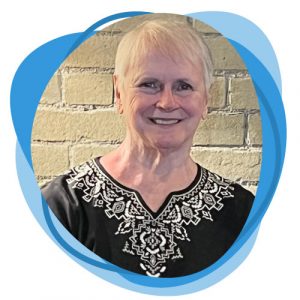
Carol Gordon is an accountant (CPA) and financial analyst (CFA) and was recently Managing Director, Audit Services at Ontario Teachers’ Pension Plan. She is a member of OICR’s Patient and Family Advisory Council, works with the Canadian Cancer Trials Group, and has a network of friends and family members who are patients or survivors.

Cancer Research Changed My Life: Ambuj’s story

Ambuj Srivastava talks about the difference cancer research made for his family.

Cancer research has changed my life because it gave me an extra year with my father, who was diagnosed with a rare cancer called bile duct cancer.

We advocated for him to participate in a clinical trial, and because of that trial, we were very fortunate to have him with us for an extra year beyond his original prognosis. 

That extra year gave my daughter the opportunity to spend time with her grandfather. She learned many things from him during that time, which she fondly recalls now.

It had a significant impact on my mother as well, for whom my father was a caregiver. It gave him the time to spend with his wife and help her prepare for the eventual journey that she would have to lead after he passed away. It gave them a lot of personal time together, which allowed both to be able to come to terms with what was eventually going to happen.

It also had a tremendous positive impact on myself. Going through the journey with him during that extra year and being able to listen to his stories, his wisdom and his life experiences made me realize the traditions and values that we still have in our family. I was very fortunate to be able to live those traditions with him through that year, all of which now I’m able to continue in my own family.

It was also beneficial for his own acceptance of what was going to happen. It gave him the opportunity to spend time and reconnect and reminisce with his relatives back in India, his friends from his university days, and gave them the opportunity to seek closure.

After his passing, that extra year of spending time with all of us helped us with our emotional healing, knowing that we missed someone with whom we had pleasant memories and not painful memories.


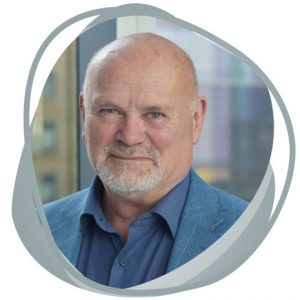
Ambuj Srivastava has a background in Engineering and  IT and also serves as a Research Advocate and Mentor with the Cholangiocarcinoma Foundation. As a former caregiver to his father with a rare form of cancer, Cholangiocarcinoma, he understands the challenges for patients and families who endure this difficult journey. Ambuj is passionate about cancer research, patient advocacy and raising awareness by bridging the knowledge gap between patients, caregivers, and healthcare professionals.

Cancer Research Changed My Life: David’s story

Dr. David Uehling shares the personal impact of his successful work in cancer research, as part of OICR’s ‘Cancer Research Changed My Life’ campaign.

Cancer research changed my life because I was lucky enough to be a part of a team that discovered a drug that impacted cancer patients.

I remember being thrilled one day when I was talking with a former colleague. She was telling me that the drug we worked on together was “melting” the tumours of patients.

Not only that, but she told me a story that was even more heartwarming.

This drug was being tested in Australia, where there was this surfer who got metastatic melanoma – a dreadful disease. They had to give up surfing and essentially were on their deathbed.

Then, they received the drug and were able to recover and go back to surfing.

When you hear a story like that, knowing how hard it was to discover the drug, and then to see ultimately the impact – not just in an abstract way, but on a real patient. It was just the thrill of a lifetime, and one that I don’t know how you can replicate in any other way.

Seeing this drug and how it changed this one person’s life was good enough in itself. But it’s also continuing to be used by patients worldwide.

I can get out of bed in the morning every day and know the drug is helping a patient. It just makes me feel like the research I’ve been involved with was all worthwhile. It has changed my life because I know that it’s changing so many other people’s lives.


Dr. David Uehling is a scientist and Interim Scientific Lead of Therapeutic Innovation and Drug Discovery at the Ontario Institute for Cancer Research. The focus of his research is the design and synthesis of small molecules for cancer drug discovery.

Cancer Research Changed My Life: Michelle’s story

Michelle Audoin talks about the impact cancer research has had on her life, as part of OICR’s ‘Cancer Research Changed My Life’ campaign.

It’s easy to feel powerless when you’re diagnosed with stage 4 metastatic breast cancer.

My diagnosis in 2017 was especially complex. My breast cancer had already spread by the time it was detected, and doctors also found a second primary cancer in my thyroid.

As a result, my treatment options were limited and my family’s future was unclear.

I was devastated, angry and frustrated, but I was also determined to stand up and take control of my future as much as possible.

And cancer research helped give me that power.

I started attending research conferences, spoke to scientists, and got a better understanding of the science behind cancer research and treatments. Over the years, I have also participated in research studies that continue to shape my knowledge and perspective.

An OICR-supported clinical trial that explored using genome sequencing to guide cancer treatment gave me insights about my cancer’s unique biology, and the treatments that might work best against it. Another study, focusing on quality of life, helped solidify my personal priorities around my treatment preferences.

Living with metastatic breast cancer means that I live with a disease that currently has no cure. I am on treatment for life, with the goal of slowing or stopping the progression of the disease, while minimizing life-limiting side effects.

Informed by my experiences with research, I recognize that my personal priority is to access oral treatments that I can take at home, rather than as an IV infusion at the hospital. I was able to communicate that priority to my healthcare team and ultimately maintain my quality of life and engage fully as a mom.

While cancer research has certainly changed my life, it also motivates me to want to help others. That’s why I raised my hand to become a patient partner in cancer research.

Through patient partnership, I’ve been able to shape research studies to make sure they address the priorities of cancer patients and advocate for improvements. This is especially meaningful as a Black woman, because people like me have too often been marginalized and underrepresented in cancer research.

My involvement in cancer research has also connected me with an inspiring community of scientists, advocates and diverse individuals affected by a cancer diagnosis. Working with them and learning from them gives me a window into what’s possible in the future.

Innovative blood tests called ‘liquid biopsies’ may soon spare people like me from the endless scans, and catch disease progression before symptoms affect my quality of life. And the rapid advancement of targeted therapies could mean even better treatment options are on the horizon.

This knowledge changes the way I look at my own experience with cancer. It also gives me hope that research, treatments and survivorship will continue to improve as my kids get older.


Michelle Audoin lives with Stage 4 breast cancer and advocates for the unmet needs of undersupported communities in the cancer care space, with a focus on health equity and the patient voice. She is involved in many cancer organizations and awareness campaigns, and loves to speak to healthcare agencies and on panels about her own experiences navigating cancer as a Black woman. Michelle comes from an education background and is a mom.

Cancer Research Changed My Life: Carla’s story

Carla Bossart-Pletzer shares her personal connection to cancer research as part of OICR’s ‘Cancer Research Changed My Life‘ campaign.

Cancer research has fundamentally meant the difference between me seeing 40 years old and not seeing 40 years old.

I’m a mom of two small kids. I have a daughter who is six and a son who is nine. At the time I was diagnosed with triple-negative breast cancer in 2022, my kids were little and I was facing a really challenging situation. My surgeon said to me that if everything went perfectly, she’d give me a 70 per cent chance at being here in five years.

If it had been five years earlier though, she and I would have been having a very different conversation. My diagnosis was not nearly as survivable back then.

Cancer research has changed the kind of treatments that are available, and the way they approach breast cancers, specifically with neoadjuvant chemotherapy. In my case, some of the cancer treatments available to me were different than they were five years earlier.

And research has kept evolving since then. We’ve added immunotherapy to the mix, for example. We’re also enabling personalized medicine approaches – which is really cool.

In my work as a patient partner, researchers tell me they enjoy hearing my story because it’s a story of survival. It shows that research is helping move the needle.

It’s hard to put into words, but cancer research changed my life because without cancer research, I would not have a life to be talking about right now.


Carla Bossart-Pletzer is a mother of two small children and a freelance designer and illustrator. She was diagnosed with stage-III, triple negative, inflammatory breast cancer at age 34. She is focused on communicating the challenges of early adult cancer and the long-term health consequences of both life-saving and prophylactic treatments as a carrier of BRCA1, MSH-6 and ATM genetic mutations. Located in Sudbury, she advocates for expedient and socially equitable cancer diagnoses and treatment for patients of Northeastern Ontario.

Cancer Research Changed My Life campaign shows personal impact of scientific discoveries

A new campaign from the Ontario Institute for Cancer Research (OICR) celebrates the profound difference cancer research is making in the lives of Ontarians.

Launched on World Cancer Day 2025, Cancer Research Changed My Life showcases the people behind research discoveries, bringing their personal stories to life through videos and first-person testimonials.

As the province’s cancer research institute, OICR brings together a community of scientists, cancer patients, clinicians and everyday Ontarians to solve cancer together. With Cancer Research Changed My Life, OICR is shining a spotlight on that community and what is has achieved.

“Cancer research is about more than just hope. It is about using scientific insights to make a tangible difference in people’s lives every day.” says Dr. Christine Williams, Acting President of OICR. “The stories featured in this campaign are a testament to the power of research and its potential to transform the future of cancer.”

Cancer Research Changed My Life debuted with a series with powerful stories from cancer patients and a scientist:


“Without cancer research, I would not have a life to be talking about right now.” – Carla

Watch Carla’s full video


“Cancer research has helped give me the power to stand up and take control of my future, while living with metastatic breast cancer.” – Michelle

Read Michelle’s full testimonial


“To see a drug that I helped discover have a real impact on patients facing this dreadful disease is the thrill of a lifetime.” – David

Watch David’s full video

The campaign will continue for the rest of 2025, with new stories published throughout the year. OICR is encouraging people to join in the campaign on social media by sharing their own stories about cancer research using the hashtag #ChangedMyLife

This year also marks OICR’s 20th anniversary.

“Decades of research have led to significant advances in our understanding of how cancer develops and evolves, and therefore how we can prevent, diagnose and treat patients,” says Dr. Lincoln Stein, Acting Scientific Director of OICR. “With support from the Ontario Government and our partners across the province, we’ll continue our work help cancer research change even more lives in the future.”

To see more about how cancer research is changing lives, visit changedmylife.oicr.on.ca and follow OICR on InstagramYouTubeLinkedin and Bluesky.

Study reveals early mechanisms behind deadly brain tumours

Researchers at OICR, SickKids and Cambridge (UK) made new discoveries about how glioblastoma develops at the earliest stages.

New OICR-supported research published in leading scientific journal Nature could provide a blueprint to stop deadly brain tumours before they progress.

Researchers made two significant discoveries – a new cell type and a novel cellular process – they believe play a key role in the development of glioblastoma, one of the deadliest forms of brain cancer.

Dr. Akram Hamed

Glioblastoma is not usually diagnosed until it reaches the late stages. This leads to poor outcomes for patients, and limits what can be learned from tumour samples, which are already very complex by the time they are resected.

Researchers at OICR, SickKids and Cambridge (UK) used genetically engineered mouse models to take a closer look at the early development of glioblastoma, monitoring tumours at various stages using MRI and genome sequencing.

“Our work provides a detailed map of the entire process of glioblastoma development and reveals new insights that could lead to better diagnosis and treatment strategies for this incurable disease” says Dr. Akram Hamed, the study’s lead author and postdoctoral fellow at SickKids.

“We are seeing for the very first time how a brain tumour develops,” says Dr. Peter Dirks, Chief of the Division of Neurosurgery at SickKids and the study’s senior author. “By targeting the earliest steps of tumour formation, we can explore new avenues for the treatment of glioblastoma and improve outcomes for patients and families affected by brain cancer.”

Dr. Peter Dirks

First, they observed a novel cell type that resembles ‘neural-crest’ stem cells and is present in large numbers in the early stages of glioblastoma development. Hamed and colleagues also discovered a novel process induced during the early stages of glioblastoma development that resembled the body’s injury healing response. They found that process seemed to induce the development of the novel ‘neural-crest-like’ cells.

“We found the tumour initiation process to be mimicking a brain injury response,” Hamed says.  “This has important therapeutic implications, raising the prospect of discovering new biomarkers for earlier diagnosis and thus also raise the possibility for intercepting tumour development by application of therapeutic approaches to target these injury-like programs.”

Knowing what drives glioblastoma at its earliest stages could ultimately help develop tools to diagnose it before it is symptomatic. A blood or cerebrospinal sample, for example, could provide evidence of that injury-like process. These cells and processes could also be targets for new glioblastoma therapies that could effectively stop the disease before it grows and becomes more complex.

The study represents another high-impact collaboration between Dr. Dirks’ lab and Dr. Lincoln Stein’s lab at OICR that generated important new knowledge about brain tumours. In 2022, Hamed, Dirks and Stein and colleagues published an atlas of more than 100,000 brain cells from mice in Nature Communications, which provided important insights on how glioblastoma and other glial cancers develop.

Stein is one of two OICR authors on the new Nature paper alongside Dr. Quang Trinh, who performed core computational analysis for the project.

“We know that finding cancer earlier gives patients the best chance at living longer and living better,” says Stein, Head of Adaptive Oncology at OICR. “These novel discoveries about how glioblastoma develops open the door for all sorts of innovative solutions that could shift the paradigm for people diagnosed with brain tumours.”