
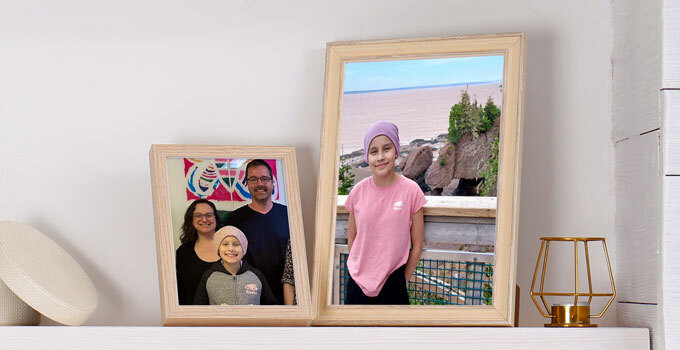
Support from OICR is helping increase uptake in an ovarian tissue cryopreservation program, which is offered to young cancer patients whose treatment might affect their fertility in the future.
The weeks after Evelyn Pijper was diagnosed with brain cancer last year were a whirlwind.
Just 12 years old and facing an aggressive course of surgery, radiotherapy and chemotherapy, Evelyn and her family were confronted with a dizzying list of life-changing risks and side effects.
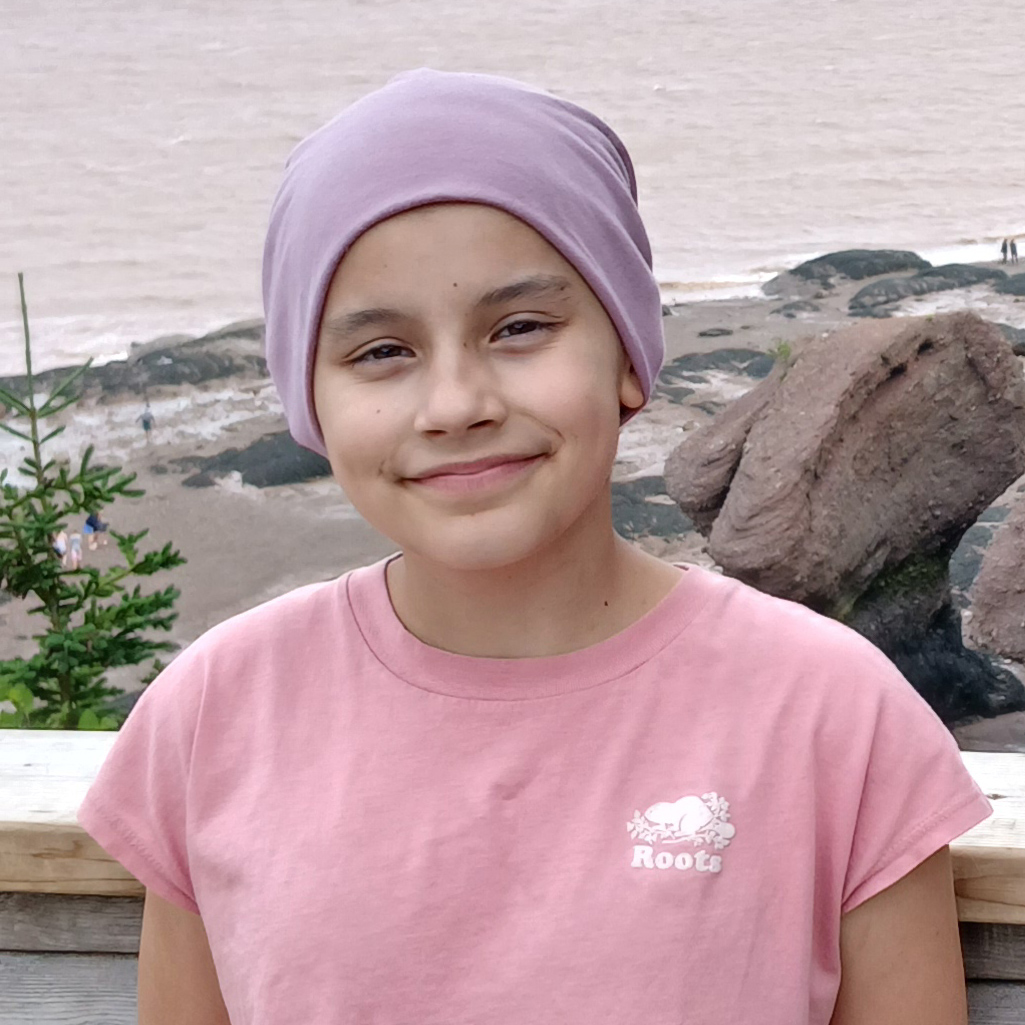
“It’s so much information about what could happen, and you’re just trying to get through what is happening now,” recalls Lisa Mychajluk, Evelyn’s mother.
Lisa says if it wasn’t for a unique OICR-supported program, they may have just glossed over one unexpected risk of Evelyn’s treatment — chemotherapy would likely damage her ovaries, leaving her unable to have biological children in the future.
Before Evelyn started chemo, her doctor referred her to the ovarian tissue cryopreservation (OTC) program at Sinai Health System. The program offered Evelyn the option to remove and freeze tissue from her ovary that could be implanted back into her body later in life and give her a chance to conceive.
“I’m not sure if I want to have kids, but I might change my mind later on,” Evelyn says. “So I thought the procedure was a good idea.”
Preserving the choice to conceive can be empowering for young cancer patients and their families at a time when everything feels out of control, says reproductive endocrinologist Dr. Jennia Michaeli.
Michaeli runs the OTC program, which became the first of its kind in Ontario when it opened two years ago. It is offered to young cancer patients who haven’t hit puberty yet, and therefore aren’t eligible for normal egg retrieval, as well as anyone whose cancer treatment is so urgent they can’t wait the weeks of preparation for egg retrieval. While it’s based at Sinai, the program partners with other Ontario hospitals to ensure people across the province have access. But despite now being standard of care, referrals to OTC remain low.
“It’s a new service, and not all clinicians know they should refer their patients to it,” says Michaeli, who is also a clinician-investigator at Sinai. “There is also a longstanding discomfort among oncologists about having fertility discussions with young patients, which can lead to missed opportunities.”
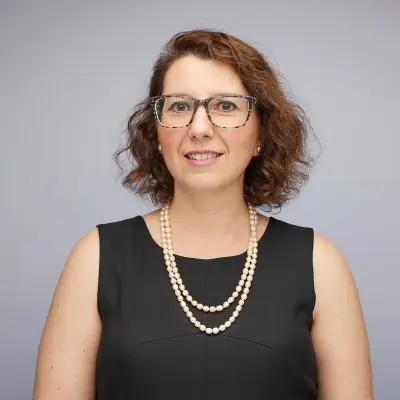
To minimize these missed opportunities, Michaeli is working with The Hospital for Sick Children (SickKids) implementation scientist Dr. Nicola McCleary and a multidisciplinary team to study how to increase the rate of young cancer patients referred to the program.
The study team will engage health professionals and lived experience partners to understand the potential impacts of a streamlined pathway for eligible SickKids patients to be referred to the program and identify any implementation barriers that need to be overcome. Launched in July 2025, the study was selected for an OICR Innovation to Implementation award last year.
“With this support from OICR, we hope we can demonstrate a scalable model that increases referrals province-wide and give more young people the option to preserve their fertility,” Michaeli says.
It has been a little over a year since Evelyn was first diagnosed and about four months since her last round of chemotherapy. Doctors told her she is cancer-free, and her energy is coming back more and more every day.
Now 13 years old, she is more focused on getting back to school and on her hobbies, like baking cookies and auditioning at her local theatre company in Orangeville, Ont., than she is on having babies in the future. But she counts the OTC program as one of many things she’s grateful for over a difficult year.
“Looking back, I’m happy I did it,” Evelyn says. “Because I might in the future want to have a child, and it could give me that chance.”