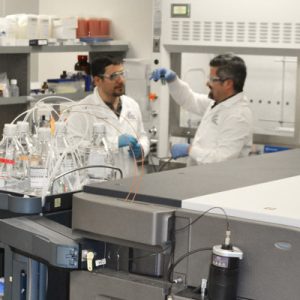

OICR Drug Discovery is teaming up with Dr. Sheila Singh to develop a potentially game-changing new treatment option for the most aggressive form of medulloblastoma.
A newly launched OICR study is hoping to develop a first-in-class drug against group 3 medulloblastoma, which could help more children survive the disease with fewer long-term side effects.
Medulloblastoma is the most common childhood brain tumour, and group 3 tumours are its most aggressive subtype.
The current standard of care treatment is a gruelling combination of high-risk surgery and intensive chemotherapy. The 70 per cent of children who survive often suffer from lifelong cognitive and developmental side effects. The other 30 per cent will not survive because their cancer relapses and becomes resistant to treatment.
“It’s a very difficult disease with a high risk of recurrence,” says Dr. David Uehling, Interim Scientific Lead of Therapeutic Innovation and Drug Discovery and one of the co-principal investigators for the study. “We need better, more durable therapeutic options and we need them to be safer, so they don’t affect children for the rest of their lives.”
The study builds on research by Dr. Sheila Singh of McMaster University, who recently discovered that medulloblastoma cells produce a specific type of fat and use it as fuel. Singh and colleagues found that blocking that fat production can stop tumour cells from recurring without damaging healthy brain cells.

It’s a promising target for new therapeutics — but to be effective, a new drug will need to cross the blood-brain barrier. So Singh is teaming up with Uehling and OICR Drug Discovery researchers to develop blood-brain penetrating compounds to target medulloblastoma fat production.
“OICR is a great partner in this research because their team has diverse talents and multiple platforms to tackle difficult scientific problems like this,” says Singh, Professor in the Department of Surgery and Biochemistry at McMaster, Head of the School of Cancer and Pharmaceutical Sciences at King’s College London (UK), and the study’s other co-principal investigator.
With an award from OICR’s Cancer Therapeutics Innovation Pipeline (CTIP) and the science already progressing, the study team could be on their way to a groundbreaking innovation that makes the future brighter for children with this common brain tumour.
“There’s an exciting potential here to offer more a more targeted treatment that prevents medulloblastoma recurrence, overcomes resistance, and spares children from potentially devastating side effects,” Singh says.