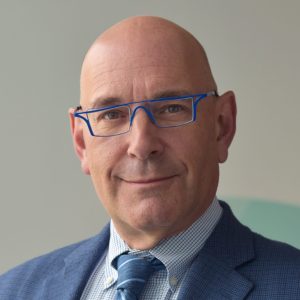
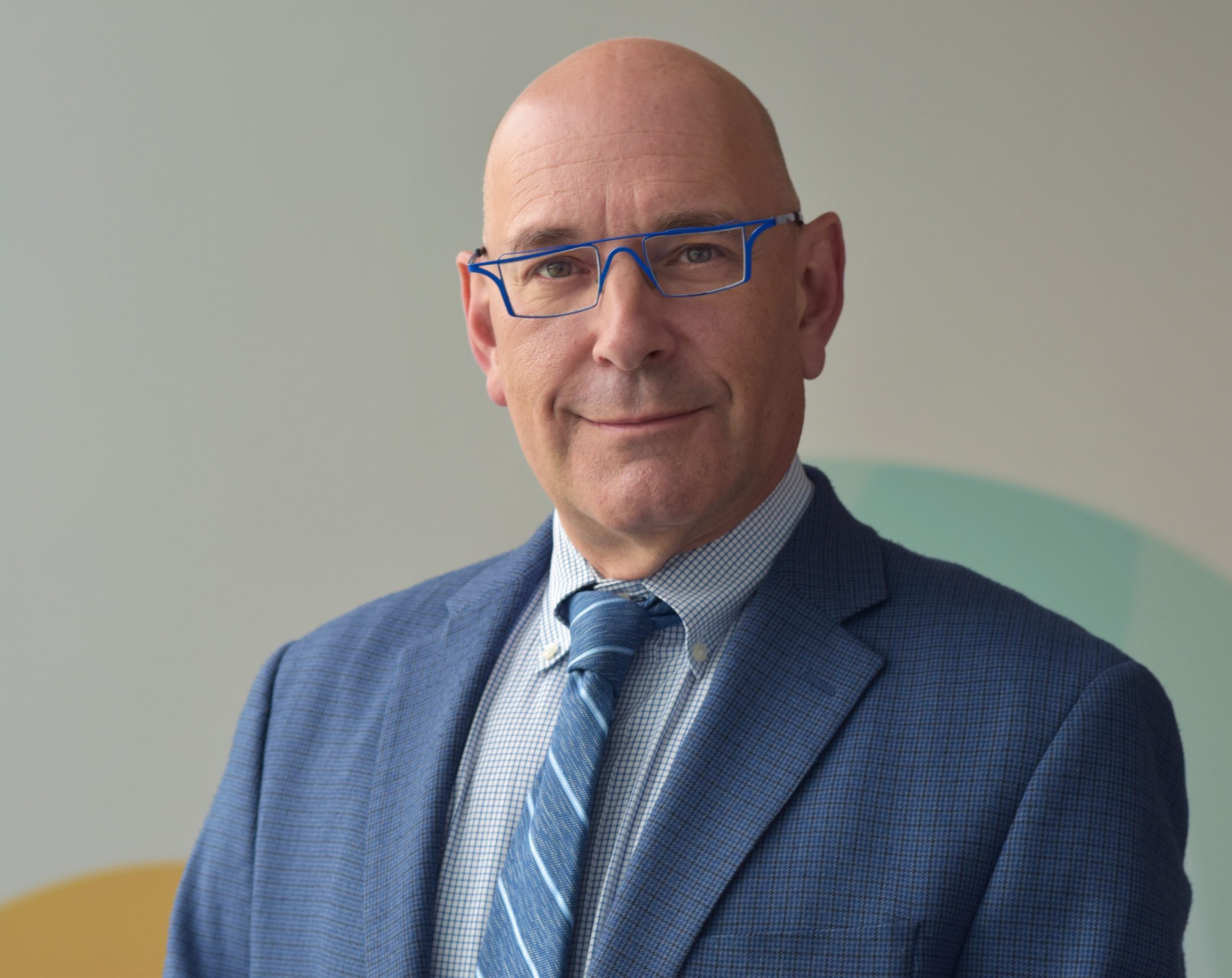
Dr. Aaron Schimmer joined OICR as its new President and Scientific Director in August, and as the clinician-scientist settles into his new role, he sat down with OICR News for a chat about why he joined OICR, his time at the Institute so far and the landscape of cancer research today.
What interested you in joining OICR and what excites you about leading the Institute?
There were two things that really interested me. First of all, I fundamentally believe that OICR can be the leader in cancer research, not just in the province, but in the country, and have a significant impact internationally. And I think now is the time for OICR, given both where we are in terms of cancer knowledge and our ability to translate that to the clinic, but also the scientific environment that we’re in now. In this environment, there is a huge need for OICR to enable research across the country, the province.
The other aspect is the people. As a researcher myself, I have interacted with people at OICR for nearly 20 years in some cases, and what was true back then remains true today – they’re some of the nicest people you’ll come across. I am very thankful for the opportunity to do something really exciting with such incredible people.
How have your first couple of months been in the role?
The first couple months have really been a chance to listen and learn. I’ve been meeting with as many people as I’ve been able to, to better understand what each program is doing, what excites people about OICR and their vision for the future. I’ve also started to meet some of the leadership at research institutes across the province, as well as our partners at the Government of Ontario. So that’s what’s been keeping me busy so far.
Has anything surprised you so far in your time here?
I think what surprised me most is while I thought I knew a lot about OICR, every meeting I had, I learned something new about what people were doing. As much as I thought I knew, I still had lots to learn.
What do you see as the Institute’s role in the province’s broader cancer research ecosystem?
I think OICR is a catalyst to cancer research in the province. We have an opportunity to do tremendous things now by supporting top talent and enabling high-impact research. Technology is a strength of OICR, and it is important that the entire province can benefit from advanced technologies available at the Institute and at other centres in Ontario. It’s also critical that we drive commercialization forward and build collaboration across the province and internationally.
What are the challenges and opportunities that you see facing cancer research globally, and how can institutes like OICR adapt and respond to those challenges?
The global challenge is that funding for cancer research is flat or declining across the developed world, and OICR is not immune to this trend. At the same time, the bar for a high impact discovery is increasing. I also think there’s a growing segment of the population that has a distrust in science, medicine, and academia. The question then is, how do you move forward and make breakthroughs in this environment. And I think this is where OICR comes in. I think OICR can be the solution to the problem, at least in Ontario, and then be an example for the world. We can accelerate research, advance commercialization, and help rebuild trust with the community.
What have you been hearing from staff and partners so far and what are you still hoping to learn about OICR and its role?
I think the one thing that’s come through is how committed our team is to OICR. More than a few people I’ve met have been here since the inception of the organization. To have people here so long and so committed is a unique thing about OICR — it’s very unusual in an organization this size. It says a lot, I think, about the culture of teamwork and collaboration that is evident in everyone I’ve met at OICR, regardless of their tenure.