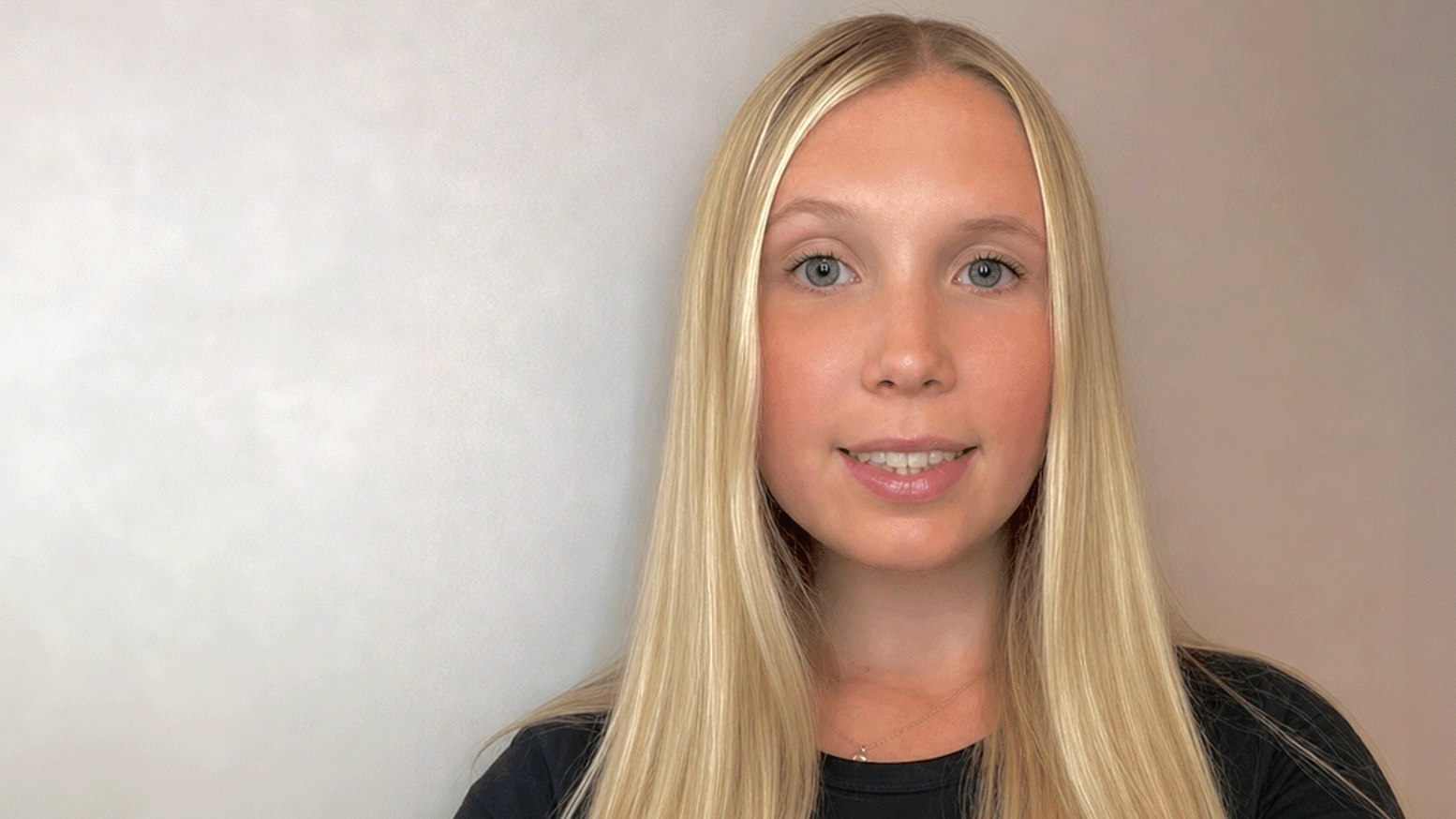
The Laurier University undergraduate’s summer internship is focused on Indigenous recruitment to the Ontario Hereditary Cancer Research Network (OHCRN).
Despite their history of prostate cancer, Ella Zwep knows her family is lucky.
Living in southwestern Ontario not far from large cities, they have access to primary care and screening programs. Through those programs, her grandfather’s prostate cancer was detected in the earliest stages, and he was able to have successful surgery.
But Zwep, who is Métis, knows that is not the case for many Indigenous people in Ontario. Many Indigenous people face barriers to accessing health services, and when they do, the care they receive doesn’t always consider their unique cultural context.
Zwep hopes that her BioCanRx Indigenous Summer Student Internship with the Ontario Hereditary Cancer Research Network can help address some of these challenges.
She is researching the uptake of genetic testing and participation in hereditary cancer registries among Indigenous Peoples, aiming to understand gaps in access and barriers to recruitment. She will ultimately identify strategies for OHCRN to engage Indigenous participants as it builds a provincial database on hereditary cancer syndromes to help ensure that the registry is equitable, diverse and inclusive.
Zwep’s internship runs from May until the end of summer, when she will begin her fourth year studying health sciences at Laurier University. We spoke about how she got involved with OHCRN and about her experiences with the internship so far.
What appealed to you about this internship opportunity?
My biology and chemistry classes in high school really started my interest in science, and then I applied to health sciences programs at university because there are so many different paths you can take from there.
Throughout my undergrad I’ve really enjoyed classes on Indigenous health, health equity and the social determinants of health. This internship seemed like a great opportunity to apply what I learned in school to an important project like OHCRN. I am getting practical experience with health equity issues and learning about cancer research and the many careers in that field.
What have you learned so far about Indigenous engagement in genetic testing and hereditary cancer registries?
I’ve learned a lot about the barriers to participation that Indigenous people face. They include barriers to accessing primary cancer and genetic testing, and also the historical injustices and violations that sometimes make Indigenous people reluctant to participate in genetic testing and research initiatives.
That’s why it’s important for researchers and projects like OHCRN to build ongoing working relationships with Indigenous participants. You can’t just ask for their data and leave. You have to work together, communicate and build trust.
Why is it important for OHCRN to successfully engage with Indigenous Ontarians?
For example, I’ve learned that a lot of Indigenous people who do genetic testing will find out they have a genetic mutation of uncertain significance — meaning no one knows how that mutation could affect their health. That’s common because Indigenous people are not well represented in genetic databases, and so some mutations that are common to them are not well studied.
That’s why I’m excited to support OHCRN in recruiting Indigenous participants. Because if Indigenous people are well represented the OHCRN registry, which is going to be used in many important research projects, then that research should ultimately reflect the unique health issues of Indigenous people.
What are your plans for your future and how will this internship help you achieve them?
I’m planning on applying to med school and seeing where that takes me. But I’m also looking into doing a Master of Public Health, because I’m really interested in the policy and health equity side of working in healthcare.
This internship has provided me a lot of exposure to that policy and health equity side of things and opened my eyes to different careers in the field. The mentorship I’ve had and the connections I’ve made are really helping me understand the path I want to go down.