
OICR is leading a province-wide initiative to advance molecular residual disease (MRD) research and bring tests to patients.
“Did you get it all?”
It’s often the first question a patient asks after cancer treatment, and one of the toughest questions for their doctors to answer.
While first-line cancer treatments like surgery, radiation and standard drug-based therapies aim to eradicate tumours, they can sometimes leave behind a small number of cancer cells. These cells are called molecular residual disease (MRD) — sometimes referred to as minimal residual disease — and they form the seeds of future recurrence.
MRD is linked with a high risk of cancer recurrence, but it is by definition impossible to detect with traditional scans, and present without any symptoms while a patient is in clinical remission.
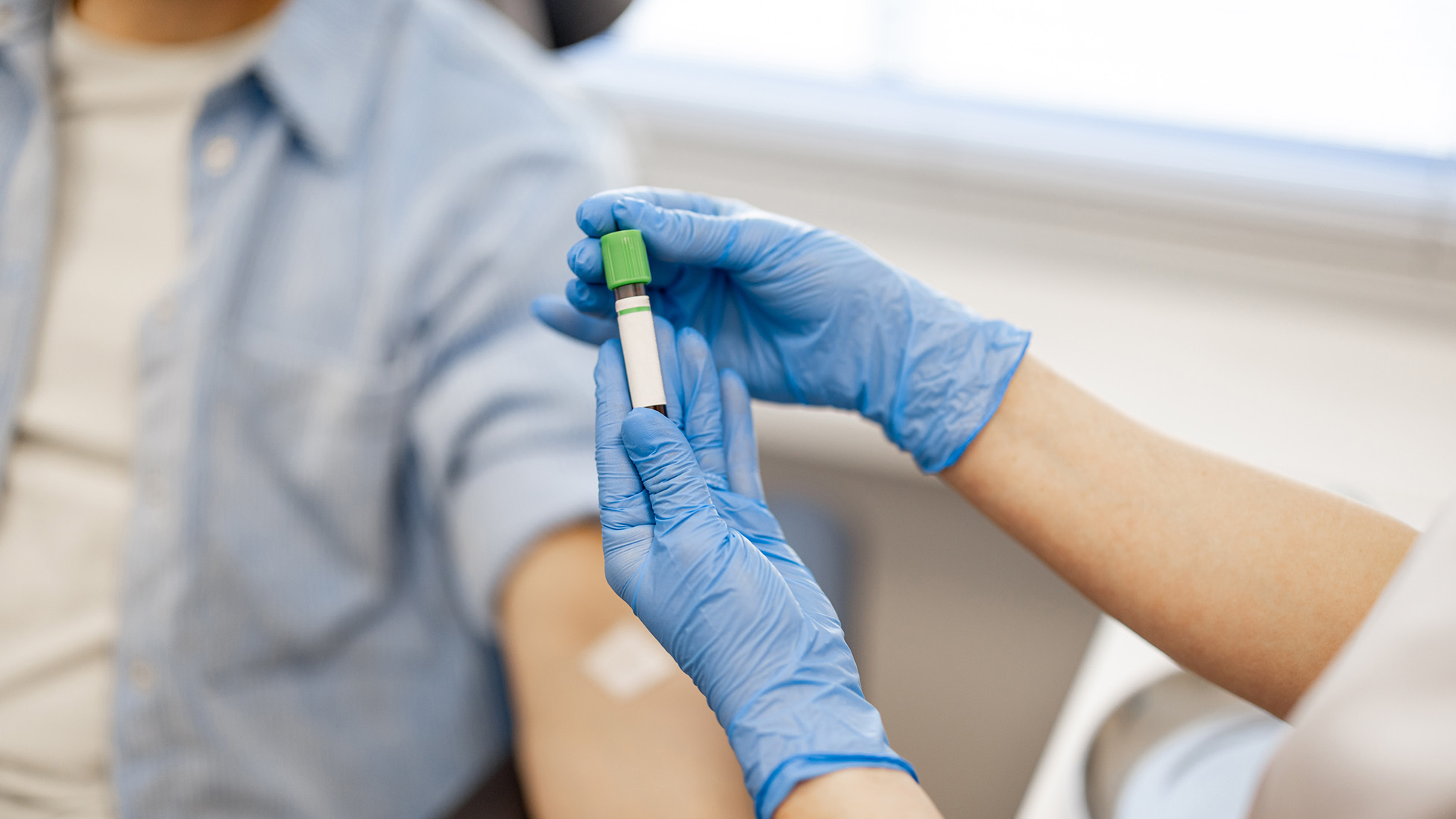
But scientists have recently developed blood tests that can detect MRD by finding tiny fragments of tumour DNA circulating in the bloodstream. OICR has been at the forefront of this research, and now the institute is spearheading an Ontario-wide network to help bring these cutting-edge tests to the clinic, where they can help predict cancer recurrence before it happens.
Led by OICR’s Clinical Translation team, the network officially launched with a meeting in February. The meeting brought together scientists, clinicians and stakeholders from Hamilton, Ottawa, London, Sudbury, Thunder Bay and Toronto, who discussed the latest innovations in MRD testing and what needs to happen for these tests to make it into the Ontario healthcare system.
Dr. David Cescon is Scientific Director of Clinical Translation at OICR and a leading MRD researcher based at Princess Margaret Cancer Centre (University Health Network). We asked him about MRD testing and how this new network can unlock its potential.
What’s the current state of MRD research, and how close are MRD tests to influencing treatment for Ontarians with cancer?
Over the last few years, scientists have established that we can accurately detect MRD in blood samples. We have also shown that a positive MRD test after initial treatment means an extremely high risk of cancer recurring. However, we still haven’t proven that acting on MRD test results by changing a patient’s treatment plan actually improves their outcomes. That’s the next critical step toward implementing MRD tests in the healthcare system.
If MRD testing can be rolled out on a large scale, what could it mean for cancer patients and their treatment?
At the moment, there is often no way of knowing if first-line cancer treatments are working. Patients identified as high-risk at diagnosis are sometimes given additional treatment to help prevent recurrence, but there’s nothing to measure after treatment to know if there are still traces of cancer left. MRD testing could allow for a much more personalized and precise approach to treatment, sparing patients from unnecessary therapies and providing a second chance to cure a patient’s cancer even if initial treatments don’t work as expected.
How will the MRD Network help realize that potential?
The types of studies needed to bring MRD testing to the clinic require collaboration across institutions and disciplines to identify key questions and harmonize approaches. With a diverse population united under a single healthcare system, Ontario is ideally suited to this type of clinical investigation. The MRD Network will provide the links, infrastructure and support needed to take the next steps toward clinical implementation and allow Ontario to lead the field globally.
Why is OICR well-placed to lead this network?
OICR has already made a major impact in the MRD field, including by supporting groundbreaking research through the CATA, pre-CATA and CATALYST funding programs. As the province’s cancer research institute, OICR also works closely with Ontario Health to identify health system priorities and deliver much-needed technologies to Ontarians. I’m excited that we can lead this important effort through Clinical Translation.
To find out more about the MRD Network please contact Clinical Translation Project Manager Sonja Givetash at sgivetash@oicr.on.ca