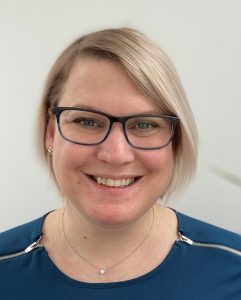

OICR’s Dr. Lincoln Stein and Dr. Mélanie Courtot were part of an expert international commission to understand and overcome challenges in precision oncology.
The results of a global commission on equity in precision oncology were published today, providing a roadmap for all patients to benefit from cancer innovations no matter where they live in the world.
The Lancet Oncology Commission on Cancer Genomics and Precision Oncology announced the findings from its international panel of experts — including OICR’s Dr. Lincoln Stein and Dr. Mélanie Courtot — at the World Cancer Congress in Hong Kong.
Precision oncology is an emerging approach to cancer care where molecular testing for “biomarkers” helps diagnose cancer more precisely and tailor treatment to the unique biology of each patient’s tumour. It has been advancing rapidly in recent years thanks to the groundbreaking work of organizations like OICR, which drives breakthroughs in cancer genomics through research programs like PanCuRx and large-scale genomics data stewardship projects like ICGC-ARGO.
Created in 2023 and coordinated by ICGC-ARGO, the Lancet Oncology Commission was tasked with helping understand current barriers to widespread adoption of precision oncology, and providing evidence-based recommendations to overcome them.
“There are a number of legal, regulatory and logistical challenges that lead to inequities in patients’ access to precision oncology and the research that drives it,” says Stein, Head of Adaptive Oncology at OICR. “We hope the Commission’s findings provide a call to action for policymakers around the world to help bring precision oncology to all cancer patients, and a roadmap for how they can achieve that.”
The Commission found that, despite major innovations in biomarker testing and targeted treatments, access to precision oncology varies greatly both across and within countries globally. Low and middle-income countries in particular faced barriers like limited lab capacity to process molecular tests, inadequate financing, and shortages of specialists. As a result, only one in five eligible patients globally receives testing for cancer biomarkers, with the majority concentrated in the wealthiest countries.
Similar disparities were also present in precision oncology research, with the bulk of genomic research and clinical trials taking place in high-income countries. That means certain populations are under-represented in precision oncology studies, leading to a lack of understanding of how new tests and treatments may be relevant to these populations, and exacerbating inequities in the care they ultimately receive.
To address these challenges, the Commission developed 10 recommendations on how to integrate precision oncology into national cancer control strategies, adopt it into routine clinical care, support it with sustainable infrastructure, and strengthen research in cancer genomics.
According to the Commission, more widespread and equitable precision oncology will not be possible without more effective systems to collect, store and share cancer genomic data. And that was the subject of one of the Commission’s companion studies co-led by Stein and Courtot.
Published today in the journal eBioMedicine, the study describes how genomic datasets are currently siloed across projects, platforms and jurisdictions. There are several reasons for this fragmentation, including differences in how data are collected and stored in different research projects, as well as regulatory and logistical challenges that prevent data from being shared from one jurisdiction to another. The strict measures that are often in place to prevent the misuse of confidential patient data can sometimes limit legitimate use by researchers.
“When cancer genomics data can’t be shared, compared and studied around the world, it limits our ability to learn from and apply these data to make new discoveries and implement them into cancer care,” says Courtot, Director of Genome Informatics at OICR and a member of the ICGC-ARGO management committee.
The study found that barriers to data sharing can only be overcome if data sharing is viewed as central to progress in precision oncology. Policymakers must ensure there is sustained funding for infrastructure and training, research funders must make data management a condition of funding, and researchers must outline a clear data management plan from the outset of each project.
Courtot says that OICR can play a critical role in overcoming these challenges. As a leading research institute, research funder, and host of significant cancer genomics data platforms, the Institute can shape data management practices at both the policy and project levels. OICR also co-founded ICGC-ARGO, which coordinates cancer genomics data across 17 countries, and the Global Alliance for Genomics and Health, which sets data management standards that can be followed by all researchers across the world
“OICR has extensive experience building the infrastructure for successful data management, and we have seen first-hand the benefits that data sharing can have on innovation and on patient care,” Courtot says. “Now we need to work together with the global community to drive more discoveries in precision oncology and help ensure that everyone, everywhere can benefit.”