Deep freezing allows researchers to dig deep into tumour samples

The Ontario Tumour Bank evaluates the quality of tumour samples stored at ultra-low temperatures over the last decade

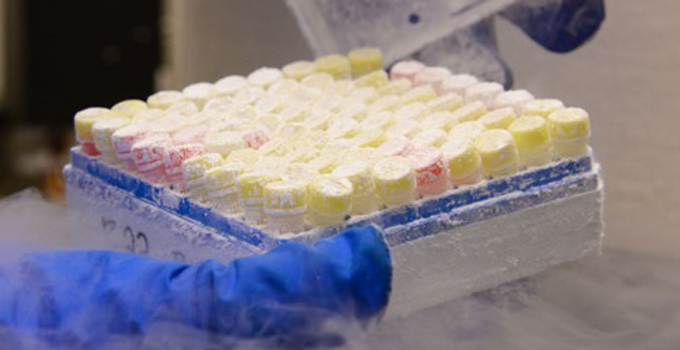
Before they are used in cancer research, tumour samples are often preserved in storage at extremely low temperatures, sometimes for several years. It is thought that these temperatures can stop all biological activity in samples and thus prevent DNA, RNA and other analytes from degrading, but this technique has never been tested for extended long-term preservation – or storage beyond a few years. Researchers at the Ontario Tumour Bank (OTB) recognized this concern and looked back over a decade of specimens to find out more.

In their recent study published in Biopreservation and Biobanking, they investigated how the quality of a sample may change over the course of 10 years in vapour-phase liquid nitrogen storage, also known as LN2 storage. They found evidence to show that LN2 storage preserves the quality of genetic material in tumour samples over several years and no connection between the age of a sample and its integrity – or how intact its genetic material is.

“Our unique study has provided us, and the greater research community, with reassuring results,” says Rachel Kelly, Research Technician at OTB and lead author of the study. “While the biobanking community generally accepts that samples stored at ultra-low temperatures are stable indefinitely, we were concerned that this assumption had not been thoroughly tested.”

Kelly’s findings apply to the hundreds of biobanks around the world that store samples at cryogenic temperatures, or temperatures below -150⁰C. This study validates that researchers will be able to analyze and investigate well-preserved tissues, whether they are two years old or 10 years old.

“For the thousands of patients who have donated their samples, they should know that their contribution may impact cancer research for years to come,” says Monique Albert, Director of OTB. “At OTB, we have the privilege of diligently preserving this resource and helping translate valuable patient samples into new research discoveries.”

OTB, which stores more than 185,000 samples donated by over 20,000 patients across Ontario, is one of six founding Charter Member Banks of the Canadian Tissue Repository Network (CTRNet). Through CTRNet, these six top-tier biobanks work to enhance the capacity and quality of biobanking across Canada. Read more about how OTB is collaborating to improve biobanking around the world, or visit their website at ontariotumourbank.ca.

Europe and Canada build secure and efficient network to share genomic and health data

Dr. Lincoln Stein, Head, Adaptive Oncology, OICR.

The Global Alliance for Genomics and Health introduces the European-CANadian Cancer network as one of seven new global Driver Projects

The rapid realization of precision medicine in oncology depends on the cancer research community’s ability to collaborate effectively. For genomics researchers, this means having the necessary computational tools and infrastructure to generate and share data.

Now, a new international initiative called The European-CANadian Cancer network (EUCANCan) has set out to align infrastructure across continents for the efficient analysis, management and sharing of cancer genomic and clinical data. On February 4, The Global Alliance for Genomics and Health (GA4GH) announced that EUCANCan has been named one of seven new GA4GH Driver Projects. 

“Our goal is to enable clinicians and researchers to exchange cancer data in a way that promotes effective analysis of this data while protecting patient privacy,” says Dr. Lincoln Stein, Head of Adaptive Oncology at OICR and leader of EUCANCan’s Toronto node. “With this network, we will be able to accelerate cancer genomics research on a global scale, and in turn, drive cancer discoveries that will lead to improved diagnostics and therapies.”

EUCANCan will realize its mission by uniting groups from Germany, the Netherlands, France, Spain and Canada into a federated network. The network will help define community standards for data formats, harmonize methods to interpret genomic data, and generate strategies to manage, store and distribute data across national borders.

As one of GA4GH’s new Driver Projects, EUCANCan aims to enrich collaborations between Canadian and European genomics groups while serving the greater global research community. The Toronto node, based at OICR, will be leading the development of an open and accessible data portal to allow the research community to search, download, and analyze EUCANCan data locally and in the compute cloud.

“Together, the new Driver Projects significantly expand GA4GH’s global representation, strengthening our collaborations across Africa and Europe, as well as in Japan, and adding connections in 31 countries for a total global reach across more than 100 countries worldwide,” says GA4GH CEO Peter Goodhand.

 “The new Driver Projects join a community that is building the standards and frameworks that will guide the field for years to come,” says Dr. David Altshuler, Founding Chair of GA4GH.

Read more about the 2019 Driver Projects here.

OICR supports cancer drug discovery in Ontario with new funding for four promising early-stage projects

Toronto (February 21, 2019 | Updated July 15, 2019) – The Ontario Institute for Cancer Research (OICR) today announced that three Early Accelerator projects from across Ontario will each receive $100,000 for one year as part of OICR’s Cancer Therapeutics Innovation Pipeline (CTIP) initiative. The funding will be used to validate cancer targets and support experiments to screen molecules against these targets, finding those that can bind to them successfully and have potential to be developed into medicines.

(more…)

Sometimes the simpler, the better: bringing personalized treatment selection for bladder cancer closer to the clinic 

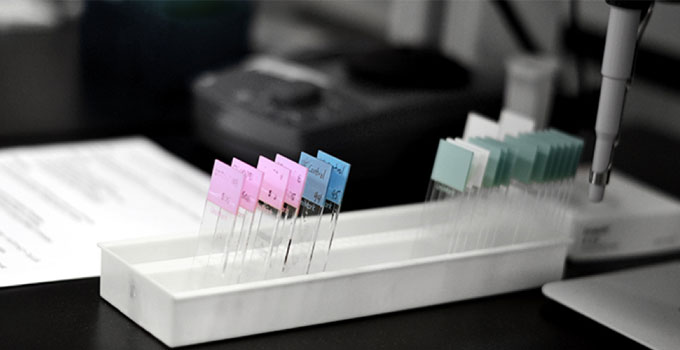
Pathology slides sit in a tray on a lab bench top.

Pathology experts review challenges and opportunities in treatment selection for muscle-invasive bladder cancer (MIBC), propose traditional pathology method to achieve same results as molecular profiling at lower cost

Research has shown that some types of bladder cancer respond well to treatment and other types are resistant, yet molecular subtyping, which can help better define a patient’s cancer and direct them to a more targeted treatment, is not performed in the clinic. This means that patients are often treated with a one-size-fits-all approach. Despite recent research progress, the movement of MIBC subtyping to the clinic has stagnated.

(more…)

The power of one, benefiting the many

Close up of a person using a laptop.

When the first volunteer signed up for the Ontario Health Study (OHS), carefully filling out a detailed online health questionnaire, they no doubt hoped their efforts would do some good. They could never have predicted that, 10 years on, their de-identified health data is now pooled with those of nine million other altruists, from across four continents, in addition to being part of a Canadian national database.

(more…)

Dockstore: Sharing tools for large-scale genomics research

Denis Yuen, Senior Software Developer at OICR

OICR’s Adaptive Oncology team has been granted $875,000 from Genome Canada to expand Dockstore – a framework for generating and sharing portable computational biology workflows.

Cancer genomics research depends on the ability to analyze massive datasets in a standardized and coordinated manner. This involves creating and managing workflows – a series of processes and computational tools – that are often long, complex and difficult to share between research groups.

(more…)

FACIT and Triphase Accelerator Announce New Partnership with Celgene for First-in-class WDR5 Leukemia Therapy

Largest transaction to date for Canadian-discovered preclinical asset arises from Ontario collaborators 

TORONTO, ON (January 29, 2019) – Triphase Accelerator, together with its majority shareholder FACIT, today announced a new strategic collaboration with Celgene for a first-in-class preclinical therapeutic targeting the WDR5 protein for the treatment of blood cancers including leukemia. Triphase is a drug development company advancing novel compounds through Phase 2 proof-of-concept, including the WDR5 program. 

(more…)

First-in-class drug for blood cancers discovered by Ontario researchers receives record-setting industry investment

Years of hard work by OICR’s Drug Discovery group and Ontario partners moves potential new treatment for leukemia towards clinical trials

On January 29, 2019, Celgene Corporation made an investment of up to US$1 billion that will facilitate further research and development of the potential drug and support clinical trials in Ontario. The potential drug was designed to exploit a weakness in leukemia centred on the protein WDR5 that was discovered by Ontario researchers. If all options under the investment are exercised, the deal will be the largest transaction to date for a preclinical asset discovered in Canada.

“The progress of this pre-clinical drug towards the clinic is an example of how OICR, working with its partners, is accelerating cancer research in Ontario and increasing investment so that new innovations can help patients as soon as possible,” says Dr. Laszlo Radvanyi, President and Scientific Director of OICR. “This announcement shows how OICR and FACIT’s unique model for research and commercialization can generate long-term impact for the province of Ontario.” FACIT is OICR’s strategic commercialization partner.

The WDR5 project’s development demonstrates the unique expertise of OICR DD, the advantages to the OICR-FACIT model, and how OICR effectively harnesses the strengths of Ontario’s diverse cancer research ecosystem by collaborating with groups such as the Structural Genomics Consortium (SGC), the group that initially identified the potential of targeting WDR5 as a treatment for cancer.

(more…)

Study reveals mechanism driving spread of advanced pancreatic cancer

Rob Denroche, bioinformatician and Project Leader of PanCuRx.

Large-scale pancreatic cancer study distinguishes primary from metastatic tumours, uncovering new genomic biomarkers that could help guide treatment selection

Over the next decade, pancreatic ductal adenocarcinoma (PDAC) – the most common type of pancreatic cancer – is projected to become the second leading cause of all cancer mortality. A better understanding of how PDAC changes when it metastasizes – or spreads from the pancreas to other organs – may help researchers find ways to treat the disease more effectively.

A study by OICR researchers and collaborators, published today in Cancer Cell, showed that the cells in advanced pancreatic tumours grow – or cycle – faster than those in early tumours, revealing one of the key reasons that the disease can advance so quickly.  OICR’s Pancreatic Cancer Translational Research Initiative, PanCuRx, investigated the whole genomes and transcriptomes of more than 300 PDAC tumours, contrasting cells from primary tumours and cells from metastatic tumours. This distinction may help clinicians advise patients about treatment, whether it be surgery, chemotherapy or radiation.

“Often, a patient’s primary pancreatic cancer recurs after surgery and chemotherapy, and there is limited knowledge of metastases to guide the next course of action. In less common ‘metachronous’ cases, treatment depends on whether the second tumour is new, or if it grew from remnants of a previous tumour,” says Dr. Ashton Connor, chief resident in the General Surgery training program at the University of Toronto and lead author of the study. “In this study, we explored differences between primary and metastatic tumours in the hopes of better understanding the mechanisms of cancer cell spread from the pancreas, and to ultimately inform their treatment.”

Over the last decade, PanCuRx has assembled the largest collection of genomic and transcriptomic data on primary and metastatic PDAC tumours. The initiative continues to collect samples through the COMPASS clinical trial today.

“There have been very few studies of advanced PDAC, so our rich dataset is very valuable to the future of pancreatic cancer research,” says Rob Denroche, bioinformatician, Project Leader of PanCuRx and co-author of the study. “Research groups from Germany, Brazil, Japan and across North America have been interested in the data that we’ve collected and we’re happy to enable their discoveries.”

PanCuRx collaborations span four continents, largely due to their enriched dataset on metastatic PDAC.

Through COMPASS, PanCuRx will continue to build on these findings and test if cell progression could be used to inform treatment selection in the clinic.

“This work is foundational to our understanding of advanced pancreatic cancer,” says Dr. Steven Gallinger, PanCuRx Director and Head of the Hepatobiliary/Pancreatic Surgical Oncology Program at UHN and Mount Sinai Hospital. “We look forward to building on this understanding to better inform treatment selection for those with this terrible disease.”

Powering the future of pathology

Ontario Molecular Pathology Research Network (OMPRN) helps establish new training standards for pathologists across Canada

Personalized medicine presents a tremendous opportunity for molecular pathologists to contribute to improvements in detecting, diagnosing and selecting treatments for cancer patients. As new diagnostic and prognostic tools continue to emerge, it is becoming increasingly important for pathologists to engage in cancer research and understand new developments across scientific disciplines. Fostering this engagement begins with education.

OMPRN is championing the advancement of molecular pathology training across Canada through its engagement with the Royal College of Physicians and Surgeons of Canada (Royal College), Canada’s governing body for medical education. Together, they are developing a new curriculum for pathology residents based on competencies – the proficiency or ability to perform a skill – rather than the traditional time-based training approach where residents are evaluated based on the amount of time spent acquiring knowledge or practicing a skill.

Dr. David LeBrun, Principal Investigator at Queen’s Cancer Research Institute and Leader of OMPRN.

“The existing competencies around molecular pathology were not adequate in detail, nor were they adequate in rigour,” says Dr. David LeBrun, Principal Investigator at Queen’s Cancer Research Institute and Leader of OMPRN. “So we harnessed the opportunity to improve these training standards for the future of pathology in Canada.”

OMPRN developed a list of molecular pathology competencies, priorities and training strategies to inform a new national curriculum. These suggestions were presented to the Anatomical Pathology Specialty Committee of the Royal College, who accepted several of the proposed strategies and recognized OMPRN’s submission as an official Royal College Curricular Document – a curriculum guide for educators.

One of OMPRN’s major contributions to the new curriculum, which is currently being implemented across Canada, was a competency focused on synthesizing a unified, clinically-actionable report based on results from non-traditional diagnostic tests, such as liquid biopsies or genomic profiling. With this ability, pathologists can better inform clinicians while ensuring that there are no opportunities missed in the detection or diagnosis a patient’s disease.

“With proper training, pathologists can play a key role in bringing the benefits of new research discoveries into the patient experience,” says LeBrun. “These competencies will help ensure that treatment decisions in the clinic are well informed by both conventional pathology techniques and novel tools and resources.”

One of the key challenges of competency-based education is that some training centres may not have the expertise to train their residents on highly-specialized skills. OMPRN is working to address the gap in expertise by developing online education materials to complement the molecular pathology competencies and offering training courses like their inaugural Applied Molecular Pathology Course, which was held January 9-10 in Mississauga.

“Our mission is to create a vibrant community of cancer research-oriented pathologists in Ontario,” says LeBrun. “Through our educational initiatives, OMPRN is helping to build the next generation of pathologists and – in turn – driving the future of cancer innovation.”

For more information on the Ontario Molecular Pathology Research Network, please visit its website.

Learn more about the Royal College’s Competence by Design program in the video below.