 Back

A new way to diagnose cancers of the bile ducts could help understand each patient’s risk and unlock new, more personalized ways to treat these rare and aggressive tumours.
Researchers at OICR and University Health Network (UHN) collected and analyzed one of the largest genomic databases ever compiled of biliary tract cancers, tumours that grow in the network of ducts that carry bile from the liver to the small intestine. They found that tumours fell into one of two distinct groups, with one group significantly more aggressive than the other, and developed a test to distinguish between them.
“This gives us a whole lens through which to view bile duct cancers and opens up a lot of potential to ask new research questions, revisit old ones, and give patients answers that help them get the treatment that works best for them,” said Dr. Felix Beaudry, first author and scientific project lead.
The start of the study, published in the journal Cancer Research, dates back more than 10 years to the early days of OICR’s groundbreaking PanCuRx program. Though PanCuRx research focuses mainly on pancreatic cancer, the team and their collaborators at the Wallace McCain Centre for Pancreatic Cancer at UHN’s Princess Margaret Cancer Centre had a strong interest in cancers originating in the liver, gallbladder and bile ducts.
At the time, scientists knew little about the biological differences between biliary tract tumours. These cancers are rare, and they often grow in a thin layer along the wall of the bile duct. This makes it hard to collect enough tumour tissue to study.
The team began collecting biliary tract tumour samples using a specialized technique called laser capture microdissection, which lets researchers cut out just the cancer cells from a piece of tissue.
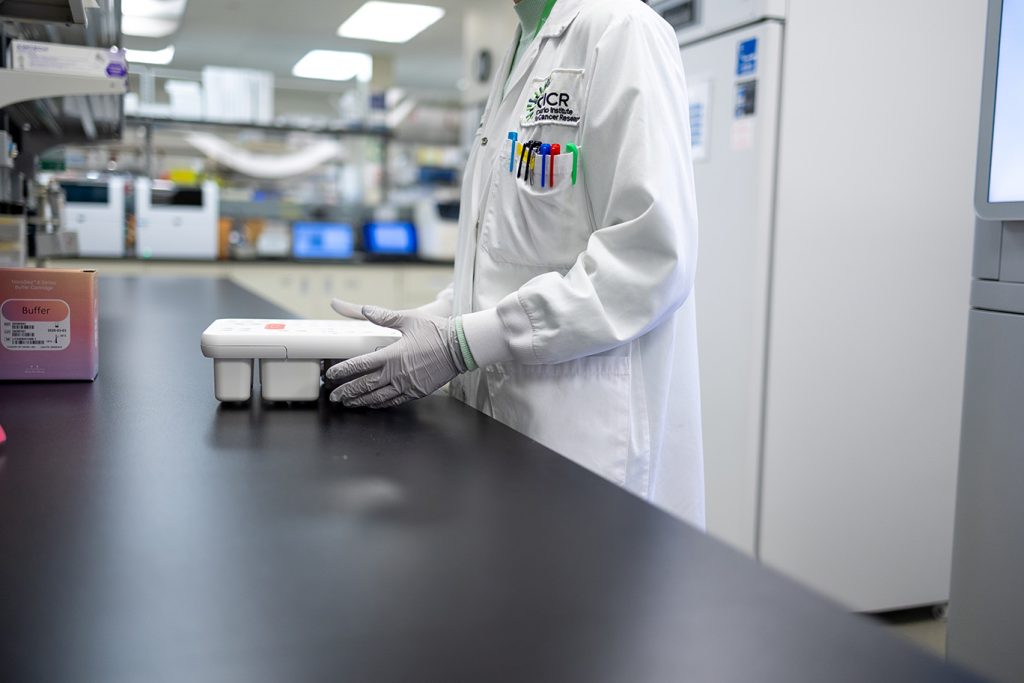
These samples were then analyzed using whole genome and transcriptome sequencing in OICR’s Genomics lab. With funding and support from OICR, the Richard LeGresley Biliary Cancer Research Fund through the Princess Margaret Cancer Foundation and the Marathon of Hope Cancer Centres Network (MOHCCN), the project expanded to include samples from more than 180 patients.
“We were able to look at these tumours in a way nobody really had before, and we kept coming up with the same result — biliary tract cancers fall very neatly into two subtypes,” Beaudry said.
The team identified two subtypes that were completely different in their biological makeup, their origins and in how long patients survive with them. One subtype is more similar to pancreatic and colorectal cancers. It grows more aggressively, and is more difficult to treat. The other subtype more closely resembles liver cancer. It grows large tumours but has better outcomes after surgery. Patients with this type of biliary tract cancer tend to live longer.
FAQs
What is biliary tract cancer?
The biliary tract is an important part of the digestive system made up of the gallbladder and a network of bile ducts. It stores and carries bile from the liver to the small intestine, which aids digestion and helps the body remove waste.
How are biliary tract cancers currently treated?
Surgery to remove the tumour is the first option followed by chemotherapy. Where surgery isn’t possible, immunotherapies drugs called immune checkpoint inhibitors are commonly recommended in combination with chemotherapy.
What is the Marathon of Hope Cancer Centres Network?
Created by the Terry Fox Research Institute and Terry Fox Foundation, it is a cross-country collaboration to accelerate precision oncology research. It connects stakeholders, funds studies, and is building an unprecedented pan-Canadian cancer database.
With the subtypes identified, researchers began working on a tool that could be used clinically to distinguish one tumour subtype from the other. They leveraged existing diagnostic platforms and algorithms to develop a genomic test that analyzes 32 genes and computes a result in seconds. Their test is now being validated with clinical data and early results are promising.
“Having the ability to quickly distinguish between these two subtypes could help us give each individual patient a better idea of their risks from the disease,” says Dr. Robert Grant, a Medical Oncologist and Clinician Investigator at Princess Margaret, Co-Lead of the PanCuRx program at OICR, and the study’s senior author.
Beyond helping to predict each patient’s risk, these subtypes can provide a framework to guide new therapies that target each tumour’s unique biology. And it’s not just new drugs that could make a difference. Researchers can also use the test to go back through data from earlier studies of biliary tract cancers to how see a prospective treatment would have fared against one subtype versus the other.
It’s early, but Beaudry is confident this discovery will ultimately make an impact on the care patients receive.
“The subtypes are so different in so many ways,” Beaudry said. “I have zero doubt they will point us to new possibilities for treating bile duct cancers we couldn’t see before.”