
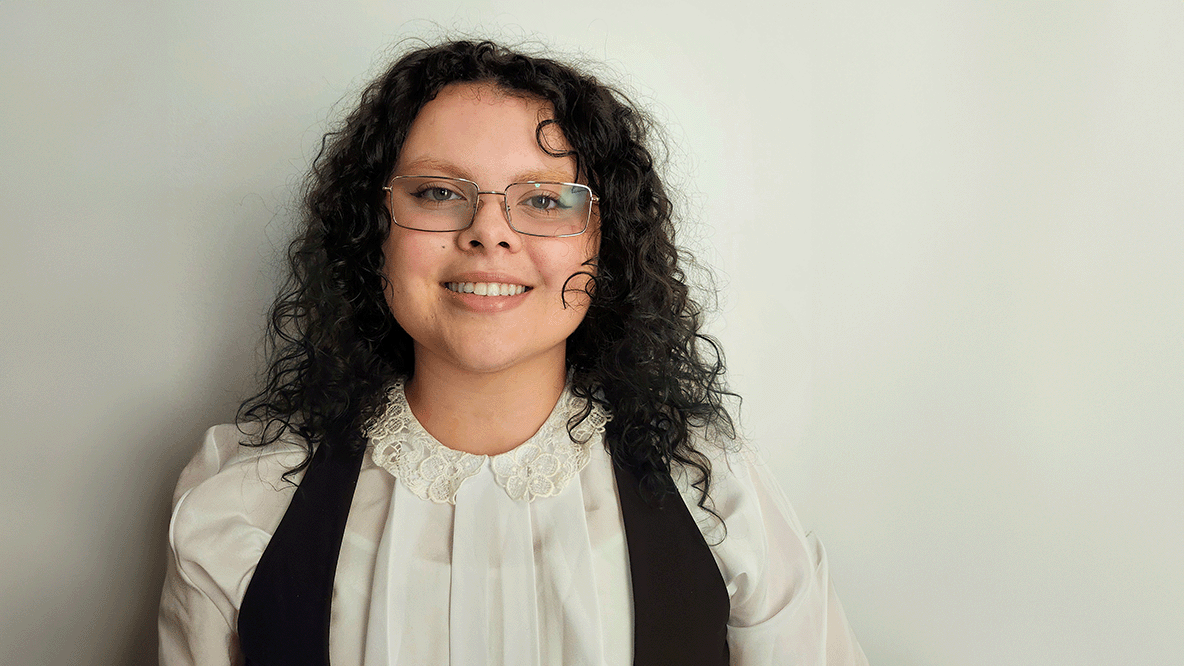
As part of a unique summer internship, Thompson is informing researcher training and data access procedures for the Ontario Hereditary Cancer Research Network (OHCRN).
With a lifelong interest in health sciences and a passion for promoting equity for Indigenous people, Mya Thompson may have found her niche.
The University of Toronto undergraduate is spending the summer researching Indigenous data sovereignty as part of a BioCanRx Indigenous Summer Student Internship with the Ontario Hereditary Cancer Research Network (OHCRN).
Indigenous data sovereignty is the right of Indigenous people to control how their data is collected and used. It is critical for a project like OHCRN, an OICR initiative building a provincial database on hereditary cancer syndromes that can be accessed by cancer researchers. OHCRN participants may choose to self-report ethnicity information, which includes options for First Nations, Inuit, and Métis.ƒ
Thompson, whose mother is Haudenosaunee from the Six Nations of the Grand River, says the project is a great match for her diverse interests.
“I’ve always loved science and had a passion for helping people,” says Thompson, who will enter the fourth year of an Honours Bachelor of Science in Human Biology and Psychology program this fall. “As an Indigenous person, I’ve also seen that not everyone has equitable access to healthcare, and it’s important to me to advocate to fill those gaps.”
After reviewing data and research guidelines on Indigenous data sovereignty, Thompson will develop recommendations that will help inform a cultural competency training package for researchers as well as procedures for accessing OHCRN data. OHCRN also intends to do further consultations before finalizing the training resources and putting policies in place.
We asked Thompson about her experience so far with her internship and what the experience could mean for her future.
Tell us more about how you became interested in health science and Indigenous equity.
I spent a lot of time on the reserve with my grandparents as a kid, and my mom was heavily involved with the Band Council. Her interest in policy and in strengthening the community definitely influenced me. My dad is a chiropractor, so I also grew up hearing about his work with patients. Above all, I found myself wanting to help people, understand their issues, and guide them through solutions.
Why is Indigenous data sovereignty so important in health research?
Throughout history, there are many examples of Indigenous Peoples being included in health research studies, but their data has not been culturally contextualized. For example, past genomic studies have pathologized Indigenous communities, ignoring social determinants of health such as socio-economic status and intergenerational trauma, which contribute to disease. This lack of consideration can cause further discrimination to Indigenous communities.
What have you learned about how research projects can promote Indigenous data sovereignty.
Researchers should always keep in mind they do not own the data, it’s on loan to them. That means that Indigenous Peoples have the right to guide how their data is used and to be informed about what happens to it throughout all stages of a research project.
It is also important to understand that Indigenous Peoples are extremely diverse. Research has often used ‘Indigenous’ as an umbrella term, homogenizing Indigeneity rather than understanding specific identities like Métis, Inuit and First Nations. Ensuring these distinctions are clear can make research more relevant and beneficial to Indigenous people.
What are your plans for your future?
I don’t have concrete plans yet, but I want to continue advocating for Indigenous equity. Policy is very interesting to me because it’s an important lever to make social change, and I like being there at the beginning stages of decisions that help people in the future. Working with OHCRN has also reignited my interest in genetics and molecular biology, and it has opened my eyes to cancer research, which I’d like to explore in the future.
How will this internship help you achieve your goals?
Being able to contribute to key policies for a project like this is really meaningful. More practically, I got the opportunity to shape my own project, and that was really great experience. I also worked on a grant proposal for the first time, and I know that will be very valuable in the future. I’ve also really enjoyed networking and learning about other people’s career journeys and how they got to where they are.