New gene signature test predicts risk of acute myeloid leukemia relapse

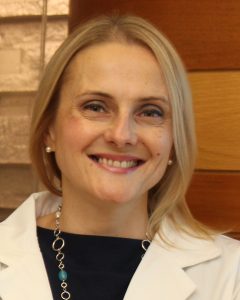
Dr. Jean Wang and colleagues developed a test that can help clinicians provide more personalized AML treatment.

A new gene signature test can improve early treatment decisions for acute myeloid leukemia (AML) by quickly assessing a patient’s risk of relapsing after treatment.

AML is a fast-growing blood cancer with a high rate of recurrence. Though most patients will go into remission after the standard treatment — a heavy dose of chemotherapy — a large proportion will see AML come back even more aggressively.

Relapses are common because AML is driven by leukemia stem cells, which chemotherapy typically doesn’t kill.

“Leukemia stem cells tend to survive chemotherapy, stay in the bone marrow and regrow the disease,” explains Dr. Jean Wang, Clinician Scientist at the Princess Margaret Cancer Centre and Staff Hematologist at University Health Network who studies the biology of leukemia stem cells.

AML isn’t a single disease. Different patients respond to treatment differently, so it’s important to understand a patient’s risk profile to make the best decisions about their treatment.

Currently, risk is assessed by molecular and cytogenetic tests. But results for these tests can take weeks, and there’s often no time to wait because AML grows so quickly. As a result, most patients are treated with the same chemotherapy up front, and then are considered for additional treatments such as bone marrow transplant later on in the disease course, depending on their risk assessment.
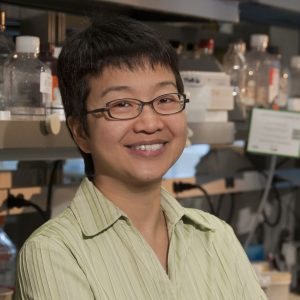
Dr Jean Wang
Dr. Jean Wang

But now, Dr. Wang and her colleagues have developed a laboratory test that can assess an AML patient’s risk of relapse and deliver results within 24 to 48 hours of diagnosis. In a study partially funded by OICR, they identified a signature of 17 genes (called the “LSC17 score”) that captures the “stemness” properties of a patient’s AML cells at diagnosis, and provides a rapid prediction of how well the patient will respond to standard chemotherapy. The new test uses the Nanostring platform to measure the expression level of the LSC17 genes and calculate a score. The higher the LSC17 score, the higher the risk of AML relapse after standard treatment.

Dr. Wang says this new test can help clinicians put patients on a more personalized treatment plan. If a patient has a high LSC17 score, meaning they have a high risk of relapse after standard chemotherapy, they could be considered for stronger up-front therapy or a clinical trial of an experimental therapy. This could ultimately improve their chances of survival without them having to go through standard chemotherapy when it’s not likely to cure them.

“With this test, clinicians can get information about whether their patient is high-risk or low-risk within just a day or two,” Dr. Wang says. “Having all the information available will help clinicians make better treatment decisions for their patients.”

The LSC17 test could also strengthen research into new treatments for AML by showing whether experimental therapies will help patients who aren’t likely to respond to standard chemotherapy. “Using it is a correlative test in clinical trials would be really valuable to identify drugs that can benefit high-risk patients,” Dr. Wang says. “One big problem in AML right now is that there are not a lot of good treatment options for high-risk patients.”

The test has been developed and validated in the CLIA-certified Advanced Molecular Diagnostics Lab at Princess Margaret, and the protocol is easily established and reproducible in other lab locations. Now, Dr. Wang says the next step is to make it accessible to clinicians. Though it is currently available through Princess Margaret, she says it needs to be more widely available to benefit patients and to determine how it can best integrated into clinical practice.

“We’ve received a lot of clinical interest,” Dr. Wang says. “Now we need to make it available to both clinicians and researchers and get them using it, and we can take it from there.”

***

This work was supported by OICR and several other organizations across Canada. A full list of funders is available in the ‘acknowledgements’ section of this journal article.

Made-in-Canada CAR-T cells save lives in promising clinical trial

A nationwide study partially funded by OICR is giving Canadians with cancer access to groundbreaking immunotherapy.

CAR-T cell therapy has given hope to people with serious blood cancers who might otherwise be out of options. Early trials for the groundbreaking immunotherapy have shown a lot of promise, with some patients still in remission a full decade after treatment.

Yet until recently, Canadians with cancer might have to travel internationally and spend hundreds of thousands of dollars for a chance at this potentially life-saving therapy.

Now, the Canadian Immunotherapies in Cancer (CLIC) program is helping change that by developing Canada’s first platform for manufacturing CAR-T cells and offering therapies to eligible Canadians through an innovative clinical trial.

The first CLIC trial started in 2019 and has now recruited more than half of a potential 60 participants. Though results have not yet been published, study lead Dr. Natasha Kekre says the made-in-Canada CAR-T cell therapy has proven to be safe and is already saving lives.

“There are trial participants who I know 100 per cent would not be alive right now without this therapy,” says Dr. Kekre, a hematologist and scientist at The Ottawa Hospital. “These success stories are the best part of our work.”

CAR-T cell therapy involves collecting immune system T cells and genetically reprogramming them to produce chimeric antigen receptors (CARs), which help them to find and attack cancers like leukemia and lymphoma that would otherwise elude the immune system.

The therapy is complicated to produce and administer, and it has taken a nationwide collaboration to get this Canada-first platform off the ground. Funding was provided by OICR, BioCanRx, BC Cancer and The Ottawa Hospital Foundation. CAR-T cells for the study are jointly manufactured at The Ottawa Hospital’s Biotherapeutics Manufacturing Centre and at BC Cancer’s Conconi Family Immunotherapy Lab, with therapies also administered at both these sites. But capacity is growing, and infrastructure is being developed to make to CAR-T cells in Toronto and Winnipeg.

Dr. Kekre says the sophisticated platform the CLIC team built should make manufacturing easy like a “bread maker” — you add the ingredients, and the machine makes CAR-T cells. “The goal is point-of-care manufacturing,” she says. “We want to be able to drop these machines in different cancer centres across the country.”

The success of the CLIC program is also the result of strong patient partnerships. Because CAR-T cell therapy can be toxic and difficult on participants who may already be very ill, the study team knew the trial had to be shaped by the voice of patients.

Patient partners were involved from the start, identifying key outcomes, helping with recruitment and co-producing trial documents like information sheets and consent forms. “As patient partners, we contributed key input to help improve patient outcomes and experiences, and helped to shape the methods used by researchers to achieve this,” says Terry Hawrysh, a patient partner for the CLIC program and member of OICR’s Patient and Family Advisory Council. “It was a truly meaningful engagement, and a very rewarding experience to participate in a ‘made in Canada’ effort to develop, translate and deliver CAR-T cell therapy.”

Dr. Kekre expects the first CLIC trial to finish later in the year, and she hopes to share early results within the next few months. Work is already underway on a second CLIC trial which will investigate a different type of CAR-T cells. “Now we want to build the next generation of CAR-T cell therapies for Canadians — first-in-human designs that may be more effective or treat other types of cancers,” Dr. Kekre says.

With plenty of work ahead, Dr. Kekre says she is motivated by the people the trial has already helped. “We’re saving lives in an early phase clinical trial,” she says. “That’s special, and it’s all I need to keep me going.”

***

Find out more about the CLIC program at ClinicalTrials.gov. Patients who think they might be eligible should speak to their hematologist.

Photo of Dr. Natasha Kekre provided by The Ottawa Hospital.

Cancer researcher leads push to elevate Black scientists

Professor Juliet Daniel is working to end inequities for Black researchers while also running a cutting-edge cancer research lab.

In a room full of her peers, Professor Juliet Daniel says she “stuck out like a sore thumb.”

It was the early 2010s, and Prof. Daniel was attending a conference with hundreds of Canadian cancer researchers. Though she had been a cancer biologist for two decades and was about to be named Professor at McMaster University, she still felt out of place as one of just two Black people at the conference.

“It was shocking,” says Prof. Daniel. “How could there have only been two Black cancer researchers in Canada?”

Prof. Daniel already knew her path from the Barbados to a prominent position in Canadian academia was more difficult than for many of her peers. She heard some colleagues quietly dismiss her accomplishments as if she was getting special treatment because of her race or gender. At the same time, she had grant applications rejected because her research on triple-negative breast cancer – which disproportionately affects Black women – was deemed “not relevant to the Canadian context.”

But it wasn’t until that conference that she realized how rare it was for a Black Canadian woman to advance to her position. “I had been working in research for twenty years and had no idea how little Black representation there was,” she says.

Black Canadians are largely underrepresented in science and technology fields despite accounting for about 3.5 per cent of the country’s population. There are biases – both historical and current – that have discouraged Black youth from pursuing careers in science, and advocates say that Canada’s system for funding research is partly to blame.

For example, certain research grants require that applicants have previously received other grants, or hold a leadership position. Since major grants and leadership positions have historically not been available to marginalized populations, Black researchers can have limited opportunities to get funding and advance their careers.

Prof. Daniel says these and other inequities are causing young Black scientists to leave the country seeking better opportunities, or to leave research altogether. She has trained and mentored at least three outstanding Black trainees who chose not to continue with research.

“They self-selected out because they saw what I went through,” she says.

In the years after that first national conference, Prof. Daniel and a small group of Black scientists discussed ways to connect and empower their community. Then in May 2020, the murder of George Floyd by a Minneapolis police officer galvanized them to act.

“Many of us were very upset,” she says. “We needed to do something to show that Black people are more than what is portrayed in the media.”

Two months later, Prof. Daniel and her colleagues founded the Canadian Black Scientists Network (CBSN) hoping to bring more Black youth into the sciences, increase representation of Black researchers, and advocate for more equitable funding. Thanks to the hard work of CBSN’s volunteer steering committee, the network has grown from a couple dozen members in 2020 to more than 300 as of early 2022.

CBSN held its first annual conference, Black Excellence in STEM & Medicine (BE-STEMM), this month, and Prof. Daniel says the impact was profound.

“People keep telling us how inspired they were attending a conference and seeing so many Black scientists speaking,” she says. “Some cried during the sessions. They didn’t know how much their soul needed this.”

Though the conference was a success, Prof. Daniel says CBSN needs sustainable financial support to continue engaging and advocating for Black scientists. Beyond that, she says Canada needs to make a concerted effort to overcome historic inequities in the sciences. But with many institutions now launching initiatives to better support researchers from diverse backgrounds, she is hopeful change is on the horizon.

OICR has made equity, diversity, and inclusion a priority in its research, training and funding programs, aiming to reduce historic and ongoing biases.

“Canada’s diverse population is a huge strength. Having a diverse and inclusive research community improves the quality of our science and ensures that people from all communities benefit from research discoveries,” says OICR Executive Vice President Christine Williams, who participated in a panel at CBSN’s recent conference. “And so OICR is committed to supporting more scientists from traditionally underrepresented communities through our Rising Stars network and Investigator Award program.”

In 2021, Prof. Daniel joined the Canadian Institutes for Health Research’s new External Advisory Committee on anti-racism, and she says the committee is exploring changes to funding structures that could help level the playing field.

Prof. Daniel is now Associate Dean of Research and External Relations for McMaster’s Faculty of Science, where her lab aims to understand the factors that regulate and control cell adhesion and motility to inform innovative cancer therapies. She has led cutting-edge research into triple-negative breast cancer and the role of the Kaiso gene – which she discovered and named – and regularly collaborates with OICR’s Diagnostic Development program.

Prof. Daniel also continues to mentor aspiring Black researchers and says that if their talents are not supported with more equitable opportunities, Canada could miss out.

“Black Canadians have contributed so much to Canada in the past, we are currently contributing, and we will continue to contribute,” she says. “It will be to Canada’s detriment if we don’t support a diversity of voices, experiences and ideas.”

FACIT award winners to give surgeons 10-second solution to identify cancer

Dr. Darren Kraemer and his team will receive $100,000 to advance their laser-based diagnostic technology after winning the FACIT Falcons’ Fortunes competition.

With a cancer patient on the operating table, surgeons have just minutes to make life-changing decisions.

They must decide how to proceed based on what type of cancer it is. And in many cases, surgeons don’t know the cancer type until they can test it during surgery.

Currently, intraoperative testing involves sending a sample to the pathology lab where it will be analyzed under a microscope. Classifying cancers this way is subjective and can be difficult for even the most experienced pathologist – especially within the short intraoperative timeframe. Though molecular testing would give a more definitive diagnosis, existing molecular tests can take hours or days.

But a Toronto-based startup plans to use patented laser technology to help surgeons conclusively classify cancer at a molecular level in as little as 10 seconds.

The team at Point Surgical Inc. believes its technology for identifying and classifying cancer can revolutionize intraoperative diagnostics. And Point Surgical’s pitch was impressive enough to win the 2022 FACIT Falcons’ Fortunes competition, earning the $100,000 Ernsting Entrepreneurship Award.

Following the competition, we spoke to Point Surgical CEO Dr. Darren Kraemer about this innovative technology and what FACIT’s investment will mean for its future.

Tell us about your technology and how it works.

We’ve invented a specialized laser that instantly vaporizes a tiny amount of tissue to liberate the cancer molecules from the tumour – without destroying their delicate molecular structures.

These molecules are identified with a mass spectrometer that counts and sorts the different molecules to record a spectrum, sort of like a fingerprint, unique to each tissue type, and we can then compare this fingerprint to a database of different classes of tumours to see if there is a closely related match. The process takes less than 10 seconds to make a molecular classification.


Where did the idea to apply this laser technology to intraoperative cancer testing come from?

We have a brain surgeon on our team who regularly confronts the limitations of intraoperative diagnosis. With brain cancer, especially, there is very little information in advance about the type of cancer because of the risks of performing pre-operative biopsy of the brain.

So, after years of having traditional pathology done across the hall in the lab, he found that it wasn’t always reliable. And it was always lacking that extra level of molecular information, which is unavailable during the intraoperative timeframe.

As we explored the potential of our technology, he said that having molecular information on hand would make his surgeries better, safer and faster.


Can you talk more about the benefits of this technology for patients, clinicians, and the health system?

On the clinical side, pathologists get objective information and super-fast characterization. That allows surgeons to perform faster operations and make informed decisions. And that helps these clinicians give patients personalized treatment that leads to better outcomes.

Meanwhile, the hospital will save money by minimizing intraoperative time delays, reducing the number of specialized pathologists on-call, and avoiding repeat procedures after inappropriate diagnosis.

What are your next steps from here?

So, the technology is currently pre-clinical, with several proof of concept studies using human tissue published to date. We’re continuing to validate our models with additional tissue types and are developing a portable and affordable prototype which we can place into hospital settings to conduct prospective clinical trials and expound our reference database.

At first, we’re focusing on brain cancer, where we know it can have a range of benefits in tissue characterization, because there is usually no information from a pre-surgery biopsy.

As we progress, we’ll expand the database by adding cancers from other parts of the body, moving beyond just the brain. We also expect our technology will be used to assess where the margins of tumours are, in addition to characterizing them.

Eventually, we’ll develop handheld instruments which surgeons can use in-situ for real-time molecular analysis. And we’ll introduce a product into the clinical office setting, where we see huge applications such as the detection of skin cancer


How will winning the $100,000 award from the FACIT Falcons’ Fortunes competition help you achieve your goals?

This award is huge for us. It will help us buy the equipment we need for the lab and fund studies to build additional evidence for this exciting technology. It will extend our runway and allow us to build even more value, which will in turn be fed back into the medical and research communities.

Although it has only recently been spun into a company, this technology has been under development for over a decade in collaboration with local academic groups. An award like this allows us to accelerate our development ahead of schedule, and we deeply appreciate this support.

Thank you to the judges and to FACIT for believing in us. We’re honoured to have been chosen among so many worthy pitches.

***

Now in its ninth year, FACIT Falcons’ Fortunes is an annual competition featuring six Ontario-based entrepreneurs working in the oncology sector who pitch their innovations to a panel of industry-experienced investors for the $100,000 Ernsting Entrepreneurship Award. The Award is part of FACIT’s Prospects Oncology Fund, which throughout the year also addresses the seed funding gap for early-stage, proof-of-concept projects with commercial potential.

Data from 10,000 Ontario Health Study participants studied for vaccine effectiveness

Ontario Health Study (OHS) investigators merited a $500,000 CIHR operating grant to relate COVID-19 antibody levels to vaccine effectiveness by looking at COVID-19 infection levels, hospitalization rates and deaths in vaccinated OHS participants.

They will also assess how immune response to vaccination varies by:

  • Type of vaccine (AstraZeneca, Pfizer or Moderna) including mixed doses
  • Number of doses received
  • Time since last dose
  • Time between those doses
  • Factors such as the participants’ age, sex, genetic makeup, and the impact of certain pre-existing health conditions (including cancer, arthritis, lupus, diabetes, kidney and liver disease)
  • Whether vaccine effectiveness varies by viral variant (including Delta and Omicron)

“By studying how antibody levels change over time, we can assess the efficacy of different vaccines, and provide insights into the need, and timing, for future boosters,” said OHS Scientific Associate Dr. Victoria Kirsh.

“Also knowing more about how people’s genetic traits, age and health status can impact immune response will help policy makers tailor recommendations for who can most benefit from boosters, and when.”

From December 2020 to June 2021, the OHS invited select participants to complete an online questionnaire about vaccination, previous COVID-19 infection, and underlying medical conditions and medications taken. The antibody study included 10,569 participants (age 21 to 93), of whom 62% were women. Participants also used an at-home kit to provide a dried blood spot sample, which was tested for antibodies to SARS-CoV-2 (anti-spike IgG, anti-receptor binding domain of spike (RBD) IgG, and anti-nucleocapsid (N) IgG). Collection of second dried blood spot samples from these participants begins February 2022.

With participants’ prior consent, some of the previously collected blood samples will undergo DNA extraction and genotyping, as will some of the dried blood spot samples. Researchers will then link the questionnaire and genetic data to several administrative health databases to ascertain COVID-19 infections, hospitalizations, ICU admission and death.

Examining how differences in people’s genetic make-up may affect antibody levels is vital to understanding possible sources of vaccine failure, Dr. Kirsh noted. “If there are common genetic variants found to drive a compromised immune response, this would support the idea of more widespread use of booster shots down the road.”

Read more about the OHS COVID-19 Antibody Study. The principal investigators for this project are Dr. Victoria Kirsh, OHS Executive Scientific Director Dr. Philip Awadalla, and CanPath Scientific Coordinator Kimberly Skead. The funding was provided by the Canadian Institute for Health Research.

CanPath’s COVID-19 Antibody Study is funded by the Government of Canada, through Canada’s COVID-19 Immunity Task Force, and by the Canadian Institutes of Health Research.

***

This article was written by the Ontario Health Study and shared with permission. The original article is published at ontariohealthstudy.ca


Radiation or surgery: finding the best treatment for oropharyngeal cancer

Dr. David Palma talks about ORATOR, the first published trial comparing quality of life outcomes between treatment options for cancers of the throat and back of the tongue.

The demographics of oropharyngeal squamous cell carcinoma (OPSCC) have shifted dramatically in recent years, with much younger people commonly diagnosed with these cancers of the throat and back of the tongue.

This has made considerations of long-term quality of life even more important. It has also led to spirited clinical debates about treatment options, says Dr. David Palma, an OICR Clinician Scientist and radiation oncologist at London Health Sciences Centre (LHSC).

Patients with oropharyngeal cancers are usually treated with either radiation or surgery. And while both have very high cure rates, both are associated with potentially lifelong side effects.

So Dr. Palma – a radiation oncologist – and his LHSC colleague Dr. Anthony Nichols – a head and neck surgeon – led a randomized trial to compare both treatments’ long-term impact on quality of life. The ORATOR trial ran for about four years and enrolled a total of 68 patients. Long-term results were recently published in the Journal of Clinical Oncology, and Dr. Palma spoke with OICR News about what he and Dr. Nichols found.

Tell us about how the demographics of oropharyngeal squamous cell carcinoma (OPSCC) have changed recently.

In the past 15 or 20 years, we’ve seen a large increase in cases of cancer of the oropharynx, and it’s due to an epidemic of the human papillomavirus virus (HPV). Traditionally, most patients with OPSCC were around 70 years old and often had major exposure to alcohol or tobacco. Now, many patients are in their 40s, 50s and 60s, and they are often non-smokers. It’s a whole different population.

How has this changed conversations around treatments?

The historical treatment has been radiation, and the good news is these cancers are extremely curable. If you’re a non-smoker with an HPV-related cancer, your chance of cure might be around 90%. But treatment can be very, very difficult on patients. Radiation can give people dry mouth, difficulty with taste, difficulty with swallowing. Sometimes people may need a feeding tube. For this new population of younger patients, they might have to live a long time with these side effects.

How did the ORATOR trial come about?

The biggest development in this area in recent years was the advent of transoral robotic surgery (TORS), which allows a surgeon to remove a tumour more easily than older surgical methods. As TORS became more popular in the U.S., there were studies suggesting that maybe it was a better approach than radiation.

At the same time, radiation was improving so that we could be much more precise and avoid damaging normal tissue like the saliva glands.

So, we had these two possible treatments and we didn’t always know which one was best. And in medicine, you don’t really know which treatment is best until you do a randomized trial.

How was quality of life measured in the trial?

We measured swallowing function through patient surveys. Swallowing is the main thing that can be negatively affected by these treatments, and so besides curing the cancer, our priority with treatment is to maximize a person’s swallowing ability.

What did trial show about radiation versus surgery?

The first finding is that both treatments were very good at treating cancer. Long-term survival was quite good regardless of whether patients had surgery or radiation.

Both groups also reported good swallowing function. Results were a little bit better with radiation, which was actually contrary to what I expected. But the difference didn’t meet the definition of what would be a clinically significant change. Over time, we found that cure rates remained very good and the differences in swallowing function between the two treatments became less prominent.

What are your main takeaways from these results?

Our findings were reassuring that both treatment options are good at curing cancer and provide good outcomes for patients.

They do however have different side effect profiles which can be discussed between physicians and patients. Since this is the only published trial comparing surgery and radiation for these cancers in a randomized fashion, it gives us a lot more information to come to a shared decision with our patients on which treatment is best.

What’s next for this research?

Our next step is to explore what we call de-escalation, which means reducing the intensity of the treatment to try and improve quality of life while preserving the high cure rates.

We recently completed a study called ORATOR 2 to compare surgery and radiation as part of a de-escalation approach. The results have been reported and should be published soon.

Ontario’s support for research will change lives across the province

A major investment in research by the Ontario government will help OICR and other organizations bring health and economic benefits to the people of the province.

In a press release distributed today, Minister of Colleges and Universities Jill Dunlop announced three years of funding for OICR and four other Ontario-based research organizations: Ontario Genomics, Clinical Trials Ontario, The Fields Institute and Compute Ontario.

This investment will allow OICR to implement our new Strategic Plan and continue to conduct and support world-class translational cancer research that leads to life-changing patient outcomes. It will ensure OICR researchers and collaborators across Ontario can continue their innovative studies, and allow us to offer new funding opportunities that support research and translate findings into healthcare and policy solutions.

The government’s investment in OICR will also fuel our work with our strategic partner, FACIT, to ensure the economic benefits of Ontario’s research innovations stay in Ontario, helping lead Ontario out of the pandemic and into the future.

As part of today’s announcement, OICR President and Scientific Director Dr. Laszlo Radvanyi joined Minister Dunlop and representatives from the other four organizations in a video message.

“With this generous support from the Government of Ontario, OICR will develop new knowledge and tools to fight cancer as effectively as possible, help patients live longer, healthier lives and bring economic benefits to the people of Ontario,” Dr. Radvanyi said.

Read more about today’s announcement from the Government of Ontario.

Proactive outreach program helps chemotherapy patients manage side effects

A telephone-based toxicity management program was shown to improve quality of life for chemotherapy patients and reduce the severity of side effects, but did not reduce hospital visits between treatments.

For cancer patients on chemotherapy, time between treatments can be fraught with illness and uncertainty.

Nausea, fatigue, diarrhea and pain are all potential symptoms of toxicity, which occurs as a side effect when chemotherapy drugs damage healthy cells as well as cancer cells. Though common, these side effects can be severe. And it’s hard for patients at home to know when they are serious enough to need medical attention.

“There is a constant question about the severity of toxicity symptoms and how to handle them,” explains Dr. Eva Grunfeld, Professor of Family Medicine at the University of Toronto and Clinician Scientist at the Ontario Institute for Cancer Research (OICR).

Dr. Eva Grunfeld, OICR
Dr. Eva Grunfeld

“Patients and their family caregivers are constantly evaluating: ‘Are these symptoms okay or not okay? Are they serious enough that we need to go to hospital?’”

Many patients receiving chemotherapy will visit the emergency department or be admitted to hospital at least once during their treatment. These trips to hospital can be difficult for patients and put strain on the health system, leading researchers to explore proactive approaches to better support patients and reduce acute care visits.

An OICR-funded study led by Dr. Grunfeld and Dr. Monika Krzyzanowska recently evaluated one potential option: a remote symptom management program where oncology nurses call patients at home at key times during each cycle of their chemotherapy treatment.

“When a patient is at home potentially experiencing symptoms of toxicity, a call from an oncology nurse can help them with their symptom management,” says Dr. Krzyzanowska, a medical oncologist and Professor of Medicine at the University of Toronto. “The theory is that this kind of proactive interaction can help catch symptoms of toxicity earlier.”

The program was trialed with patients in treatment for early stage breast cancer in 20 Ontario cancer centres. The results, recently published in BMJ, suggest that it was associated with less severe toxicity symptoms and better quality of life, but did not impact the number of times patients visited the emergency department or were admitted to hospital.

Dr. Monika Krzyzanowska

Dr. Krzyzanowska says the improvements to patient outcomes, which were measured via questionnaires, are encouraging. They echo findings from the team’s earlier pilot study and other similar studies, which also showed that these kinds of programs are well-received by patients and healthcare providers.

Though it didn’t make in impact on visits to acute care, Dr. Krzyzanowska says that making some tweaks to the program’s target group – or potentially pairing it with another intervention – could help realize its full potential for patients and the health system. She notes that the study has become even more relevant since the COVID-19 pandemic because of Ontario’s increased reliance on remote care delivery.

“I strongly believe that we need some sort of a proactive toxicity monitoring program for patients undergoing cancer chemotherapy,” Dr. Krzyzanowska says. “The question is really about how.”

Beyond the findings, the study makes an important methodological contribution by measuring its primary outcome – the number of acute care visits – using routinely collected administrative health data. This approach is rare for a randomized trial and provides more accurate and comprehensive measurement.

For Dr. Grunfeld, the study offers promising evidence that researchers can build upon to explore province-wide options to manage the side effects of chemotherapy. She has seen many patients struggle with toxicity in her practice, and experienced toxicity intimately when her husband underwent chemotherapy recently. She says a program like this could offer much-needed support and comfort during those difficult days between treatment.

“Toxicity is an enormous thing to have to manage and worry about,” she says. “I can really empathize with how knowing someone will be checking in is really important.”

Dr. Geoffrey Fong appointed Officer of the Order of Canada

An OICR senior investigator has been awarded one of Canada’s top civilian honours for his research on policies to reduce the negative health impact of tobacco products.

Dr. Geoffrey Fong was appointed an Officer of the Order of Canada on Dec. 29, 2021, when the Governor General of Canada announced 135 appointments. The Order of Canada recognizes outstanding achievement and service to the nation.

Dr. Fong is a Professor of Psychology at the University of Waterloo and the Founder and Chief Principal Investigator of the International Tobacco Control Policy Evaluation Project (ITC Project), which evaluates the impact of population-level tobacco control policies. His research has demonstrated the effectiveness of tobacco control measures like plain packaging for cigarettes and bans on menthol cigarettes, and his findings have informed tobacco control efforts in Canada and around the world. 

“I am humbled and honoured to receive this recognition, which is a tribute to our dedicated research team, who have worked together to evaluate and understand the impact of policies throughout the world,” Dr. Fong said.

“I am grateful for the support from OICR and other funding agencies, including the Canadian Institutes of Health Research (CIHR) and U.S. National Cancer Institute, which have allowed us to use our research evidence to strengthen and accelerate population-level action to tackle the number one preventable cause of cancer and non-communicable diseases more generally: tobacco smoking.”