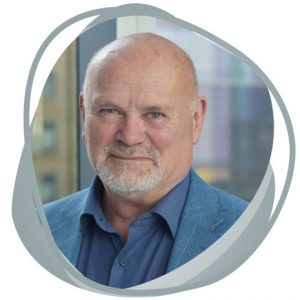
Cancer research changed my life: Gary’s story

Gary Davis talks about how a major research breakthrough years before he was diagnosed transformed his journey with cancer.

The survival rate for acute promyelocytic leukemia (APL) in the 1990s was about 10 per cent. By the 2010s it was about 90 per cent.

These numbers tell you why, when I was diagnosed with APL in 2017, I was told that I had won the lottery.

Right place. Right time. But it wasn’t luck that dramatically changed my prognosis. It was cancer research.

A few decades ago scientists in China began studying arsenic trioxide (ATO) as a treatment for APL. For 2,000 years arsenic was a commonly used ingredient in various medications in China. Modern studies trialled ATO, often in combination with chemotherapy or other treatments, and the results were extremely positive.

ATO was ultimately approved to treat APL by the FDA in the early 2000s and its increased use is a big reason for the dramatic shift in APL survival rates — from one of the deadliest forms of acute myeloid leukemia to the most treatable.

I am an example of that success. Eight years after my initial diagnosis I am now a healthy man with no APL residue. During my nine months of treatment, and as my blood counts started to improve, I read more about how ATO came to be developed for APL.

Out of that investigation I composed a letter to two of the researchers behind the ATO studies of the 1990s, describing to them my experience on the receiving end of their breakthroughs. I wanted them to know, beyond the numbers that they could see, what a difference they were making in the lives of people around the world.

I soon heard back from them and I swear there were smiles in their letter. They said that it indeed made a difference to see the real-world implications of their research.

Our shared experience — my health and their joy from hearing my story — is a testament to the power of cancer research.

That power also inspired me to want to contribute to blood cancer research. I took the opportunity to be a patient advisor in a project aimed at developing ways to encourage newly diagnosed blood cancer patients to donate extra bone marrow samples for research purposes.

The opportunity to help others through cancer research, just as others before helped me, has been an honour.


A Toronto native, Gary Davis now lives in Ottawa with his wife of many years. Following a career in community economic development he is now savouring retirement.

Promising drug discovery research gets funding boost from Ontario Institute for Cancer Research

The latest projects supported through OICR’s Cancer Therapeutics Innovation Pipeline (CTIP) program aim to develop new drugs against multiple forms of cancer.

April 3, 2025, ONTARIO – The Ontario Institute for Cancer Research (OICR) has announced its support for five Ontario research teams working to develop the next generation of medicines that kill tumours more effectively, cause fewer side effects and reduce the risk that cancer will come back.

The projects will be funded as part of OICR’s Cancer Therapeutics Innovation Pipeline (CTIP) awards, which provides research teams with up to $300,000 over two years to help advance promising drug discovery research so that new cancer drugs can more quickly and safely reach patients.

“Ontario has become a global leader in developing a new generation of cancer drugs, and OICR is proud to help made-in-Ontario innovations reach their full potential,” says Dr. Lincoln Stein, Acting Scientific Director of OICR. “These five projects are on the cutting edge of cancer drug discovery and are well-positioned to make a major difference in the lives of cancer patients.”

CTIP applications are reviewed by a committee of experts from academia and industry, who also provide scientific and strategic advice to the funded research teams.

The five new CTIP research teams span the province from Thunder Bay to Toronto. They are taking innovative approaches to treating cancer by harnessing new insights about cancer biology to help stop cancer from spreading, reduce unwanted side effects and overcome treatment resistance.

This year’s CTIP recipients include:

  • Dr. Jinqiang Hou (Lakehead University, Thunder Bay Regional Health Research Institute (TBRHRI)) and Dr. Guillem Dayer (TBRHRI) who will explore a potential treatment for cervical cancer, the world’s third most common cancer among women aged 20-39. By targeting a protein found only in cervical cancer cells, they will develop a drug to find and kill cancer cells, with limited damage to surrounding healthy tissue.

    “Our hybrid molecule, acting like a guided missile that targets only cancer cells, could provide a new tool to destroy cancer while minimizing side effects for the patient.” – Dr. Jinqiang Hou, Associate Professor (Chemistry), Lakehead University, Scientist, TBRHRI
  • Dr. Iacovos Michael (Sunnybrook Research Institute) and Dr. Masoud Vedadi (OICR) who will investigate ways to overcome cancer metastasis and resistance to treatment, the two main reasons patients ultimately die of cancer. With CTIP funding, they will build on recent discoveries about a protein that plays a key role in metastasis and resistance for multiple types of cancer, further study its role in cancer development, and explore ways to impede its function.

    “Understanding how this protein works will allow us to develop drugs that hinder its function, with the ultimate goal of improving the survival and quality of life of patients affected by cancer.” – Dr. Iacovos Michael, Scientist (Biological Sciences), Sunnybrook Research Institute
  • Dr. Valentina Evdokimova (OICR) and Dr. Laszlo Radvanyi (University of Toronto) who will harness the “dark matter” of the human genome to identify endogenous retroviruses (ERVs) which could be targeted to prevent cancer progression and immunosuppression. Their team’s goal is to develop a validated drug screening platform that can help unlock the potential of ERV targeting in cancer drug discovery and to use that platform for testing potential therapeutic candidates.

    “Though human endogenous retroelements were considered disabled and functionally inept for decades, we are now showing that they are highly expressed in cancerous cells and may hold exciting potential for therapeutics to stop the development of cancer or prevent it altogether.” – Dr. Valentina Evdokimova, Research Scientist, OICR
  • Dr. Anthony Rullo (McMaster University), Dr. David Uehling (OICR) and Dr. Methvin Isaac (OICR) who will test a potential breast cancer therapy that activates the body’s immune system to kill a tumour. Researchers have developed a chemical synthetic “covalent” antibody mimic that binds to immune cells on one side and tumour cells on the other side, acting as a “bridge” that allows the immune system to attack cancer, while causing fewer side effects than chemotherapy.

    “The results of our study will help advance a new class of synthetic immunotherapies with the potential to stop cancer, reduce relapse rates, and help Canadian breast cancer patients who lack other treatment options.” – Dr. Anthony Rullo, Associate Professor (Medicine), McMaster University.
  • Dr. Rima Al-awarDr. Richard Marcellus and Dr. Masoud Vedadi (OICR) who will explore chemical compounds to slow down the uncontrollable growth of cancer cells by inhibiting the function of a protein called KRAS. While the body often develops resistance to other KRAS inhibitors, Al-awar and colleagues will test a different kind of compound less likely to cause resistance, aiming to find the basis for new cancer treatments.

    “This approach could offer a new tool against multiple cancers to effectively overcome resistance and give patients a better chance of survival.” – Dr. Rima Al-awar, Senior Advisor (Drug Discovery), OICR.

These exciting studies join the growing portfolio of projects enabled by OICR’s Therapeutic Innovation Research Theme. OICR hosts one of the largest drug discovery programs of its kind in Canada and supports drug discovery projects at other institutions across the province.

“Ontario is proud to be globally recognized as a leader in cancer treatment, a disease where early intervention is critical,” said Nolan Quinn, Minister of Colleges, Universities, Research Excellence and Security. “Our government’s support of the Ontario Institute for Cancer Research and its Cancer Therapeutics Innovation Pipeline will ensure Ontario researchers continue to make ground-breaking discoveries so residents afflicted by cancer can receive the cutting-edge treatment they need to live longer, healthier lives.”  

CTIP is currently inviting applications for Early Validation, Early Accelerator and Late Accelerator projects.

* * *

OICR is funded by the Government of Ontario. As the province’s cancer research institute, we take on the biggest challenges in cancer research and deliver real-world solutions to find cancer earlier and treat it more effectively. We are committed to helping people living with cancer, as well as future generations, live longer and healthier lives. For more information visit http://www.oicr.on.ca.

The views expressed are those of OICR and do not necessarily reflect the views of the Province of Ontario.

Cancer research changed my life: Rakhi’s story

Rakhi Henderson explains how cancer research unlocked a life-changing treatment for her rare form of cancer.

It started with back pain. It was during the early days of the COVID-19 pandemic. I went to the doctor and wanted to make sure everything was okay.

I had some tests done, and it turned out I had stage 2 adenocarcinoma.

It was extremely shocking for me because I was a nonsmoker. I never thought I would be able to get lung cancer — and yet there I was.

But everything went well. I got my lower left lobe removed, and I was living life quite well. 

Then it came back in 2022, and it had metastasized into the pleura. I was given three to eight months to get my affairs in order. 

I decided right then and there I needed a second opinion.

That’s when they did a lot of testing on my tumour, and also blood biopsy testing and testing of the pleural fluid. They found out that I had a very rare form of cancer called ‘ROS-1 positive lung cancer’. This genetic mutation, ROS1, seems to affect predominantly women of Asian descent in their 40s to 50s. 

I was told that there was a treatment for it. It was a targeted therapy. 

Somebody had gone out and researched how to treat this genetic mutation that only affects like one-to-two per cent of all of adenocarcinoma patients. I was going to be able to take this drug and it would change my life.

And because of this drug, I have been able to live my best life.


Rakhi Henderson is an internal auditor and mother of two living the Greater Toronto Area. She was born in Kolkata, India, and spent her early years in Japan before moving to Canada with her family at the age of three. She studied English and History at the University of Toronto, and maintains a passion for politics and world history.

Cancer Research Changed My Life: Julie’s story

Dr. Julie Deleemans tells the story of how a personal experience with cancer inspired to pursue a fulfilling career in cancer research.
“You have cancer, and we will have to remove your voice box, or you will not live to see your 19th birthday.” 

When my oncologist first said these words I laughed, thinking it was all a big joke. Turns out, it wasn’t. 

I was diagnosed with Stage IV laryngeal cancer in 2006, at the age of 18. I had surgery to remove my voice box (larynx), thyroid, and surrounding lymph nodes, followed by chemoradiation. 

The treatments worked, but the aftermath was devastating. I was left to live with a permanent disability: a tracheotomy and only able to speak with a soft whisper for a voice. 

Physically, I recovered well, but my mental health suffered greatly, and I developed severe depression and post-traumatic stress disorder (PTSD). 

For several years I suffered, not knowing where I fit in this world or what I was supposed to do with my second chance at life. You see, that’s the thing about cancer people don’t tell you; you don’t just get to go back to who you were. It takes a part of you. Maybe it’s your voice, or fertility, or a limb, or your life. Either way, you don’t come through the other side the same. 

There was little psychosocial support available at the time, and eventually I realized no one was coming to save me from my life. I had to make a choice: I could leverage my experience to create change, or I could be the victim of my story and wallow. 

The words of psychologist Dr. Carl Jung became my mantra: “I am not what happened to me. I am what I choose to become”. I realized that despite the hardships life dealt me, I still have the opportunity to decide how I choose to respond. That led me to a career in cancer research focused on psychosocial supportive care for people with cancer.

Our research focuses on using integrative medicine modalities, such as yoga, mindfulness, probiotics, and other therapies to support people affected by cancer. Through my research and patient advocacy work, I’m passionate about helping others with cancer to not only survive, but thrive! 

Cancer research changed my life by giving my experience purpose and allowing me to help others affected by this disease. The huge advancements in cancer therapies, like immunotherapy, have also been a blessing for my younger sister, who is currently navigating her own cancer experience. With the advancements from cancer research, we have been able to access precision oncology solutions to address her tough-to-treat neuroendocrine tumour, and I’m hopeful we will soon find the solution to cure her cancer once and for all. 

I think that’s one of the most important gifts cancer research gives us: HOPE! We know that when patients lose hope, their outcomes are poor. With these continuous advancements in precision oncology, we have hope that the right solution is out there — that a brighter future exists.


Dr. Julie Deleemans is a Canadian Institutes for Health Research (CIHR) funded Postdoctoral Fellow at the University of Calgary in the Department of Oncology, and a 19-year survivor of stage IV laryngeal cancer. She is an experienced patient advocate and lead researcher on the Chemo-Gut Probiotic Trial (www.chemogut.ca). Through her research and advocacy, she’s passionate about helping others affected by cancer.

Let’s Talk About Clinical Trials: A patient’s perspective

The third installment of our series explores clinical trials from the perspective of a cancer patient.

Over the course of the first two installments of Let’s Talk About Clinical Trials, we’ve taken a closer look at why clinical trials are important, and how the safety of trial participants is protected.

For our third installment, we turn our focus to the people who make cancer clinical trials possible: the patients who participate in trials.

Martina Wood has a unique lens on clinical trials, drawing from her experience as a breast cancer survivor, the wife of a cancer patient, and a longtime patient representative for the Canadian Cancer Trials Group.

How were you first introduced to clinical trials?

My husband was diagnosed with cancer back in 2011. At the time, we didn’t really understand the breadth and scope of trials, and it seemed like something only for ‘lost cause’ patients. Ultimately, we decided not to participate. Two years later, I was also diagnosed with cancer. I was offered a clinical trial but felt it wasn’t right for me.

Are there misconceptions about clinical trials you’d like to clear up?

I think a lot of people shared my incorrect assumption that clinical trials are only a last resort. If a friend or relative tells you they’re in a clinical trial, you might think they’re on their last legs.

But from my own cancer experience and my time as a patient partner in research, I’ve learned that clinical trials are offered for all stages of cancer. They study all sorts of different things, including how to save or prolong a patient’s life, as well as how to make their quality of life the best it can be.

Why should cancer patients ask their doctors about clinical trials?

They should ask about clinical trials because trials may offer new meds or treatments that have the potential to cure patients or, for patients with advanced cancer, give a new lease on life. People can and do live longer thanks to being part of a trial. For stage 4 patients who have exhausted standard treatments, a clinical trial may help them stay alive for just long enough that a new potentially life-saving trial could extend their life yet again.

What else would you like people to know about clinical trials?

The research done through clinical trials in recent decades has helped make huge advancements in treatments that have prolonged the lives and improved the quality of life of so many people in our society.

But sadly research is often delayed because clinical trials can take a long time to get enough patients as participants, which translates to longer time to get results, and this delays getting potential advancements to patients. So I believe that patients should stand up and be counted. Consider joining a clinical trial if you have the opportunity, both to further scientific knowledge and potentially to help your own outcomes.


Cancer patients and their families can find more information about clinical trials from the Canadian Cancer Clinical Trials Network (3CTN) at
https://3ctn.ca/for-patients/

Cancer Research Changed My Life: Beth’s story

Beth Ciavaglia talks about how a clinical trial changed the course of her cancer treatment.

I’m a six-year breast cancer survivor, and research changed my life because it allowed me to not have to endure ongoing treatments that brought a lot of negative side effects.

After I was done active treatment — which involved chemotherapy, radiation and surgery —there’s another intervention that’s the standard of care for breast cancer patients. 

It’s an infusion to help decrease the chance of your breast cancer coming back as metastatic. You get it seven times over three-and-a-half years.

With it comes some short-term side effects, and then possibly more serious long-term side effects like death of your jaw bone or spontaneous fractures elsewhere in your body.

But luckily for me, my oncologist was running a study where they were looking at whether those seven treatments were really necessary. Could we get away with less and still have the same outcome?

The idea of avoiding a lot of these side effects and having to go to the cancer center less often was very, very appealing to me. So I jumped in and agreed to participate in the study.

The one treatment that I did have was very unpleasant. So right off the top, I was thankful to be participating.

And I think the best news around it was the study has just completed and has shown that the one-time intervention is as effective as the seven-time intervention.

I am also happy to report that I remain cancer free, and I’m very thankful to the research that helps me to be so today.


Beth Ciavaglia is a physiotherapist turned not-for-profit Executive Director. Her experience at the front line as a healthcare worker, and then as a patient gives her a unique perspective that made her shift her own personal paradigm on what quality of life really means.

Cancer Research Changed My Life: Carol’s story

Carol Gordon explains how cancer research gave her a second chance.

I went from “healthy” to “terminal” in the blink of an eye.

In 2013, after years of clean physical exams, my doctors detected a gynaecological tumour the size of a golf ball. Turns out cancer had been growing, hidden inside my Bartholin gland, for as long as five years.

Though I felt great and had no symptoms, I was told I wouldn’t survive.

Surgery wasn’t an option for me. The tumour was too big and there was too much risk to the surrounding tissue. Instead, I was given a combination of chemotherapy and radiation. 

While I was hopeful, my expectations were low. My treatment was only supposed to shrink the tumour, not kill it.

But cancer research changed that. 

The same week I was due to start radiation, my hospital acquired a new, precision radiotherapy machine. The device harnessed the latest research innovations to deliver high doses of radiation to the precise location of a tumour. 

I ended up being one of the first patients to be treated with the device. Now, 11 years later, I have no signs of cancer, much to the surprise of my doctors.

While I still experience side effects from my treatment, innovations in cancer research gave me a second chance. And I’m using that opportunity to give back.

I volunteer as a patient partner in cancer research in the hopes that my daughter doesn’t have to go through what I went through.


Carol Gordon is an accountant (CPA) and financial analyst (CFA) and was recently Managing Director, Audit Services at Ontario Teachers’ Pension Plan. She is a member of OICR’s Patient and Family Advisory Council, works with the Canadian Cancer Trials Group, and has a network of friends and family members who are patients or survivors.

Cancer Research Changed My Life: Ambuj’s story

Ambuj Srivastava talks about the difference cancer research made for his family.

Cancer research has changed my life because it gave me an extra year with my father, who was diagnosed with a rare cancer called bile duct cancer.

We advocated for him to participate in a clinical trial, and because of that trial, we were very fortunate to have him with us for an extra year beyond his original prognosis. 

That extra year gave my daughter the opportunity to spend time with her grandfather. She learned many things from him during that time, which she fondly recalls now.

It had a significant impact on my mother as well, for whom my father was a caregiver. It gave him the time to spend with his wife and help her prepare for the eventual journey that she would have to lead after he passed away. It gave them a lot of personal time together, which allowed both to be able to come to terms with what was eventually going to happen.

It also had a tremendous positive impact on myself. Going through the journey with him during that extra year and being able to listen to his stories, his wisdom and his life experiences made me realize the traditions and values that we still have in our family. I was very fortunate to be able to live those traditions with him through that year, all of which now I’m able to continue in my own family.

It was also beneficial for his own acceptance of what was going to happen. It gave him the opportunity to spend time and reconnect and reminisce with his relatives back in India, his friends from his university days, and gave them the opportunity to seek closure.

After his passing, that extra year of spending time with all of us helped us with our emotional healing, knowing that we missed someone with whom we had pleasant memories and not painful memories.


Ambuj Srivastava has a background in Engineering and  IT and also serves as a Research Advocate and Mentor with the Cholangiocarcinoma Foundation. As a former caregiver to his father with a rare form of cancer, Cholangiocarcinoma, he understands the challenges for patients and families who endure this difficult journey. Ambuj is passionate about cancer research, patient advocacy and raising awareness by bridging the knowledge gap between patients, caregivers, and healthcare professionals.

Cancer Research Changed My Life: David’s story

Dr. David Uehling shares the personal impact of his successful work in cancer research, as part of OICR’s ‘Cancer Research Changed My Life’ campaign.

Cancer research changed my life because I was lucky enough to be a part of a team that discovered a drug that impacted cancer patients.

I remember being thrilled one day when I was talking with a former colleague. She was telling me that the drug we worked on together was “melting” the tumours of patients.

Not only that, but she told me a story that was even more heartwarming.

This drug was being tested in Australia, where there was this surfer who got metastatic melanoma – a dreadful disease. They had to give up surfing and essentially were on their deathbed.

Then, they received the drug and were able to recover and go back to surfing.

When you hear a story like that, knowing how hard it was to discover the drug, and then to see ultimately the impact – not just in an abstract way, but on a real patient. It was just the thrill of a lifetime, and one that I don’t know how you can replicate in any other way.

Seeing this drug and how it changed this one person’s life was good enough in itself. But it’s also continuing to be used by patients worldwide.

I can get out of bed in the morning every day and know the drug is helping a patient. It just makes me feel like the research I’ve been involved with was all worthwhile. It has changed my life because I know that it’s changing so many other people’s lives.


Dr. David Uehling is a scientist and Interim Scientific Lead of Therapeutic Innovation and Drug Discovery at the Ontario Institute for Cancer Research. The focus of his research is the design and synthesis of small molecules for cancer drug discovery.

Cancer Research Changed My Life: Michelle’s story

Michelle Audoin talks about the impact cancer research has had on her life, as part of OICR’s ‘Cancer Research Changed My Life’ campaign.

It’s easy to feel powerless when you’re diagnosed with stage 4 metastatic breast cancer.

My diagnosis in 2017 was especially complex. My breast cancer had already spread by the time it was detected, and doctors also found a second primary cancer in my thyroid.

As a result, my treatment options were limited and my family’s future was unclear.

I was devastated, angry and frustrated, but I was also determined to stand up and take control of my future as much as possible.

And cancer research helped give me that power.

I started attending research conferences, spoke to scientists, and got a better understanding of the science behind cancer research and treatments. Over the years, I have also participated in research studies that continue to shape my knowledge and perspective.

An OICR-supported clinical trial that explored using genome sequencing to guide cancer treatment gave me insights about my cancer’s unique biology, and the treatments that might work best against it. Another study, focusing on quality of life, helped solidify my personal priorities around my treatment preferences.

Living with metastatic breast cancer means that I live with a disease that currently has no cure. I am on treatment for life, with the goal of slowing or stopping the progression of the disease, while minimizing life-limiting side effects.

Informed by my experiences with research, I recognize that my personal priority is to access oral treatments that I can take at home, rather than as an IV infusion at the hospital. I was able to communicate that priority to my healthcare team and ultimately maintain my quality of life and engage fully as a mom.

While cancer research has certainly changed my life, it also motivates me to want to help others. That’s why I raised my hand to become a patient partner in cancer research.

Through patient partnership, I’ve been able to shape research studies to make sure they address the priorities of cancer patients and advocate for improvements. This is especially meaningful as a Black woman, because people like me have too often been marginalized and underrepresented in cancer research.

My involvement in cancer research has also connected me with an inspiring community of scientists, advocates and diverse individuals affected by a cancer diagnosis. Working with them and learning from them gives me a window into what’s possible in the future.

Innovative blood tests called ‘liquid biopsies’ may soon spare people like me from the endless scans, and catch disease progression before symptoms affect my quality of life. And the rapid advancement of targeted therapies could mean even better treatment options are on the horizon.

This knowledge changes the way I look at my own experience with cancer. It also gives me hope that research, treatments and survivorship will continue to improve as my kids get older.


Michelle Audoin lives with Stage 4 breast cancer and advocates for the unmet needs of undersupported communities in the cancer care space, with a focus on health equity and the patient voice. She is involved in many cancer organizations and awareness campaigns, and loves to speak to healthcare agencies and on panels about her own experiences navigating cancer as a Black woman. Michelle comes from an education background and is a mom.