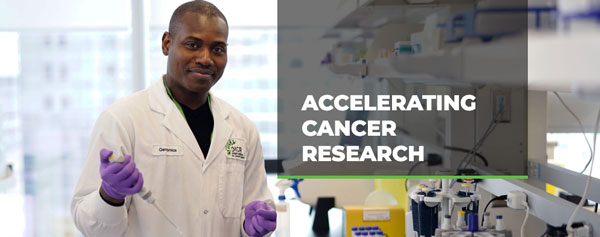
Translating cancer research means bringing the best research discoveries to patients, and it’s at the heart of the work we do. OICR collaborates with researchers across Ontario and around the world to ensure Ontario’s most significant cancer research discoveries have maximum impact for patients and the province’s economy. This report highlights a selection of OICR’s many translational research successes over the last year, including:
An unprecedented investigation into the dark matter of the human cancer genome, which discovered the causes of two thirds of cancers that were previously unexplained;
A study that’s bringing next generation genomic sequencing to five Ontario cancer centres, helping match patients to targeted therapies and accelerating cancer research;
Developing new software technologies to help bring portable nanopore sequencing into cancer research and care;
A pan-Canadian initiative changing the landscape of lung cancer radiotherapy clinical trials and providing more treatment options to patients;
The scientific and business excellence of Fusion Pharma Inc., which is developing innovative medical isotopes for treating cancer with reduced side effects.
We hope you enjoy learning more about OICR’s many achievements over the past year and we welcome your feedback at info@oicr.on.ca.
Hamilton study discovers new approach to target cells at the root of leukemia
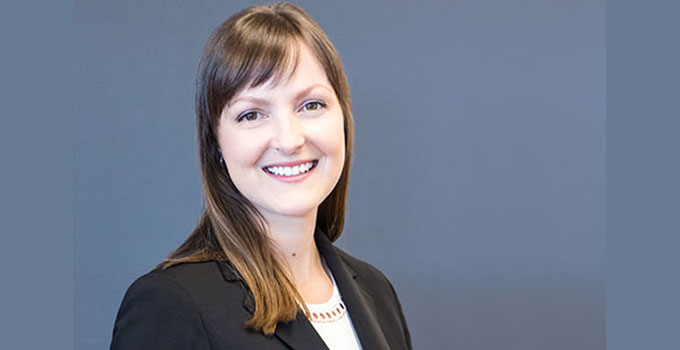
Dr. Kristin Hope, Principal Investigator at McMaster University’s Stem Cell and Cancer Research Institute and OICR Investigator.
McMaster
University researcher and OICR Investigator, Dr. Kristin Hope, turns her stem
cell discovery into a new treatment approach for leukemia.
A few years ago, Dr. Kristin Hope and her
research team discovered a new
way to grow rare life-saving blood stem cells.
Now, the Hope Lab is using this discovery to suppress leukemic stem cells – the
cells at the “root” of leukemia.
In their most recent study, published earlier
this month in Cancer Research,
the Hope Lab discovered that the same molecular pathway they found previously could
be turned off to grow healthy stem cells could be turned on to impair the
development of cancer stem cells.
The study suggests that this pathway, called
the aryl hydrocarbon receptor (AHR) signaling pathway, could be leveraged as a
potential therapeutic approach for acute myeloid leukemia – one of the most
common subtypes of leukemia.
“We saw a loss of leukemic stem cells by
activating – or turning on – the AHR pathway,” Hope says. “This brings us a
step closer to a potential new therapy for patients with leukemia.”
The study group used a small molecule to
activate the AHR pathway, finding that it had a significant effect in
eliminating leukemic stem cells, but no effect on healthy cells. The group
found similar results in cell cultures as well as in mice that were transplanted
with human leukemia cells.
Hope, who is a Principal Investigator at
McMaster University’s Stem Cell and Cancer Research Institute, will continue investigating
this small molecule as a potential drug that could complement chemotherapies in
the future.
“We will continue building on our understanding
of the AHR pathway and how to control it,” she says. “This understanding will
help us in the development of new therapies so that our discoveries can one day
help patients.”
When the tools you need don’t exist, create them
Dr. Ina Anreiter joins OICR as a Schmidt Fellow, bringing
her background in behavioural genetics to bioinformatics
While writing her doctoral thesis, Dr. Ina Anreiter
realized that there was a missing piece to her research. What she didn’t
realize was that this missing piece would lead her into a prestigious postdoctoral
fellowship in an entirely new scientific discipline. For decades, scientists
have known that RNA – often referred to as DNA’s cousin – undergoes chemical
modifications before running its course. These modifications, like RNA
methylation, have an important
effect in cancer cells, but without the tools to
study RNA modifications, progress in this field had stalled for many years.
Recently, the study of these modifications – also
known as the field of “epitranscriptomics” – has garnered
new attention as the research community
develops new methods to study RNA. These methods, Anreiter says, still rely on
common chemistry lab techniques and cumbersome procedures that make studying RNA
methylation difficult, especially in application to diseases like cancer.
“I found myself in need of a tool,” says
Anreiter. “I needed a way to easily analyze RNA methylation across large
datasets and found that nothing existed – well, nothing existed yet.”
From
fruit flies to machine learning
Anreiter’s doctoral research focused on the
behaviour of fruit flies, specifically how inherited characteristics and
environmental factors influence their feeding patterns. While searching for a
way to study RNA methylation, her background led her to a unique idea.
Anreiter knew of nanopore sequencing – a
relatively new type of sequencing technology that could decode DNA and RNA as
it passes through a tiny channel. By directly reading a strand of RNA, Anreiter
says, nanopore sequencing has the potential to revolutionize how we study RNA
modifications. To this day, however, there are no algorithms or tools that can
accurately find RNA methylation patterns in the output data of a nanopore
sequencer.
Anreiter had also heard of Dr. Jared Simpson’s
breakthrough methods for detecting DNA methylation using nanopore sequencing.
His computational methods allowed the nanopore community to sequence the entire
– highly-methylated – human genome in 2017, and since, he has been working in
part to study RNA modifications, like RNA methylation, using nanopore sequencing.
Anreiter pitched her idea to Simpson.
“RNA methylation occurs in normal fruit flies,
but not in a certain type of mutant fly,” says Anreiter. “I had a crazy idea
that we could sequence both of these types, and use the datasets to develop a
machine learning algorithm that could find RNA methylation on its own.”
The potential of her idea would win her the
prestigious Schmidt
Science Fellowship and a $100,000 USD stipend to
work with Simpson for a year.
From
machine learning to cancer patients
Anreiter recently began her year-long postdoctoral fellowship in the Simpson Lab at OICR where she is working alongside a team of computational biologists to turn her idea into an algorithm. She is cross-appointed with the University of Toronto’s Department of Computer Science.
“At this point, we’re working on a preliminary
dataset, but I’ve already learned so much. The team has been very welcoming and
supportive and we’re working together to make better tools to understand
diseases.”
The Schmidt Fellowship, which was co-founded by
the former CEO of Google, is awarded to exceptional, early-career researchers
making a “pivot” in their work. Anreiter
saw the fellowship as an opportunity to immerse herself in a completely new field.
“If we can develop this tool, it would allow us
to study human diseases in a new way,” Anreiter says. “When we look at a
problem in a new way, we don’t know what solutions we’ll find, but this angle
could lead us to new cures.”
OICR welcomes new investigator, Dr. Parisa Shooshtari
Dr. Parisa Shooshtari, OICR Investigator and Assistant Professor in the Schulich School of Medicine and Dentistry at Western University.
OICR is proud to welcome Dr. Parisa Shooshtari as an OICR Investigator.
Shooshtari specializes in developing computational, statistical and machine learning methods to understand the biological mechanisms underlying complex diseases, like cancer and autoimmune conditions. She is interested in uncovering how genes are dysregulated in complex diseases by integrating multiple data types and applying machine learning methods to analyze single-sell sequencing data.
Of her many achievements, Shooshtari developed a computational pipeline to uniformly process more than 800 epigenomic data samples from different international consortia. She then built and led a team that developed a web-interface and an interactive genome-browser to make the database publicly available to download and explore.
Shooshtari joins the OICR community with research experience from Yale University and the Broad Institute of MIT and Harvard. She also served as a Research Associate with the Centre for Computational Medicine at the Hospital for Sick Children (SickKids).
Shooshtari recently became an Assistant Professor in the Schulich School of Medicine and Dentistry at Western University, where she officially began her career as an independent researcher. Here, Shooshtari discusses her commitment to collaboration and her transition to professorship.
Your work spans multiple disease areas from autoimmune diseases to cancer, what do these diseases have in common? Is there a specific disease that you’re more interested in?
My work focuses on complex diseases, where instead of one gene causing the disease, there are sometimes tens or hundreds of genes working together to give rise to an ailment.
When it comes to complex diseases, we also know that there are multiple factors that we need to consider, including genetics, epigenetics and environmental factors. We live in an era where we have rich datasets with many different types of data. Each of these data types sheds light upon a different aspect of the disease mechanism, but we need to integrate these data types to gain a comprehensive understanding of how a complex disease works.
I develop computational methods for integrative analysis, so complex diseases are definitely the most interesting to me. I feel lucky to be a researcher at this time when I can help bring these data types together to understand mechanisms of diseases, which in turn will help inform treatment selection or help find new therapeutic strategies.
I am interested in applying our data integration methods to several complex diseases but I am currently working with a few Canadian groups to help better understand Diffuse Intrinsic Pontine Glioma (DIPG) – a type of fatal childhood brain cancer.
Your current collaborators include researchers from Yale, Harvard, MIT, SickKids and other leading organizations. How did you initiate and sustain these collaborations?
At the beginning of my research career, I would reach out to scientists who were working on interesting, challenging and cutting-edge problems. I enjoy working in collaborative environments because I believe the key to success in biomedical research is through collaborations between researchers from diverse backgrounds.
With the support of my collaborators, I’ve been able to learn and shift my focus from theoretical computational sciences to applications of data science in genetics of complex diseases. Now, sometimes collaborators approach me with their rich data, which I’m eager to help analyze.
With your new appointment, what are you looking forward to over the next few years?
I am eager to continue expanding my research program and working with new scientists on exciting cutting-edge problems in genetics and epigenetics of complex diseases. New technologies have revolutionized how we study diseases, and we are transitioning to a point where these new technologies are revolutionizing how we treat diseases. I am confident that we will have better ways of treating these diseases in the future using personalized medicine, and I want to help make that a reality.
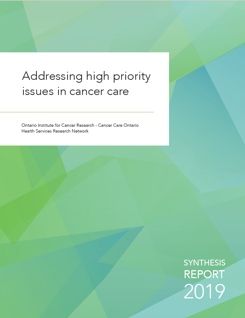
OICR and Cancer Care Ontario’s Health Services Research Network releases the 2019 Synthesis Report, summarizing 14 studies that address high priority issues in cancer care
An excerpt from the foreword by Drs. Christine Williams and Eva Grunfeld:
Optimal cancer care across Ontario cannot be solely provided by a clinician or implemented by a researcher, enacted by a policy maker or attained by a patient. To improve the delivery of cancer services, we need to work together with stakeholders from across our rich cancer care ecosystem and involve them in prioritizing concerns, designing interventions and implementing solutions. For these reasons, OICR and Cancer Care Ontario (CCO) teamed up to co-create the OICR-CCO Health Services Research Network (HSRN).
Now, a decade later, we present our second Synthesis Report with an additional 14 studies that have emerged from this network. These studies have addressed high priority issues in cancer care including the gap in follow up after a positive colorectal cancer screening test, and the challenges that cancer patients face with co-existing chronic conditions like diabetes. The studies have led to the development of new methods to determine the burden of cancer in Ontario, and new resources to facilitate health services research across the province. This report provides summaries of these studies and others and their impact to date.
How do cancer patients help future cancer patients? This is Ron’s story
The Canadian Cancer
Clinical Trials Network launches new pilot project at Windsor Regional Hospital
to help patients understand their treatment options and access current clinical
studies
In early 2012, Ron Truant, the former Board Chair of Windsor Regional Hospital (WRH), became a patient when he was diagnosed with pancreatic cancer.
Facing a disease with a
dismal prognosis, Ron and his wife, Noella Truant, made an appointment for a
second opinion at a hospital outside of Windsor. It was there that the Truants
learned about an open clinical trial and secured the study’s last available
spot.
Noella says not
everyone is as fortunate as they were.
“We were lucky to gain
access to an immunotherapy trial, which – in combination with a new
chemotherapy treatment – gave us another four years together,” says Noella. “Throughout
his own treatment, Ron was always thinking about others and realized there were
many others who weren’t as fortunate as we were to find a trial. He knew that
trials are complex and not everyone can navigate them, so he saw an opportunity
to help.”
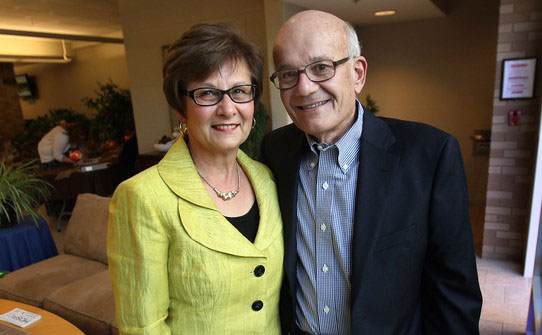
Noella and Ron Truant
Last year, only eight per
cent of cancer patients in Ontario were recruited to clinical trials and in
community hospitals, like WRH, that number drops to fewer than two per cent. These
statistics, Noella says, indicate that patients are missing opportunities to
gain access to new treatment options and contribute to clinical research.
Currently, each cancer
centre in Ontario has a clinical research team that recruits patients for
available trials at their respective sites but patients, like Ron, often want
to explore all treatment options, including those at other nearby hospitals.
These patients and their care givers are frequently left to research trials on
their own through websites that may not contain current information or online
trial databases that may be difficult to navigate. Even if a patient finds an
available trial, understanding eligibility criteria requires specialized
knowledge and advanced medical literacy.
Ron, a long-standing advocate for the quality
of patient care, teamed up with Dr. Caroline Hamm, an oncologist at the WRH, to
develop a better way for patients to navigate clinical trials.
“We want to make sure patients are offered the
best treatments available for their individual needs, and that requires more
than a database of trials,” says Hamm, who is also the Director of the Windsor
Cancer Research Group. “There are many considerations that a patient weighs
when deciding to participate in a trial and we need a more considerate approach
to help patients with these decisions.”
With support from the Canadian Cancer Clinical
Trials Network (3CTN), Hamm and the Truants
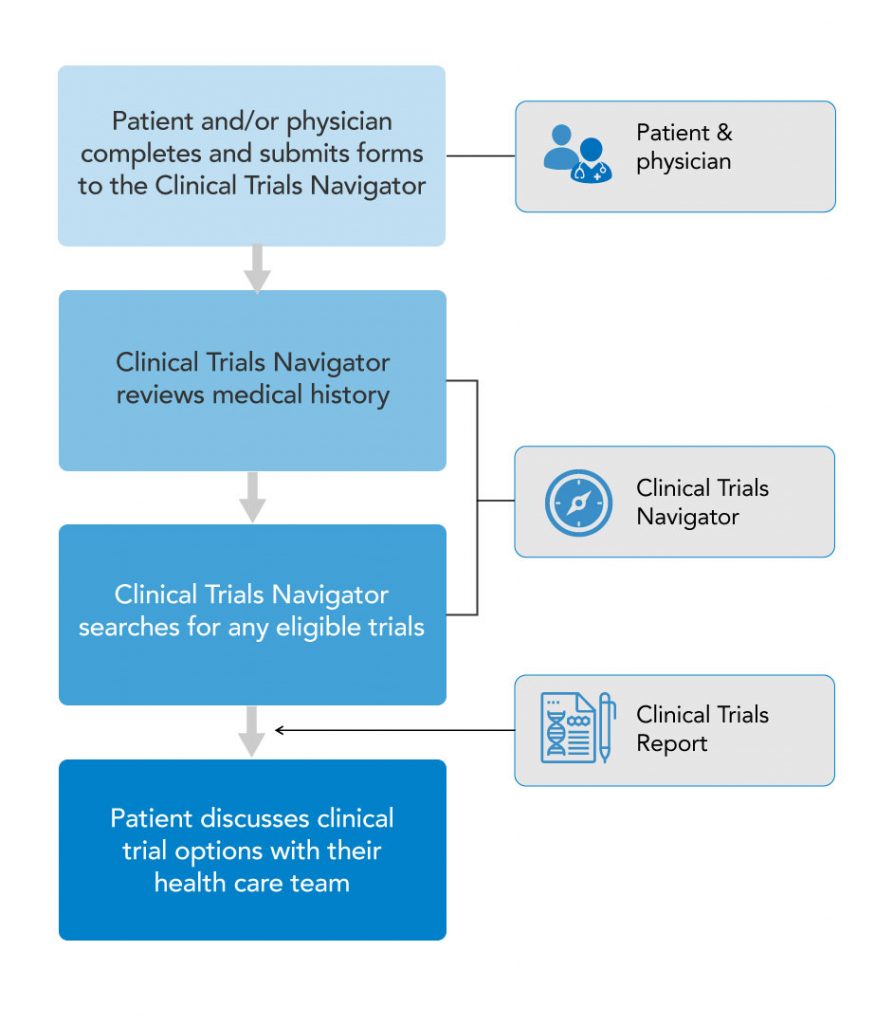
designed a program where a designated clinical trials specialist – a Clinical
Trials Navigator – would help patients find and understand the trials available.
A patient could refer themselves to the navigator or they could be referred to
the navigator by their oncologist. After reviewing the patient’s case and
considering their preferences, the navigator could then identify available
trials for which the patient is likely eligible, and help facilitate the
connection between a patient and the study team.
Hamm, in Ron Truant’s legacy, launched the Clinical Trials Navigator pilot project at WRH in January and so far the project has since helped more than 40 patients explore trial options.
The process by which the Clinical Trials Navigator project helps patients find clinical trials that may be of benefit.
Youshaa
El-Abed, the project’s navigator, sees the impact of this
initiative on patients and their care givers first-hand.
“When
a patient comes to us, they’re looking for a trial,” says El-Abed. “But even if
there are no trials available for them, the patient – and their loved ones –
gain reassurance that they have explored their options.”
Due to growing demand for clinical trial
navigation services at other hospitals, the project is now open to receive
patient referrals from across Ontario.
Hamm, who has been recognized
for her patient advocacy in Windsor, hopes to expand this
initiative to new sites as she has in the past for a cancer drug access
coordinator program. In addition to helping current patients with cancer, Hamm
sees the Clinical Trials Navigator project as a way to accelerate clinical
research so patients can benefit from research sooner.
“If we can help patients access trials,
we can help trials reach their accrual targets sooner – a win-win for patients
and for local clinical research,” says Hamm. “A health system with accelerated
clinical research allows us to attract more study sponsors, bringing leading
edge treatment options to our hospitals. Ron envisioned this solution and we’re
proud it’s in action today.”
Dr. Rola Saleeb on her path to becoming a pathologist
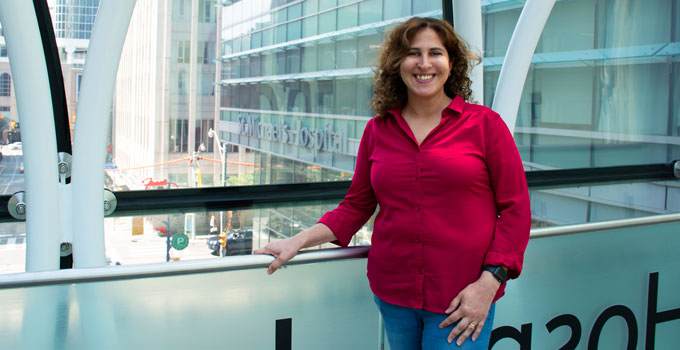
Dr. Rola Saleeb, Assistant Professor, Department of Laboratory Medicine and Pathobiology, University of Toronto.
OMPRN grantee and former Transformative Pathology Fellow discusses her recently-awarded faculty appointment with the University of Toronto
Despite
research advances in identifying the subtypes of kidney cancer, treatment decisions
are often based on the size of a patient’s tumour. Dr. Rola Saleeb, who has
been studying kidney cancer for nearly a decade, thinks there’s a better way to
make these decisions.
“Each month, more than
500 people are diagnosed with kidney cancer in Canada,” says Saleeb. “These
individuals and their oncologists face tough decisions to make about their
treatment options and I want to help make that decision easier.”
Saleeb, a former OICR
Transformative Pathology Fellow and two-time Ontario Molecular Pathology
Network (OMPRN) grantee, has recently become a certified pathologist and
faculty member in the Department of Laboratory Medicine and Pathobiology at the
University of Toronto.
Throughout her doctoral
research, Saleeb developed a classification system that could help pathologists distinguish between
aggressive kidney cancers and less aggressive cancers. She says this system
could, one day, help spare patients from unnecessary surgery if they don’t have
aggressive tumours. Additionally, she says classifying these tumours could
enable the development of new therapies for these subtypes.
Now as a certified
pathologist, Saleeb is the second Transformative Pathology Fellow to have been
recruited to a faculty position. Both former fellows have committed to a career
where research and development is central to their practice of pathology.
“Not all pathologists
do research,” says Saleeb. “But for me, I feel like I can help more patients if
I can help find solutions to unsolved problems.”
Saleeb is currently
completing a validation study on her classification system. She looks forward
to implementing the system at St. Michael’s Hospital and broadening her
research to study the molecular origins of kidney cancers and new kidney cancer
prevention strategies.
Canadian Government-Sponsored Collaboration Targets Standardized Cancer Testing
Genome Canada, Ontario Institute for Cancer Research
and Thermo Fisher Scientific to focus on pancreatic, prostate and breast cancer
CARLSBAD, Calif. –
(July 30, 2019) – Genome
Canada, the Ontario Institute for Cancer Research (OICR) and Thermo Fisher
Scientific are collaborating to develop a complete solution of targeted next
generation sequencing (NGS) assays and analysis software designed to more effectively
assess – and eventually improve management of – pancreatic, prostate and breast
cancer.
The $6
million, three-year initiative aims to standardize advanced molecular profiling
in these disease areas and make the assays commercially available globally. Focusing
on rapid genomic diagnostics in pancreatic cancer and targeting treatment in
breast and prostate cancers, the partnership builds on previous clinical
research between OICR and Thermo Fisher and will inform development of three assays
that will be utilized to stratify patients in clinical trials in Ontario and
other jurisdictions.
“By
supporting research and clinical trials, Genome Canada is helping to put more
of Ontario’s innovative cancer diagnostics research into clinical use,” said Dr.
John Bartlett, program director, diagnostic development at OICR. “This project
has the potential to springboard advanced next-generation sequencing to routine
clinical use in Ontario and across Canada.”
Breast and
prostate cancer are among the most common types of cancer in Canada, and the
country’s five-year net survival rate for pancreatic cancer is only 8 percent.
However, there is clear evidence that patient outcomes can be improved with
NGS-based testing strategies. A recent U.S. health economics study has shown
that advanced cancer patients who received treatment based on NGS testing results
experienced double the length of progression-free survival without increasing
health care costs.1
While some solutions
analyze only DNA sequences, the new targeted NGS assays will provide
comprehensive genomic profiles by simultaneously assessing DNA and expression
signatures from RNA to provide significantly more insight into driver
mutations. The OICR/Thermo Fisher team will leverage this advantage by
supplementing the new assays with unique DNA/RNA stratification biomarkers –
specific to pancreatic, prostate and breast cancer – previously qualified by
OICR translational researchers.
The
collaboration is partly funded with a grant from Genome Canada through the
Genomic Applications Partnership Program (GAPP). Genome Canada will contribute
$2 million, the highest possible level of funding support, with the balance
split between OICR and Thermo Fisher, which will cover development costs and
validation activities.
Previous
research collaborations led by OICR and Thermo Fisher are already well on their
way to impacting cancer treatment in the future. Of particular note is a 2016
study designed to identify mutations and copy number variation changes in
breast cancer, and clinical research utilizing the Oncomine Comprehensive Assay,
which also supports both the National Cancer Institute’s Adult and Pediatric
MATCH trials in the United States.
“OICR is a
leader in clinical research, with extensive clinical trials in progress to
improve care for patients with pancreatic, prostate and breast cancer,” said Jeff
Smith, global lead of NGS precision medicine initiatives, clinical NGS and oncology
for Thermo Fisher Scientific. “When OICR approached our team with the idea for
this project, we saw it as another exciting for opportunity to bring Thermo
Fisher’s proven Ion Torrent technology to clinical laboratories across Canada
and to contribute to future improvement of patient care.”
1
“A Retrospective Analysis of Precision Medicine Outcomes in Patients
With Advanced Cancer Reveals Improved Progression- Free Survival Without
Increased Health Care Costs,” Journal of Oncology Practice, Vol 13, Issue 2,
February 2017
OICR funding for Ontario drug discovery projects will accelerate development of new cancer therapies
The
Ontario Institute for Cancer Research (OICR) has selected two new Late
Accelerator projects to receive support through its Cancer Therapeutics
Innovation Pipeline (CTIP) initiative. The projects, detailed below, will each
receive up to $250,000 per year, for up to two years, to advance the
development of drug candidate molecules. The projects were selected by an
international expert review panel from 18 applications.
By
joining the CTIP portfolio, these projects will receive more than just
financial support – they will also benefit from the guidance of the
Therapeutics Pipeline Advisory Committee, a group of industry and academic
experts that provides advice on the scientific and strategic direction of CTIP
projects.
“CTIP projects have great potential to improve treatment for patients, promote scientific collaboration and drive investment to Ontario’s biomedical research sector,” says Dr. Christine Williams, OICR’s Deputy Director and Head of Therapeutic Innovation. “These new projects are great examples of the innovative cancer therapeutics research happening in our province. We are excited to add them to CTIP’s portfolio of promising drug candidates and look forward to their progress.”
Funded projects
Identification of kinase inhibitors to block the
tumour-promoting activity of YAP/TAZ for cancer therapeutics
Liliana Attisano, Principal Investigator, University of Toronto
Rima Al-awar, Principal Investigator, OICR
Frank Sicheri, Co-investigator, Lunenfeld-Tanenbaum Research Institute
Jeff Wrana, Co-investigator, Lunenfeld-Tanenbaum Research Institute
David Uehling, Co-investigator, OICR
Richard Marcellus, Co-investigator, OICR
Methvin Isaac, Co-investigator, OICR
The highly conserved Hippo pathway is a key
regulator of cell and tissue growth. Virtually all solid tumours display
pathway disruptions, which drive cancer initiation and progression. Mutations
in pathway components are rare, making it unclear how to target the pathway for
cancer treatment. This research group has shown that certain kinases are key
regulators of the pathway that promotes tumorigenicity and observed that
diverse human cancers display elevated levels of these kinases. Kinases are
highly amenable to the development of targeted inhibitors; therefore, this
project will identify potent and specific inhibitors with the long-term goal of
establishing novel cancer therapeutics.
Development of kinase inhibitors for ovarian cancer: A novel first
in-class immune-oncology therapeutic agent targeting tumor intrinsic stress
states
Rob Rottapel, Principal Investigator, Princess Margaret Cancer Centre
Tracy McGaha, Principal Investigator, Princess Margaret Cancer Centre
Rima Al-awar, Principal Investigator, OICR
Methvin Isaac, Co-investigator, OICR
David Uehling, Co-investigator, OICR
Richard Marcellus, Co-investigator, OICR
Ahmed Aman, Co-investigator, OICR
The development of new cancer immune therapeutics has triggered a revolution with the recent advent of diverse strategies that engage the patient’s immune system. This research group has identified a novel kinase target that has the unique property of being both an emergent essential gene in high-grade serous ovarian cancer and a repressor of the innate and adaptive immune system. Additionally, they have demonstrated that target inhibition sensitizes cancer cells to cisplatin – a standard of care chemotherapy drug. This project will work to develop a “first-in-class” dual-action, anti-tumour and immune-oncology kinase inhibitors for ovarian cancer and potentially other cancer types.
Patterns in pancreatic cancer samples lead to better prognostic power
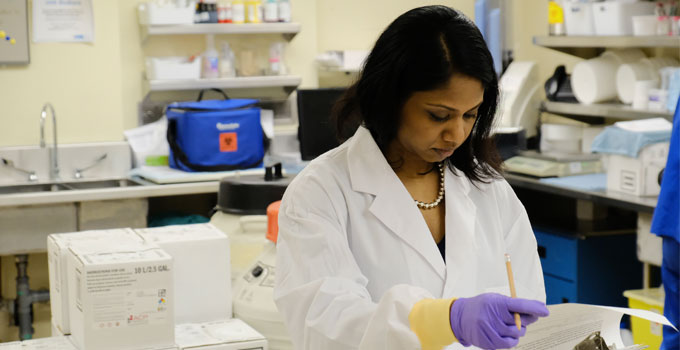
Dr. Sangeetha N Kalimuthu, gastrointestinal pathologist at the University Health Network, works in her lab. (Photo: UHN)
University Health Network pathologist teams up with OICR researchers to develop an improved pancreatic cancer classification test that can better predict the severity of the disease
Under a microscope, pancreatic cancer often looks like a haphazard collection of cells with various shapes and sizes, but Dr. Sangeetha N Kalimuthu saw something different.
She
had been analyzing hundreds of pancreas resections, which are classified using
the current three-tiered staging system – well, moderate and poor – but found
that the vast majority of cases fell into the moderate category, offering
little information to physicians about how best to treat these patients.
N Kalimuthu, a gastrointestinal pathologist at the University Health Network (UHN), noticed that certain patterns in cell shape matched the molecular profile of tumours with poorer survival for patients. She teamed up with Drs. Runjan Chetty and Steven Gallinger at UHN to see if what she noticed was true. Gallinger is Director of OICR’s PanCuRx Translational Research Initiative.
In a
study recently published in Gut BMJ, the
study group assessed more than 800 pancreatic ductal adenocarcinoma (PDAC) slides
and developed an improved classification method that could help differentiate
patients with the most aggressive tumours.
“Our aim was to revise and reappraise the current grading system to find features that correlated with these molecular subtypes,” says N Kalimuthu.
By linking molecular profiles of tumours with their appearance, N Kalimuthu was able to develop a classification method that can be easily integrated into current pathology laboratories.
“Any pathologist in any part of the world can do this,” says N Kalimuthu. “It’s the bread and butter of what pathologists do. It’s fast, cheap and accessible.”
N Kalimuthu also says that this method can be augmented using deep learning methods to reduce turn-around times and variability from one pathology laboratory to another.
“Pathologists have had a long, rich
history in their vital roles to diagnose and stage pancreas cancer,” says Gallinger, who is co-author of the publication. “This
study is an elegant demonstration of the potential of personalized medicine, with the promise of improved
outcomes for our patients.”
This website uses cookies in order to optimize the user’s experience. To learn more about how we use cookies on this website, please review our Website Privacy Statement. Your browser settings may allow you to turn off cookies. By continuing to use our website site without changing your browser settings, you consent to our use of cookies in accordance with Website Privacy Statement
This website uses cookies to improve your experience while you navigate through the website. Out of these, the cookies that are categorized as necessary are stored on your browser as they are essential for the working of basic functionalities of the website. We also use third-party cookies that help us analyze and understand how you use this website. These cookies will be stored in your browser only with your consent. You also have the option to opt-out of these cookies. But opting out of some of these cookies may affect your browsing experience.
Necessary cookies are absolutely essential for the website to function properly. These cookies ensure basic functionalities and security features of the website, anonymously.
Cookie
Duration
Description
cookielawinfo-checkbox-analytics
11 months
This cookie is set by GDPR Cookie Consent plugin. The cookie is used to store the user consent for the cookies in the category "Analytics".
cookielawinfo-checkbox-functional
11 months
The cookie is set by GDPR cookie consent to record the user consent for the cookies in the category "Functional".
cookielawinfo-checkbox-necessary
11 months
This cookie is set by GDPR Cookie Consent plugin. The cookies is used to store the user consent for the cookies in the category "Necessary".
cookielawinfo-checkbox-others
11 months
This cookie is set by GDPR Cookie Consent plugin. The cookie is used to store the user consent for the cookies in the category "Other.
cookielawinfo-checkbox-performance
11 months
This cookie is set by GDPR Cookie Consent plugin. The cookie is used to store the user consent for the cookies in the category "Performance".
viewed_cookie_policy
11 months
The cookie is set by the GDPR Cookie Consent plugin and is used to store whether or not user has consented to the use of cookies. It does not store any personal data.
Functional cookies help to perform certain functionalities like sharing the content of the website on social media platforms, collect feedbacks, and other third-party features.
Performance cookies are used to understand and analyze the key performance indexes of the website which helps in delivering a better user experience for the visitors.
Analytical cookies are used to understand how visitors interact with the website. These cookies help provide information on metrics the number of visitors, bounce rate, traffic source, etc.
Advertisement cookies are used to provide visitors with relevant ads and marketing campaigns. These cookies track visitors across websites and collect information to provide customized ads.
Other uncategorized cookies are those that are being analyzed and have not been classified into a category as yet.
This website uses cookies in order to optimize the user’s experience. To learn more about how we use cookies on this website, please review our Website Privacy Statement. Your browser settings may allow you to turn off cookies. By continuing to use our website site without changing your browser settings, you consent to our use of cookies in accordance with Website Privacy Statement