Propellon Therapeutics to Accelerate WDR5 Inhibitor Development for Cancers

FACIT Logo

FACIT forms biotechnology company for OICR-discovered first-in-class epigenetic modifiers

TORONTO, ON (June 23, 2016) – FACIT has announced the creation of a new Ontario biotechnology company, Propellon Therapeutics Inc. (“Propellon” or “the Company”), to manage the development and commercialization of a portfolio of first-in-class WDR5 inhibitors for the treatment of various cancers. Epigenetic targets such as WDR5 represent an exciting class of therapies, possessing the potential to contribute significantly in precision medicine for cancer patients. Substantial advances have been achieved with the series of proprietary small molecule WDR5 inhibitors discovered and developed by the Drug Discovery team at Ontario Institute for Cancer Research (“OICR”). The formation of Propellon reflects a natural translation of early-stage breakthrough cancer innovations, and enables important development activities including attracting private sector investment and industry partnerships.

(more…)

Ask an expert: How are new cancer drugs created?

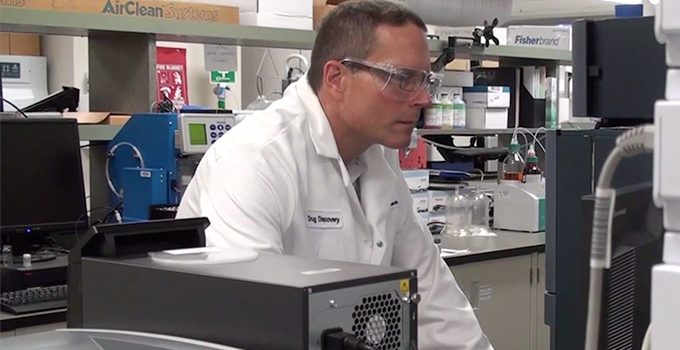
Dr. David Uehling in the Lab.

Cancer drugs help millions of people every year by assisting them in living longer or by reducing side effects or symptoms. In some cases, cancer drugs can even prevent cancers from developing. But cancer drugs take a long time to carefully develop and test, and the process is expensive. We asked Dr. David Uehling, Scientific Advisor and Group Leader, Medicinal Chemistry Group in the Drug Discovery Program at OICR, to help explain the process and its challenges.

(more…)

Study examines mental health in common ethnic minorities in Ontario

Large Group of People

Ethnocultural minorities are more likely to report suffering from mental health issues but are less likely to access treatment, a study out of York University using Ontario Health Study (OHS) survey data has found.

(more…)

OICR-developed software helping track Zika in Brazil

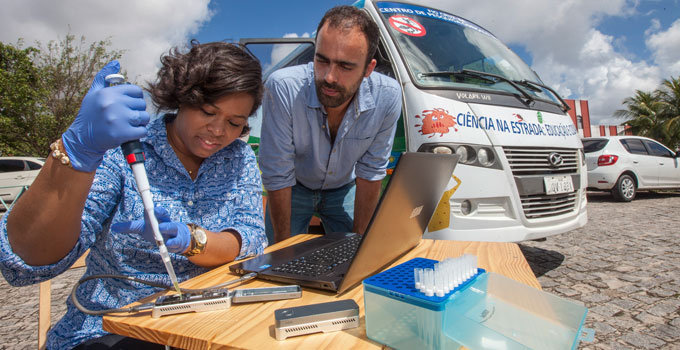
Field Laboratory tracking Zika
Photo: University of Birmingham

Scientists from the University of Birmingham in the U.K. have established a mobile DNA sequencing lab in Brazil to help that country track the spread of the Zika virus. The lab, based inside a minibus, is travelling through the areas of Brazil that have been most affected. A central part of the technology they are using is the small, USB-powered MinION genome sequencer. OICR’s Dr. Jared Simpson, an Investigator in the Informatics and Bio-computing Program, developed the software used to sequence samples on the device.

Read the news release: Mobile laboratories help track Zika spread across Brazil

Related: Tracking Ebola with portable sequencers: Could this technology be the key monitoring the spread of Zika?

Extreme Streams: The What, How and Why of Observables

Observables are great for building UIs and RxJS is an amazing implementation of them. Despite the library’s awesome power, it’s relatively underutilized mostly due to it being “hard”. This talk gives a high level overview of “what” observables are, “how” you use them, and “why” they are useful, through a basic implementation and a real world example (searching reddit for cute animals).

OICR attends BIO International 2016 in San Francisco

OICR at BIO

OICR has joined other innovative Ontario and Canada-based organizations for the 2016 BIO International Convention in San Francisco, California. Those attending BIO can visit OICR at Booth 5944 in the Canada Pavilion to learn more about the Institute, its research programs and the Fight Against Cancer Innovation Trust. OICR is attending the conference to pursue collaborations and investments to further advance anti-cancer technologies developed at OICR and across Ontario.

(more…)

Genomic Data Commons at University of Chicago heralds new era of data sharing for cancer research

Public launch of NCI-funded cancer-knowledge platform will bridge silos and enable broad collaboration among researchers

The Genomic Data Commons (GDC), a next-generation platform that enables unprecedented data access, analysis and sharing for cancer research, publicly launched at the University of Chicago on June 6, opening the door to discoveries for this complex set of diseases.

(more…)

Making prostate cancer diagnosis more PRECISE

Dr. Laurence Klotz of the Sunnybrook Research Institute

Dr. Laurence Klotz of Sunnybrook Health Sciences Centre is a world leader in the field of prostate cancer research. He has been a champion of active surveillance (also known as watchful waiting) for over 20 years, an approach to prostate cancer treatment that has allowed thousands of men with low-risk prostate cancer to avoid or delay therapy by monitoring it closely instead of immediately treating it.

Now Klotz has launched a new clinical trial called PRECISE, funded with $3 million in support by the Movember Foundation, the Ontario Institute for Cancer Research and Prostate Cancer Canada, that will use MRI to help to better diagnose prostate cancer without invasive biopsy.

(more…)

Clinical trial launched to test use of MRI to improve prostate cancer diagnosis and management

Research supported by the Movember Foundation, the Ontario Institute for Cancer Research and Prostate Cancer Canada

Toronto, ON – June 1, 2016 – The Movember Foundation, the Ontario Institute for Cancer Research (OICR) and Prostate Cancer Canada today announced $3 million in funding for a new Phase III clinical trial to evaluate if magnetic resonance imaging (MRI) can replace the current standard of care to diagnose prostate cancer. The primary objective of the multi-centre trial, called PRECISE, is to determine whether MRI imaging can spare some men from undergoing a biopsy and avoid the possible associated side effects.

The trial will be led by Dr. Laurence Klotz of the Sunnybrook Research Institute in Toronto, a world leader in the field of prostate cancer research and in the global adoption of active surveillance, a standard practice to monitor patients with low risk prostate cancer.

(more…)

World No Tobacco Day: Preventing the world’s leading cause of cancer

World No Tobacco Day

For many years, smoking was considered a sophisticated and glamorous pastime advertised to millions as a source of relaxation and freedom. But today, in the face of decades of research showing the harmful short and long-term side effects of smoking, including cancer and lung disease, that perception has almost entirely disappeared.

Dr. Geoffrey Fong

Dr. Geoffrey Fong

Yet many people continue to smoke. Almost 15 per cent of Canadians (more than four million people) were active smokers in 2013, with the majority of smokers reporting that they smoked daily. Tobacco use is the leading cause of cancer and cancer deaths in the world and it contributes to many other serious health conditions. According to the World Health Organization (WHO), tobacco kills approximately six million people per year globally. Preventing the use of tobacco and helping users quit are the important first steps in a long-term effort to ensure fewer people develop and die from lung cancer and other related diseases.

(more…)