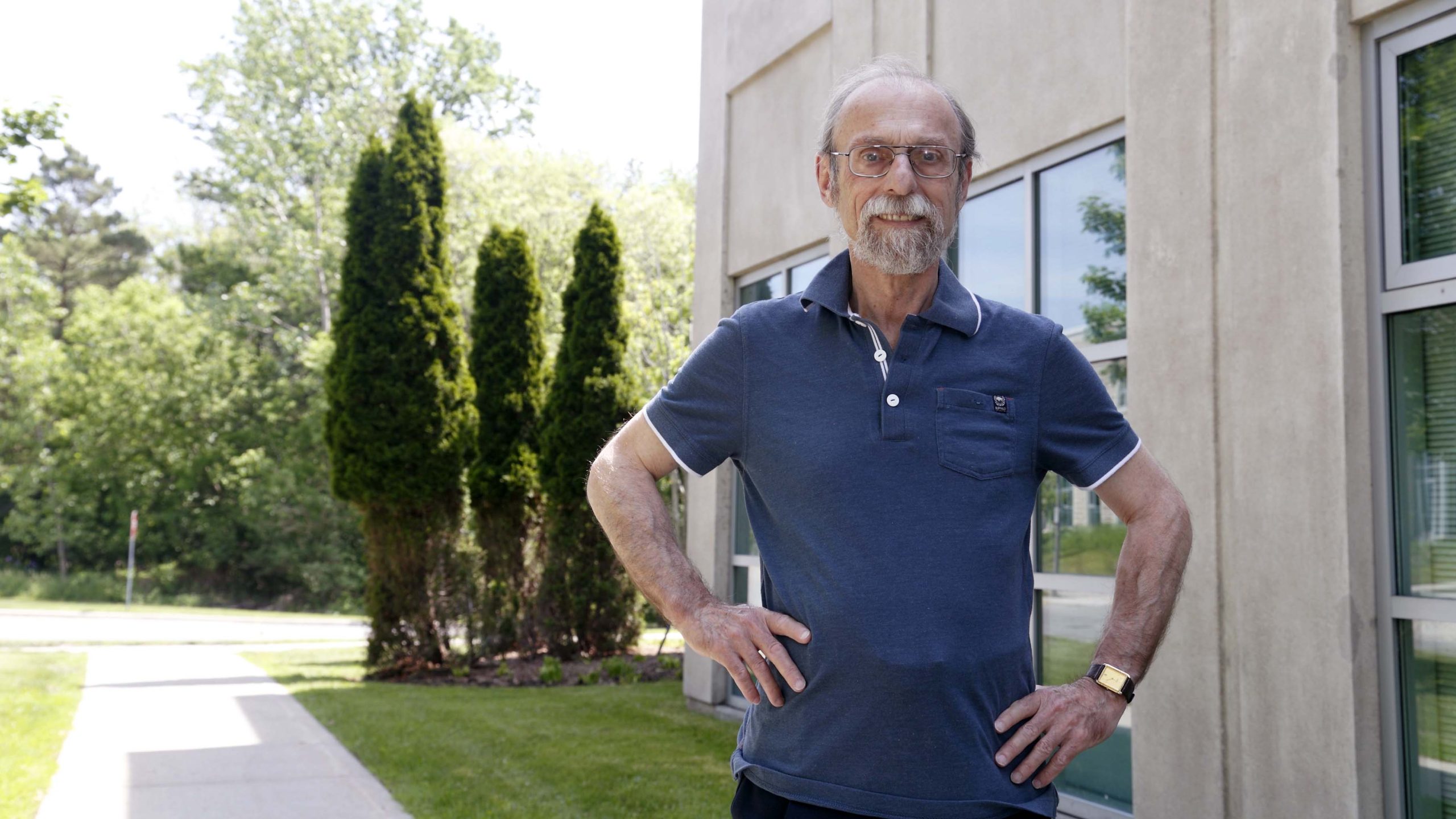
Over two decades as Co-Director of OICR’s Imaging Program, Dr. Aaron Fenster has developed 3D ultrasound systems that are improving cancer diagnosis and treatment.
Dr. Aaron Fenster’s groundbreaking inventions in 3D ultrasound have sparked dozens of patents, two companies and a fundamental shift in how some cancers are diagnosed and treated.
But they all date back to a clinical need and an aha moment two decades ago.
Back in 2007, Fenster was leading an imaging lab at Western University’s Robart’s Research Institute and in the process of co-founding OICR’s Imaging Program. A young radiologist approached him in his lab, frustrated with the 2D ultrasound technology used to guide prostate biopsies at the time, and wishing Fenster could design something better.
That conversation was on Fenster’s mind a few weeks later as he watched a presentation at a radiology conference about the difficulties of interpreting ultrasounds. To Fenster, trying to make sense of three-dimensional tissue with a 2D image was like shining a flashlight through a small window into a dark room.
“All of a sudden it came to me,” Fenster recalls. “Why don’t we ‘turn on the lights’ by making ultrasound 3D?”
Fenster went back to London to work on a prototype for the world’s first-ever 3D ultrasound system for the prostate. The system he developed took dozens of 2D ultrasound images at different angles and used advanced software to combine them into a 3D image. After years of refining the technology, validating it through clinical trials, and working with industry partners to commercialize it, Fenster’s 3D ultrasound is now used to guide prostate biopsies in clinics around the world.
Today, Fenster is the past Director of Imaging Research Laboratories at the Robarts Research Institute, Scientist at the Institute, Professor at Western University, Chief Executive Officer of the Centre for Imaging Technology Commercialization in London, and Co-Director of the Imaging Program at OICR. He is recognized as a pioneer in 3D ultrasound and has helped make OICR’s Imaging Program one of the most impactful in the country.
“Having OICR’s continued support over the years has allowed us to build a large program and attract key collaborators, while giving us the flexibility to be innovative,” Fenster says.
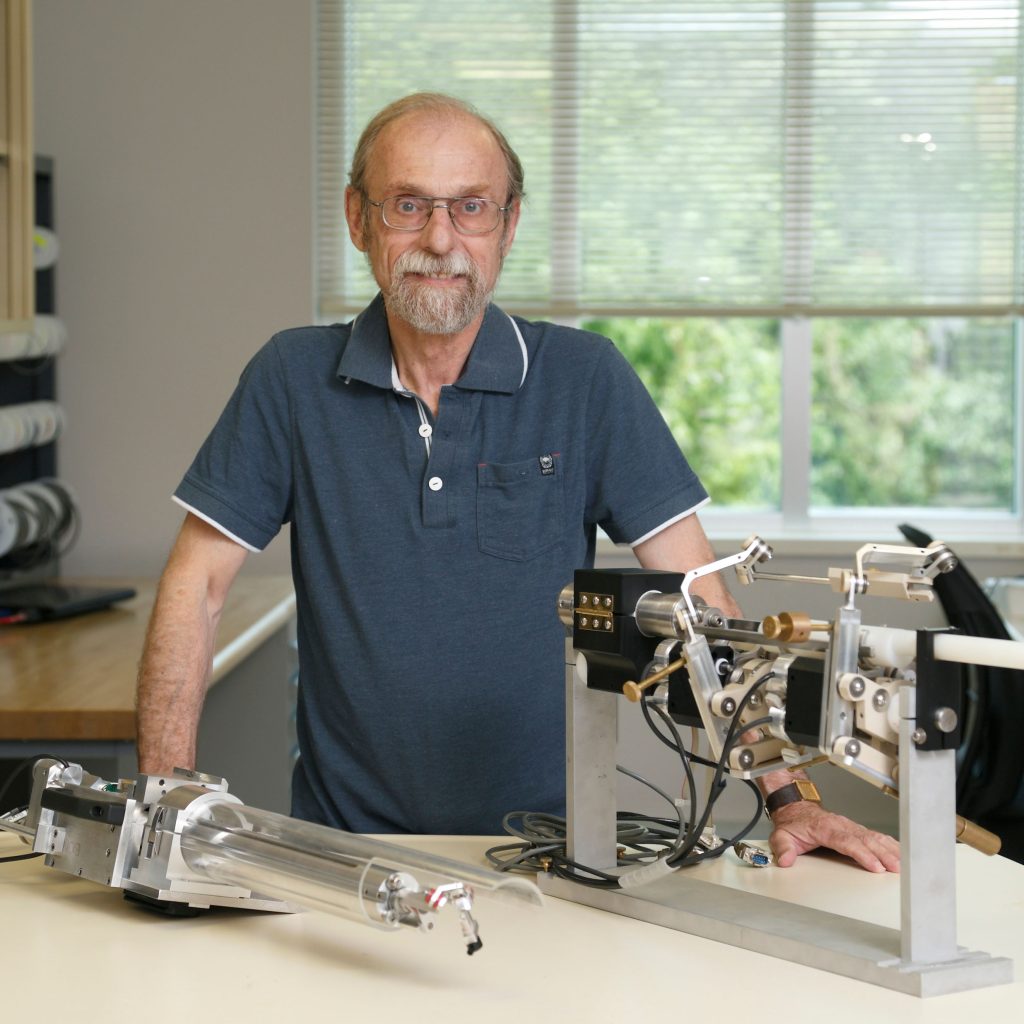
Fenster’s lab has become an important training ground for young researchers, with trainees leading much of the work. While the lab incorporates the latest technology like artificial intelligence, much of Fenster’s research has evolved from that first 3D ultrasound system.
That includes the 3D ultrasound whole-breast imaging system Fenster developed with students Dr. Claire Park and Amal Aziz. Offering safe, accurate breast cancer screening for women with dense breasts, whose cancer often goes undetected in mammographs, the system has received Health Canada approval and Fenster is hopeful it will be screening patients in Ontario hospitals before too long.
Fenster’s 3D ultrasound technology is also transforming brachytherapy, a cancer treatment where radioactive “seeds” are placed inside a tumour. Cervical brachytherapy usually needs MRI to guide the precise placement of the seeds, requiring the patient to go back and forth between the operating room and the MRI. Fenster is developing 3D ultrasound systems to guide the placement of the radioactive seeds for cervical brachytherapy that will allow the entire procedure to happen in the same room.
Fenster and colleagues have also developed 3D ultrasound technology to guide liver tumour ablations that has been patented and licensed, 3D ultrasound for kidney cancers that is being studied clinically, as well as several other applications. And just like that first 3D ultrasound prototype in 2007, nearly all these applications were inspired by clinical needs.
“That’s usually how it happens,” Fenter says. “A clinician comes to us with an unmet need, and we develop a solution that works for them and their patients.”