BioCanRX makes a major investment in Canadian biotherapeutics research
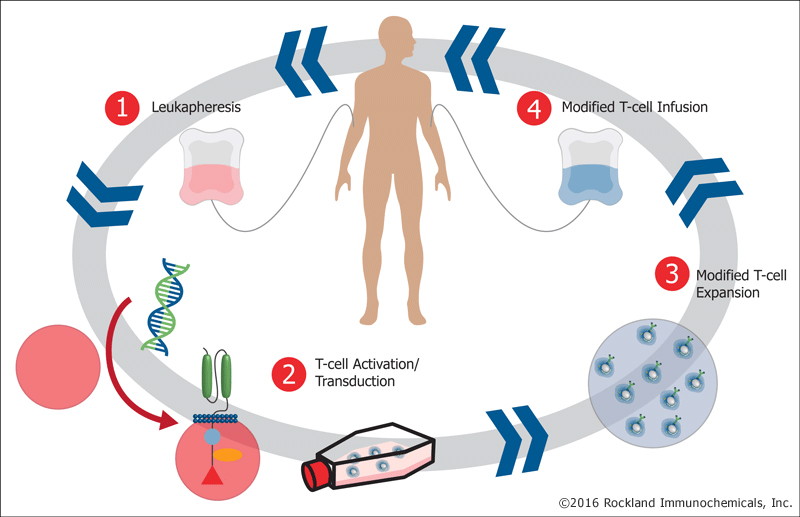
Biotherapeutics, a relatively new class of treatments, have shown great promise and are generating a lot of excitement in the cancer research community. These treatments harness the power of oncolytic viruses, cell therapies and antibodies to kill cancer. BioCanRX, Canada’s biotherapeutics research network, has announced $11 million in funding for 16 projects that will enable scientists across the country to bring their innovations to patients sooner.
International collaboration cooks up powerful new software: MISO
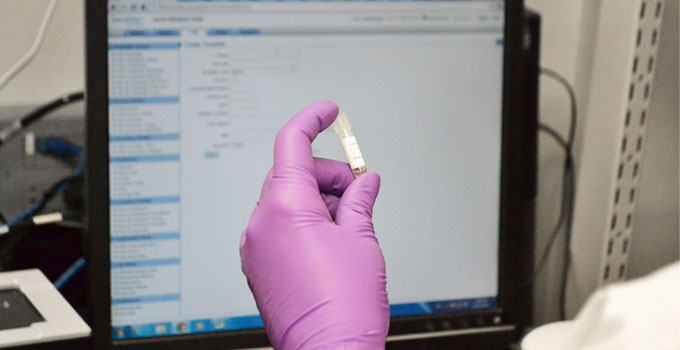
Keeping track of samples and organizing their associated data is a crucial part of the research process. Like many labs around the world, those at OICR were using a commercially available Laboratory Information Management System (LIMS) to perform this task. However, the researchers using it found that this tool placed far too many constraints on their work. So what did they do? They built their own in partnership with the Earlham Institute (EI) in the U.K. This collaboration has resulted in powerful, flexible and open source software called MISO (Managing Information for Sequencing Operations).
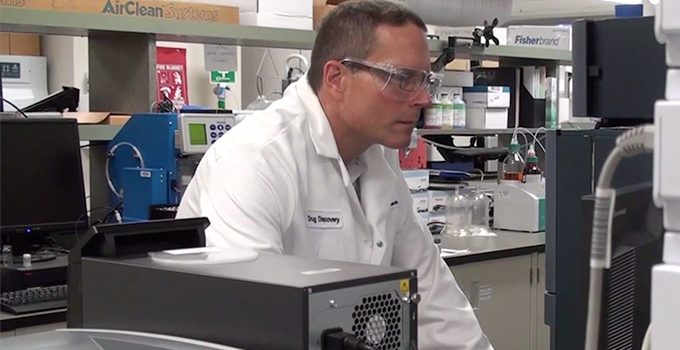
The quest for a new cancer drug often begins when a protein target is implicated as an important driver in tumourigenesis. For cancer researchers, small molecules that block or stimulate such proteins can be valuable tools in research. Not only do they help us understand the role that the protein plays in cancer biology, but they also enable researchers to demonstrate which tumours are sensitive toward inhibition or stimulation with that protein target of interest, providing early clues as for patient selection and biomarker identification. Moreover, the knowledge that a small molecule can bind to such a protein builds confidence that this target is indeed “druggable,” which can provide a powerful stimulus to initiate a sustained effort to find medicines for that target.
ICGCmed will provide wealth of vital new information to scientists
The ability to sequence and study the human genome and the genomes of different cancer types has allowed scientists to increase our understanding of the biology of these diseases. In turn this has helped to create new preventative strategies, diagnostic and prognostic tools as well as better treatments. But what if there was a way to make this information even more useful? An international group is working to establish a project that will do just that.
Cancer is a global concern. Cancer Research UK estimated that in 2012 there were 14.1 million new diagnoses of cancer worldwide and 8.2 million deaths could be attributed to the disease. While these staggering numbers alone may paint a bleak picture, it is important to remember that around the world scientists are improving methods to prevent, diagnose and treat cancer. Their efforts have drastically increased cancer survival over the last few decades.
OICR is proud to contribute to this global cause through its provincial, national and international research projects. Cancer is too large and complex an issue to be tackled by one organization alone. Below we’re sharing a selection of stories from the last several months highlighting the progress that has been made by researchers at the Institute, working together with our partners, to help reduce the impact of cancer on the lives of people around the world.
Dr. John Dick to present 2017 Tobias Award Lecture
The International Society for Stem Cell Research (ISSCR) has honoured Dr. John Dick by selecting him to deliver the 2017 Tobias Award Lecture at the organization’s annual meeting June 14-17 in Boston. The honour, supported by the Tobias Foundation, recognizes promising research into stem cell therapies for haematological conditions.
Interested in bioinformatics? Come to TorBUG on January 25
The Toronto Bioinformatics User Group (TorBUG) will hold its first session of the New Year on January 25. Anyone with an interest in bioinformatics is encouraged to attend and hear from Katie Pollard, Director and Senior Investigator at Gladstone Institutes and Davide Chicco from the University of Toronto.
Event details
January 25, 2017
4-4:15 p.m. Trainee Speaker: Davide Chicco, University of Toronto: “Siamese neural network for prediction of long-range interactions in chromatin”
Missed a session? Videos of the latest TorBUG talks are below.
First follow-up questionnaire to strengthen Ontario Health Study data
For scientists working to understand diseases and develop new treatments, access to data is key. Ontario Health Study (OHS) participants have already provided the Study with a wealth of information about their health and lifestyle through the OHS online survey, and in some cases, blood samples and physical measures. Researchers can use this information to uncover the causes of various chronic diseases and to inform further research. Now, OHS participants are being given an opportunity to further help researchers by completing a follow-up questionnaire.
Partnership to expand genomic data sharing in Europe
The Global Alliance for Genomics and Health’s (GA4GH) Beacon Project has partnered with ELIXIR, the body that organizes Europe’s infrastructure for life science data, to make genomic data in that continent more easily discoverable by researchers. The Beacon Project is a demonstration project that enables genomic data centres to make their data more easily discoverable to users by allowing them to use simple queries to explore a dataset’s contents.
New prognostic test for prostate cancer now closer to clinical use
Prostate cancer is the most common cancer in Canadian men, but there is still no one-size-fits-all strategy for treating the disease. Currently it is difficult to choose exactly the right type and amount of treatment for each individual because it is hard to accurately assess how aggressive the cancer is. Researchers are now a step closer to bringing a powerful new prognostic tool into clinical use.
This website uses cookies in order to optimize the user’s experience. To learn more about how we use cookies on this website, please review our Website Privacy Statement. Your browser settings may allow you to turn off cookies. By continuing to use our website site without changing your browser settings, you consent to our use of cookies in accordance with Website Privacy Statement
This website uses cookies to improve your experience while you navigate through the website. Out of these, the cookies that are categorized as necessary are stored on your browser as they are essential for the working of basic functionalities of the website. We also use third-party cookies that help us analyze and understand how you use this website. These cookies will be stored in your browser only with your consent. You also have the option to opt-out of these cookies. But opting out of some of these cookies may affect your browsing experience.
Necessary cookies are absolutely essential for the website to function properly. These cookies ensure basic functionalities and security features of the website, anonymously.
Cookie
Duration
Description
cookielawinfo-checkbox-analytics
11 months
This cookie is set by GDPR Cookie Consent plugin. The cookie is used to store the user consent for the cookies in the category "Analytics".
cookielawinfo-checkbox-functional
11 months
The cookie is set by GDPR cookie consent to record the user consent for the cookies in the category "Functional".
cookielawinfo-checkbox-necessary
11 months
This cookie is set by GDPR Cookie Consent plugin. The cookies is used to store the user consent for the cookies in the category "Necessary".
cookielawinfo-checkbox-others
11 months
This cookie is set by GDPR Cookie Consent plugin. The cookie is used to store the user consent for the cookies in the category "Other.
cookielawinfo-checkbox-performance
11 months
This cookie is set by GDPR Cookie Consent plugin. The cookie is used to store the user consent for the cookies in the category "Performance".
viewed_cookie_policy
11 months
The cookie is set by the GDPR Cookie Consent plugin and is used to store whether or not user has consented to the use of cookies. It does not store any personal data.
Functional cookies help to perform certain functionalities like sharing the content of the website on social media platforms, collect feedbacks, and other third-party features.
Performance cookies are used to understand and analyze the key performance indexes of the website which helps in delivering a better user experience for the visitors.
Analytical cookies are used to understand how visitors interact with the website. These cookies help provide information on metrics the number of visitors, bounce rate, traffic source, etc.
Advertisement cookies are used to provide visitors with relevant ads and marketing campaigns. These cookies track visitors across websites and collect information to provide customized ads.
Other uncategorized cookies are those that are being analyzed and have not been classified into a category as yet.
This website uses cookies in order to optimize the user’s experience. To learn more about how we use cookies on this website, please review our Website Privacy Statement. Your browser settings may allow you to turn off cookies. By continuing to use our website site without changing your browser settings, you consent to our use of cookies in accordance with Website Privacy Statement