OICR IN THE NEWS
Big Data
Healthcare Conundrum Overcome: Protecting and Sharing Patient Data
From ENTERPRISETECH
Biologics driver of market growth
Life Sciences Grow Up
From Lexpert
Receive the latest news, event invites, funding opportunities and more from the Ontario Institute for Cancer Research.

OICR IN THE NEWS
Big Data
Healthcare Conundrum Overcome: Protecting and Sharing Patient Data
From ENTERPRISETECH
Biologics driver of market growth
Life Sciences Grow Up
From Lexpert
Integrating innovative data privacy expertise with a global healthcare information & technology service leader, strengthening and driving Ontario’s digital healthcare security footprint
 TORONTO, May 26, 2016 /CNW/ – FACIT is pleased to announce that IMS Health (NYSE: IMS) has acquired privately-held Privacy Analytics Inc., a FACIT portfolio company. The transaction combines Privacy Analytics’ leading edge expertise in health data anonymization and de-identification with IMS Health’s broad range of healthcare information, technology and services solutions, particularly its Real-World Evidence (RWE) capabilities. IMS Health’s mission-critical anonymous information and technical strength in providing its life sciences clients with R&D and commercial solutions positions Privacy Analytics to continue to expand its suite of innovative data governance software and expertise on a global scale. Reflecting Ontario’s innovative strength and expertise in healthcare technologies, the acquisition also allows Privacy Analytics to maintain a strong presence within the province, with solutions continued to be offered to the market, Privacy Analytics and IMS Health clients as an independent suite of products. Terms of the transaction have not been disclosed.
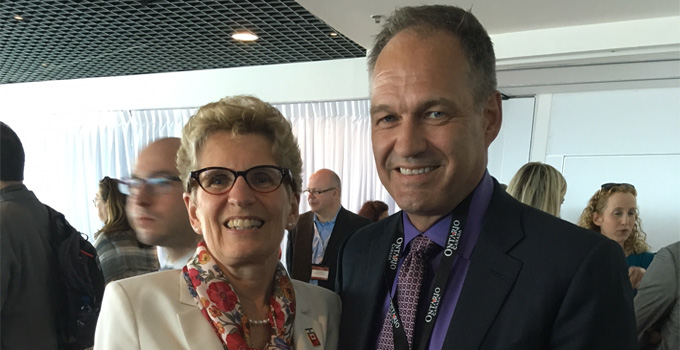
On May 18 an Ontario delegation led by Premier Kathleen Wynne visited Israel and signed several Memoranda of Understanding aimed at facilitating collaboration between Israeli and Ontario institutions.
 Clinical trials are an essential part of the healthcare system, giving patients access to cutting-edge treatments and providing researchers with concrete information about how these new treatments work in the clinic. To mark International Clinical Trials Day tomorrow, we spoke with Karen Arts, Executive Director of the Canadian Cancer Clinical Trials Network (3CTN) about the importance of clinical trials and how patients and their families can find out more about them.
What are clinical trials?
Clinical trials are a formal way to evaluate if a new treatment, which could be a medication or other type of therapy, is better than what is currently used to treat a condition or disease. Cancer clinical trials are important because that is how the effectiveness of new cancer treatments are tested and establish whether they should be adopted as new standard treatments for cancer patients.
 The Canadian Institutes of Health Research (CIHR) named Professor Eva Grunfeld as the inaugural Chair of the new Institutes Advisory Board (IAB) on Chronic Conditions. In her role, Grunfeld, Giblon Professor and Vice Chair (Research) at the Department of Family and Community Medicine at U of T, will help determine the future directions of research in chronic disease in Canada.
The management and prevention of chronic diseases in Canada represents one of the biggest challenges to our healthcare system
“It’s a great opportunity to contribute to the development of the new IAB structure – the aim of which is to improve integration across CIHR Institutes,” said Grunfeld, who is physician-scientist and Director of the Knowledge Translation Research Network, Health Services Research Program, at the Ontario Institute for Cancer Research. “Particularly with chronic conditions, it’s important to coordinate and cooperate across disciplines, across health conditions, and across research pillars. I’m looking forward to working with the other IAB chairs, IAB and members, and Institute Directors to impact research on chronic conditions in Canada.”
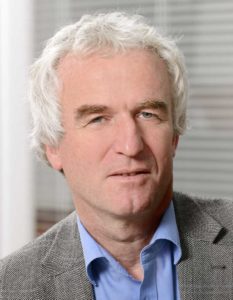 ICGCmed launched this April (see story on ICGCmed’s launch). We spoke to Dr. Peter Lichter, Head of the Division of Molecular Genetics at the German Cancer Research Center (DKFZ) about why ICGCmed is needed and what the next steps are to ensure the consortium can meet its ambitious goals.
Why is ICGCmed necessary, and why now?
Researchers worldwide are currently exploring how to bring more precision oncology to the clinic. The goal is to develop a new approach to how we treat cancer patients that is more specific to their individual type of cancer. Currently, at many places clinical studies are being launched addressing similar questions. An international network of such studies would not only harmonize these initiatives and develop common standards, it would also greatly accelerate the process of validating the concept and provide guidelines to physicians who are not yet familiar with this approach.
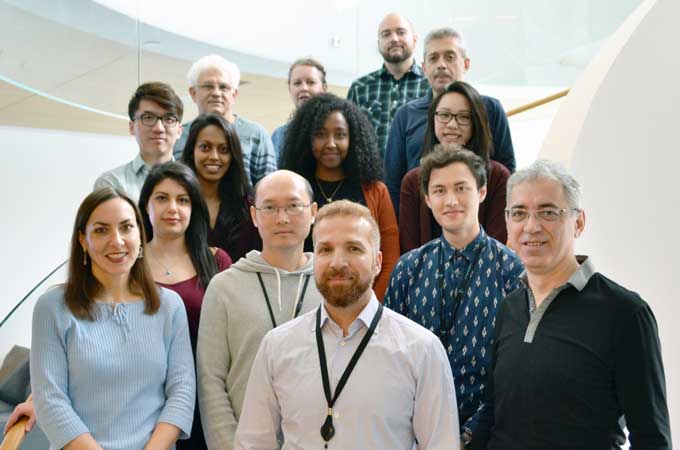
Dr. Philip Awadalla and the Ontario Health Study team.
Chronic health conditions place a heavy burden on patients and their families, and cost the healthcare system and the Canadian economy staggering amounts. Chronic diseases were behind 67 per cent of total direct costs in health care and 60 per cent of total indirect costs as a result of early death, loss of productivity and foregone income, according to a 2006 study by the Public Health Agency of Canada. Globally, non-communicable disease (NCD) was made a priority by the World Health Organization, leading to the formation of the NCD Alliance and the Sharjah Declaration, which aims to reduce the global burden of NCDs.
The University Health Network announced today that Dr. Geoffrey Liu, clinician-scientist at Princess Margaret Cancer Centre, and his team have identified a blood marker that better defines which patients will respond to the drug cetuximab. The research applies to patients with metastatic colorectal cancer.
See Dr. Liu explain his findings:
Dr. Liu’s research was funded by the Ontario Institute of Cancer Research, the Alan B. Brown Chair in Molecular Genomics, the Cancer Care Ontario Chair in Experimental Therapeutics and Population Studies, the Canadian Cancer Society, and The Princess Margaret Cancer Foundation. The research was published today in the journal Clinical Cancer Research.
See full release here:
Researchers Discover Blood Marker That Better Defines Who Will Respond To Drug Used In Metastatic Colorectal Cancer
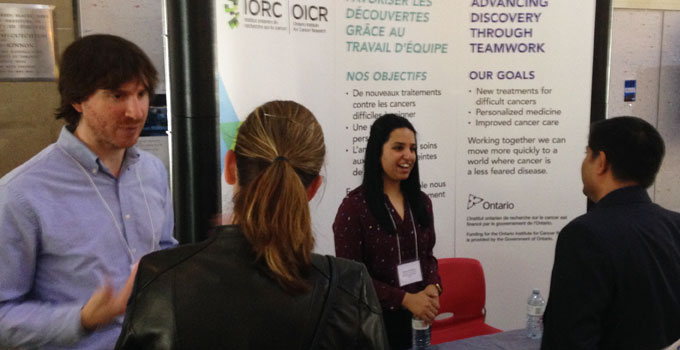
Recruiting the next generation of researchers with in-demand skills is essential to the success of a research institute like OICR. On May 6, representatives from OICR attended the University of Toronto Life Sciences Career Development Society’s (LSCDS) Career Day. The Institute’s booth was very busy as students in chemistry, biology, medicine and other fields came by to find out about the research being done at OICR and how their skills could be applied. OICR also held a well-attended ‘Spotlight Session’ to inform students about the Institute’s research programs and the benefits of working at OICR.
Recruiting the next generation of researchers with in-demand skills is essential to the success of a research institute like OICR.
Students were invited to visit OICR later this month to get a firsthand look at the Institute’s facilities, to hear more about current projects and to speak to its researchers about career paths. OICR would like to congratulate LSCDS for a very successful event and thanks to everyone who stopped by to find out more about OICR.
Big Data
Intel signs up Dana-Farber, Ontario Institute to cloud cancer data hub
From FierceBiotechIT
Intel-backed Collaborative Cancer Cloud expands to include two more universities
From ComputerWeekly.com
Collaborative Cancer Cloud
Intel partners with Broad Institute to help beat cancer
From Alphr
Congratulations