Developing best practices for benchmarking: The quiet but crucial work behind sequencing today
The Global Alliance for Genomics and Health publishes new guidelines for comparing a patient’s test results to a reference human genome
Finding the difference between a
patient’s DNA sequence and a reference sequence – also known as variant calling
– is central to cancer research, but approaches to variant calling differ from
lab to lab. Comparing – or benchmarking – one lab’s approach to another lab is
important to the development of new sequencing and analysis tools, yet there
are no widely-accepted standards for benchmarking variant calls.
To develop these standards and address common benchmarking challenges, a group of stakeholders from government agencies, academic bioinformatics groups, sequencing technology developers and other organizations around the world gathered to create the Global Alliance for Genomics and Health (GA4GH) Benchmarking Team. They’ve recently published their best practices for benchmarking genome sequencing results in Nature Biotechnology.
“Technology is improving rapidly, but we’ve lacked ways to know the strengths and weaknesses of new sequencing and genome analysis methods,” says Dr. Justin Zook, lead author of the study from the National Institute of Standards and Technology. “This paper gives people tools to develop accurate sequencing tests for precision medicine.”
The adoption of these practices – and their continual improvement – can also help facilitate collaboration between research and clinical laboratories while improving the performance of shared tools and methods.
The framework was developed in part
by Dr. Paul Boutros and his lab members at OICR, who have used crowdsourcing to develop
benchmarking foundations for individual variants as well as
broader genetic variation.
Read more about this benchmarking
work on Genome
Web.
Moving in vivo: A case of navigating through translational research roadblocks
OICR’s Drug Discovery team and Princess Margaret Cancer Centre researchers collaborate to turn a research discovery into a potential cancer breakthrough
For more than three decades,
researchers have tried to develop drugs that target the MYC oncoprotein – a
protein that can contribute to half of all cancers – but traditional approaches
to blocking MYC have not been successful. The structure of the MYC protein
makes it ‘undruggable’; it cannot be blocked by a small molecule or a drug, so
new strategies to inhibit the activity of this protein are needed.
Dr. Linda Penn, Senior
Scientist at the Princess Margaret Cancer Centre, recently discovered a new way
of preventing MYC from promoting cancer growth by stopping the interaction
between the MYC protein and a ‘druggable’ partner protein, G9a.
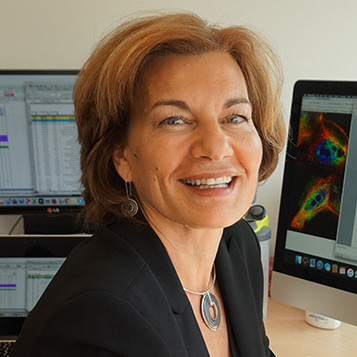
Dr. Linda Penn
“We investigated MYC and discovered
G9a as a key partner protein. We blocked G9a using both genetic and
pharmacological strategies. We saw that inhibiting G9a using an inducible
knockdown strategy had the potential to melt tumour cells away,” says Penn.
“But for some reason, no matter what we tried, we didn’t see the
tumour-fighting effect of the G9a compound inhibitor in animal models.
Something didn’t line up.”
A discovery like Penn’s, however, can only be brought to patients if it can first be demonstrated in living experimental models, also known as in vivo. The results of Penn’s in vivo experiments were inconclusive, preventing her from publishing her promising findings in a top-tier journal and advancing this line of research.
Navigating the preclinical minefield
The compound – or molecule –
that Penn’s team was using to block G9a in
vitro wasn’t doing the same in vivo
and they didn’t understand why. Lacking the medicinal chemistry expertise
needed to solve this problem, Penn turned to OICR’s Drug Discovery group.
Dr. Ahmed Aman
“All of Dr. Penn’s experiments
and all of the published literature implies that the compound should have
worked, but unfortunately that wasn’t her observation,” says Dr. Ahmed Aman, Principal
Research Scientist in the Drug Discovery group at OICR. “We had to break this
problem down and solve it methodically while considering the various factors
that could have contributed to these results.”
The Drug Discovery team evaluated the compound and found that it didn’t have the drug-like properties necessary to demonstrate activity in vivo. More specifically, they discovered that the compound would break down in the body before having a chance to inhibit G9a. Although the compound that they tested would not be useable as a drug, Penn’s study was now conclusive. Finding the missing piece of the puzzle allowed her team to publish their discovery in Cancer Cell and proceed with identifying and investigating new compounds to target G9a more effectively.
Collaboration to translation
Penn says that she worked with
the Drug Discovery group because of their stellar reputation in the industry, strong
track record and unique expertise.
“Without the Drug Discovery
team, I really don’t know where I would have gone,” says Penn. “I simply didn’t
have established relationships with medicinal and analytical chemists nor private
industry to help me solve these chemistry problems.”
Together, Penn and the Drug
Discovery group are continuing to investigate G9a and how to block it from
interacting with the MYC protein. They are using another reported G9a
inhibitor, which has been prepared in-house by the Drug Discovery team that
Aman says should be able to work much more effectively in vivo.
“Our collaboration with the
Penn group is a great example of how we hope to leverage our drug discovery capabilities
to support investigators across Ontario and advance their research efforts,”
says Dr. Rima Al-awar, Director and Senior Principal Investigator of OICR’s
Drug Discovery group.
New step-by-step protocol for common omics analyses fills 10-year gap in training resources
Expert group develops comprehensive guide for the interpretation and visualization of gene lists, replacing outdated, decade-old protocols
The importance of understanding
biological pathways – or how our genes work together – is becoming increasingly
evident, but pathway analysis remains a major challenge for many basic and
biomedical researchers. Current computational tools can help simplify this
analysis, but there is no established guide or standard for using these tools in
practice.
To fill this gap, a
team of experts from OICR and the Bader Lab
at the University of Toronto recently published a comprehensive, step-by-step
guide to pathway enrichment analysis that brings together their highly-recommended
tools into one protocol. The complete protocol, which is now published in Nature Protocols,
can be performed in less than five hours and can be used by researchers with no
prior training in bioinformatics or computational biology.
“These days, almost
every omics study needs to include
pathway enrichment analysis, but it has been over a decade since a
comprehensive protocol for these analyses has been published,” says Dr. Jüri
Reimand, Principal Investigator at OICR and co-lead author of the protocol. “Our
new methods are designed to guide researchers through their analyses and serve
as a practical resource for their studies.”
Each step of the
protocol is supported with detailed instructions and valuable troubleshooting
information, which were designed in large part by Ruth Isserlin, co-lead author
and Senior Bioinformatics Analyst in the Bader Lab.
Recently, the methods
were used to identify a therapeutic
target for ependymoma, a prevalent type of childhood brain
cancer that is notoriously difficult to treat. The pathway analysis, as
described in Nature,
led to a better understanding of why most ependymoma treatments are not
effective and revealed a new treatment option that could stop the progression
of the disease.
“Future cancer
research discoveries rely on our understanding of biological pathways,” says
Reimand. “This protocol provides a resource from which we can build our understanding
and explore previously uncharted relationships between our genes.”
Op-ed in The Globe and Mail hails innovation strategy that resulted in record-breaking investment by Celgene
In a contribution to The Globe and Mail titled “For Innovation, open science means business”, E. Richard Gold and Max Morgan point to the recent investment by U.S. pharmaceutical giant Celgene into a potential treatment for leukemia developed by OICR researchers, as an example of how Canada can successfully commercialize its scientific discoveries. The authors note that the uniquely Canadian approach employed by FACIT and OICR working together will, unlike other strategies, keep the intellectual property (IP) in Canada longer and see research and development, clinical trials and other outcomes, benefit Canada and Ontario.
Gold
and Morgan point out that it was an open science collaboration between OICR and
the University of Toronto’s Structural Genomics Consortium (SGC) that allowed
for the initial scientific discovery behind the new potential drug to take
place rapidly, since traditional concerns around IP weren’t a factor. This
approach allowed FACIT and OICR to move towards targeted drug development much
earlier than possible under other models, enabling them to create a patented
drug candidate. Gold and Morgan call on Canadian governments to replicate the
open science to IP model, which Celgene’s investment shows is a viable path to
commercialization in Canada.
E. Richard Gold is James McGill professor, McGill Faculty of Law; senior fellow, Centre for International Governance Innovation; former technology lawyer. Max Morgan is chief policy officer and senior counsel, SGC; corporate secretary and legal consultant, M4K Pharma Inc. OICR has provided funding to M4K Pharma Inc. through its Cancer Therapeutics Innovation Pipeline initiative. SGC and OICR are long-term partners.
Updates and highlights from Global Alliance’s 6th Plenary Meeting
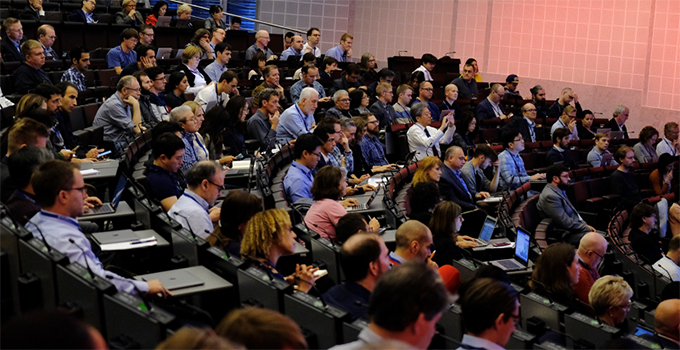
The Global Alliance for Genomics and Health (GA4GH) held its 6th Plenary Meeting in Basel, Switzerland earlier this month. The meeting brought together more than 430 participants from 25 countries, making it the biggest GA4GH event yet. Attendees of the meeting learned about GA4GH Connect – a strategic phase focused on connecting GA4GH development work to the immediate data sharing needs of the community.
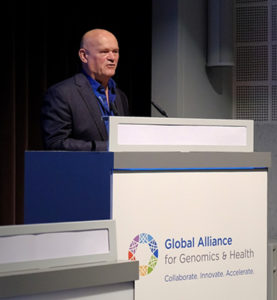
Peter Goodhand, CEO of GA4GH, introducing GA4GH Connect
At the meeting, Peter Goodhand, Chief Executive Officer of GA4GH, announced a call for new real-world genomic data initiatives – Driver Projects – with a specific focus on global collaboration and scientific merit. The Steering Committee will announce the accepted Driver Projects in February 2019.
Also at the meeting, Dr. Marc Fiume, Chief Executive Officer of DNAstack and OICR Associate, presented on the recent progress of the Beacon Project – an international collaborative initiative that has developed a realtime discovery platform for genetic mutations. The Beacon Project has released Beacon API V1.0.0 on Friday – the first genomic data interoperability standard from the GA4GH 2018 Strategic Roadmap.
“It was a fantastic meeting and an eye-opening experience to learn about how the field of precision medicine is linking genomic tools with clinical databases and patient outcomes to drive a patient-centered, learning healthcare model,” says Dr. Laszlo Radvanyi, President and Scientific Director of OICR. “GA4GH continues to play a critical role in establishing standards for genomic data acquisition, quality, interpretation, integrity, security, and sharing that many national genomic health initiatives are beginning to embrace around the world.”
Access highlights and updates from the Plenary Meeting online, or read a PDF of the meeting report here.
Researchers find common cell process key to therapy resistance
Ottawa researchers discover a new way to make cancer cells more susceptible to virus-based therapies
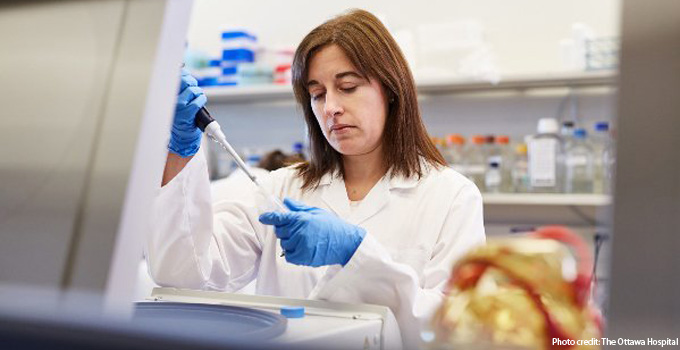
Over the past decade, researchers have made significant progress in designing oncolytic viruses (OVs) – viruses that destroy cancer cells while leaving healthy tissue unharmed. However, some cancer cells are resistant to this type of therapy and their resistance mechanisms remain poorly understood.
Researchers at the The Ottawa Hospital and University of Ottawa, under the leadership of Dr. Carolina Ilkow, have discovered that a common cellular mechanism, RNAi, allows cancer cells to fight back against cancer-fighting viruses. Their findings, recently published in the Journal for Immunotherapy of Cancer, show that blocking RNAi processes in tumours can make cancer cells more susceptible to OVs.
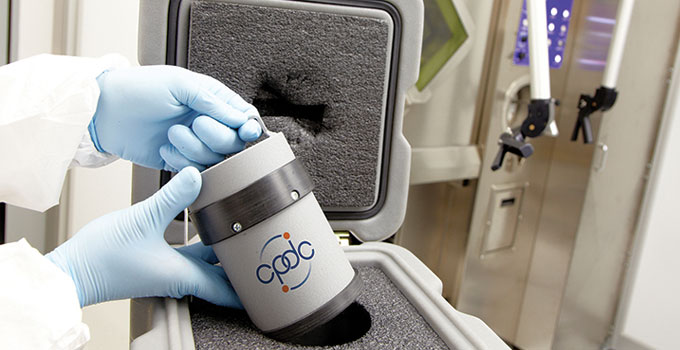
Translating new scientific discoveries into products and moving those products to the market is a challenging process. This is especially the case for highly-regulated medical products such as radiopharmaceuticals – a special class of drugs that are used to accurately diagnose and treat diseases. Over the past decade, the CPDC in Hamilton has been bridging the gap between the innovation and commercialization of radiopharmaceuticals in Ontario and, in turn, reaping benefits for patients and the province’s economy.
Viral protein identified as one of the main drivers of virus-induced stomach cancers
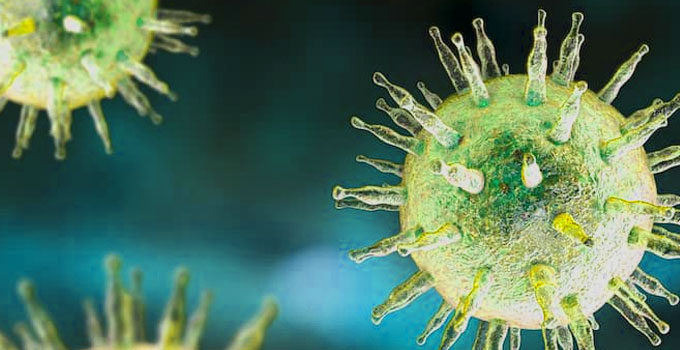
Some common pathogens, like the Epstein-Barr virus (EBV), can turn healthy cells into cancer cells, but it is not well understood how they do so. Better understanding how such pathogens work allows researchers to find new ways to target the pathogen’s disease-causing mechanisms and ultimately find new treatments for certain virus-induced cancers.
Dr. Ivan Borozan, from Dr. Vincent Ferretti’s Lab at OICR, and Prof. Lori Frappier at the University of Toronto are working together to better understand EBV and how it triggers the transformation of normal cells to cancerous cells, also known as oncogenesis. Together, they have identified that a key protein expressed by EBV, BKRF4, is one of the likely drivers behind EBV-induced stomach cancers.
FACIT Appoints Biotech Veteran Dr. David O’Neill as President
Entrepreneur adds US oncology management experience to Ontario commercialization
TORONTO, ON (June 13, 2018) — The Board of Trustees announced the appointment of David O’Neill as the President of FACIT. Dr O’Neill joined FACIT in 2013 as Vice President, Business Development, bringing cancer drug development expertise as well as an extensive business network in pharma and biotech. As Acting President for the last year, he has elevated the profile of the organization and enabled FACIT to continue to deliver critical commercialization financing to innovative start-ups in the growing Ontario market.
This website uses cookies in order to optimize the user’s experience. To learn more about how we use cookies on this website, please review our Website Privacy Statement. Your browser settings may allow you to turn off cookies. By continuing to use our website site without changing your browser settings, you consent to our use of cookies in accordance with Website Privacy Statement
This website uses cookies to improve your experience while you navigate through the website. Out of these, the cookies that are categorized as necessary are stored on your browser as they are essential for the working of basic functionalities of the website. We also use third-party cookies that help us analyze and understand how you use this website. These cookies will be stored in your browser only with your consent. You also have the option to opt-out of these cookies. But opting out of some of these cookies may affect your browsing experience.
Necessary cookies are absolutely essential for the website to function properly. These cookies ensure basic functionalities and security features of the website, anonymously.
Cookie
Duration
Description
cookielawinfo-checkbox-analytics
11 months
This cookie is set by GDPR Cookie Consent plugin. The cookie is used to store the user consent for the cookies in the category "Analytics".
cookielawinfo-checkbox-functional
11 months
The cookie is set by GDPR cookie consent to record the user consent for the cookies in the category "Functional".
cookielawinfo-checkbox-necessary
11 months
This cookie is set by GDPR Cookie Consent plugin. The cookies is used to store the user consent for the cookies in the category "Necessary".
cookielawinfo-checkbox-others
11 months
This cookie is set by GDPR Cookie Consent plugin. The cookie is used to store the user consent for the cookies in the category "Other.
cookielawinfo-checkbox-performance
11 months
This cookie is set by GDPR Cookie Consent plugin. The cookie is used to store the user consent for the cookies in the category "Performance".
viewed_cookie_policy
11 months
The cookie is set by the GDPR Cookie Consent plugin and is used to store whether or not user has consented to the use of cookies. It does not store any personal data.
Functional cookies help to perform certain functionalities like sharing the content of the website on social media platforms, collect feedbacks, and other third-party features.
Performance cookies are used to understand and analyze the key performance indexes of the website which helps in delivering a better user experience for the visitors.
Analytical cookies are used to understand how visitors interact with the website. These cookies help provide information on metrics the number of visitors, bounce rate, traffic source, etc.
Advertisement cookies are used to provide visitors with relevant ads and marketing campaigns. These cookies track visitors across websites and collect information to provide customized ads.
Other uncategorized cookies are those that are being analyzed and have not been classified into a category as yet.
This website uses cookies in order to optimize the user’s experience. To learn more about how we use cookies on this website, please review our Website Privacy Statement. Your browser settings may allow you to turn off cookies. By continuing to use our website site without changing your browser settings, you consent to our use of cookies in accordance with Website Privacy Statement


 TORONTO, ON (June 13, 2018) — The Board of Trustees announced the appointment of David O’Neill as the President of FACIT. Dr O’Neill joined FACIT in 2013 as Vice President, Business Development, bringing cancer drug development expertise as well as an extensive business network in pharma and biotech. As Acting President for the last year, he has elevated the profile of the organization and enabled FACIT to continue to deliver critical commercialization financing to innovative start-ups in the growing Ontario market.