Study highlights effectiveness of worldwide tobacco control treaty

World No Tobacco Day

According to the World Health Organization (WHO), tobacco is used by over 1 billion people and is the number one preventable cause of death and disease. Tobacco—especially smoked tobacco—causes 30 per cent of the world’s cancer cases and so tobacco control is the number one strategy for preventing cancer. Tobacco use kills six million people a year. It also brings a staggering economic cost of US$1 trillion a year in health care expenditures and lost productivity.

The WHO Framework Convention of Tobacco Control (FCTC) is a treaty that was created to combat the global tobacco epidemic. Currently, 179 countries and the European Union have joined the treaty, which obligates countries covering about 90 per cent of the world’s population to implement a set of strong evidence-based measures to reduce tobacco use. The FCTC is, in effect, the most extensive cancer prevention effort in history. The FCTC recently marked ten years since its coming into force. But how much impact have these measures made? A research team centered at the International Tobacco Control Policy Evaluation Project (the ITC Project), University of Waterloo (UW), recently published a study that demonstrated the positive impact of the FCTC on smoking rates.

Dr. Shannon Gravely, Research Assistant Professor at UW, was the lead author on the study, which was published in Lancet Public Health in March. The study examined how the implementation of five key FCTC tobacco policies affected smoking prevalence across 126 countries. “We looked at the highest-level implementation (i.e. fully satisfying the requirements of the FCTC) of these measures between 2007-2014 and the smoking prevalence estimates for the first 10 years of the FCTC, from 2005 to 2015,” says Gravely. “We found a strong and statistically significant association between the number of these FCTC measures and decreases in smoking rates.”

The five tobacco demand-reduction measures studied by the ITC Project team were: 1) Taxation; 2) Smoke-free policies; 3) Warning labels; 4) Bans on advertising, promotion and sponsorship; and 5) Cessation programs. The researchers found that with each additional measure implemented at its highest level, countries experienced an average decline in smoking prevalence of 1.57 percentage points, or a relative decrease of 7.09 per cent.

“It is indeed good news that the FCTC measures are associated with decreasing the number of smokers, but the bad news is that few countries are actually implementing these effective measures,” says Gravely. Only a fifth of the countries covered in the study had implemented taxes on tobacco at the highest levels called for under the treaty. “We found this to be particularly worrisome as it is known that increasing the price of tobacco via taxes is the most effective way to reduce tobacco use,” says Gravely. In fact, none of the five key FCTC policies had been implemented by even half of the countries.

“Overall, the study found that these measures, when implemented at their highest levels are very effective at reducing smoking rates,” comments Gravely. “Our findings highlight the importance of tobacco control measures in improving global health by directly decreasing the rates of smoking thus in turn indirectly reducing tobacco-attributed-non-communicable diseases.”

Dr. Geoffrey Fong, Professor of Psychology and Public Health and Health Systems at UW and OICR Senior Investigator, is Chief Principal Investigator of the ITC Project. Fong, a co-author of the article, commented, “This study should be a call to arms for governments to strengthen and accelerate their efforts to fully implement the FCTC secure in knowing that such efforts will significantly reduce the devastation caused by tobacco products in their countries.”

OICR launches five all-star teams of Ontario scientists to tackle some of the deadliest forms of cancer

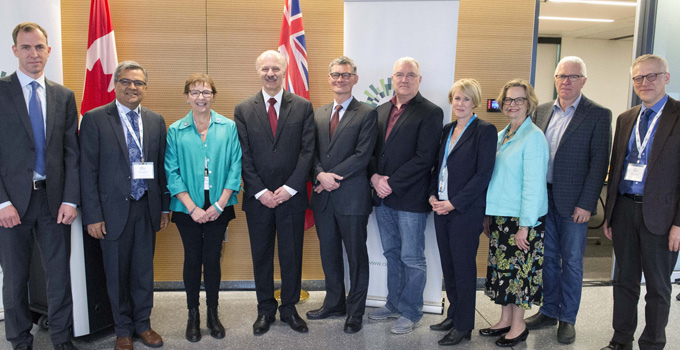
People from the press conference

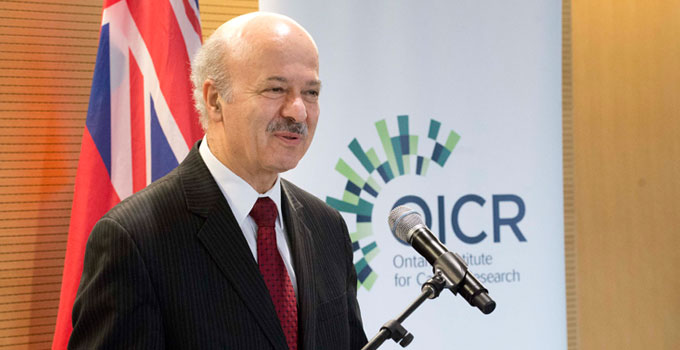
Great strides have been made in cancer research, but much work remains to develop better treatments for the most lethal cancers and to advance new anti-cancer technologies. OICR is taking on a new approach, building on the success of the Institute’s first ten years and Ontario’s strength in particular cancer research areas. Reza Moridi, Ontario’s Minister of Research, Innovation and Science announced that the Institute is funding five collaborative, cross-disciplinary and inter-institutional Translational Research Initiatives (TRIs) with a total of $24 million over the next two years.

The TRIs will bring together some of the top cancer researchers in Ontario and be led by internationally renowned Ontario scientists. Each team will focus on a certain type of cancer or therapeutic technology. To maximize the positive impact of research on patients, the TRIs all incorporate clinical trials into their design. The TRIs, which were selected by an International Scientific Review Panel, are:

The funding will also support Early Prostate Cancer Developmental Projects led by Drs. Paul Boutros and George Rodriguez.

“In just over 10 years, the Ontario Institute for Cancer Research has become a global centre of excellence that is moving the province to the forefront of discovery and innovation in cancer research. It is home to outstanding Ontario scientists, who are working together to ease the burden of cancer in our province and around the world,” said Moridi.

“Collaboration and translational research are key to seeing that the innovative technologies being developed in Ontario reach the clinic and help patients,” said Mr. Peter Goodhand, President of OICR. “These TRIs represent a unique and significant opportunity to impact clinical cancer care in the province.”

Read the news release: OICR launches five large-scale Ontario research initiatives to combat some of the most deadly cancers

Study bringing more precision medicine to Ontario’s cancer patients

A technician holds a blood sample and writes down information.

The advent of genomic sequencing and targeted therapies has opened the door to new ways of diagnosing and treating cancer. The Ontario-wide Cancer Targeted Nucleic Acid Evaluation (OCTANE) program is a new, province-wide initiative supported by OICR that will allow more patients to benefit from these innovations while also helping to advance cancer research in Ontario.

(more…)

Clinical trial opens for promising combination therapy

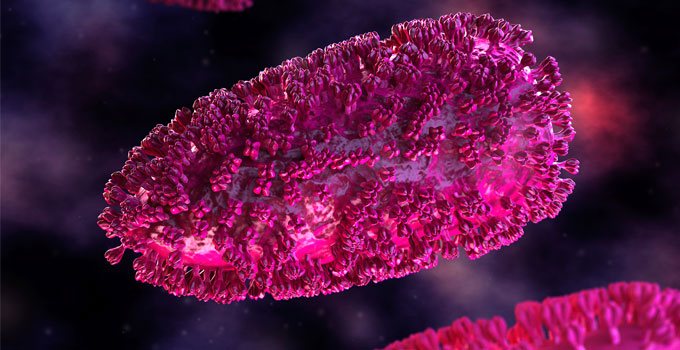
Rhabdovirus

The first patient has been treated in what has been named the Sandpiper Trial. The Phase I/II clinical trial will evaluate a therapy that combines a novel oncolytic viral immunotherapy agent called MG1-MAGEA3 with pembrolizumab, which is an approved checkpoint inhibitor. The Sandpiper Trial will study the use of this combination therapy in patients with non-small cell lung cancer who are no longer responding to chemotherapy.

(more…)

Dr. John Dick presented with CIHR Gold Leaf Award for Discovery

Dr. John Dick

Dr. John Dick was recognized for his pioneering research in cancer stem cells with the presentation of the CIHR Gold Leaf Award for Discovery. He was the first scientist in the world to confirm their existence. Better understanding of cancer stem cells has the potential to lead to new treatments, ultimately resulting in improved patient outcomes.

(more…)

Report shows investment in cancer research in Canada remains strong, identifies areas for improvement

Map of Canada

The Canadian Cancer Research Alliance (CCRA) has released its report: “Cancer Research Investment in Canada, 2005 to 2014”, which conveys the findings of a survey of its 42 member organizations to assess the state of cancer research funding in Canada. The CCRA is a national alliance of organizations that together fund the majority of cancer research in Canada. Its members include federal and provincial funding programs and research agencies, provincial cancer care agencies, cancer charities and other organizations.

(more…)

Could diagnosing cancer as rare diseases improve outcomes for patients?

Dr. John Bartlett

Breast cancer is the most common form of cancer amongst women in Canada and worldwide, but despite its prevalence, a group of researchers believes that it should often be treated as a rare disease. Doing so would change clinical approaches and improve treatment for patients.

(more…)

OICR provides students a window into possible careers over March Break

Three students pose for a photo.

For three science-obsessed high school students March Break wasn’t a time to kick back and relax. Instead the students, Cameron, Chris and Zev, spent the week at OICR gaining knowledge and hands on experience in genomics and bioinformatics as part of the Gene Researcher for a Week program.

(more…)

New approach improves sensitivity of DNA sequencing, producing more reliable results

A lab technician works at a bench

Polymerase chain reactions (PCR) are one of the most common tools used in molecular biology labs worldwide. This technique allows researchers to amplify, or increase, the amount of DNA in a sample so that they have more to work with. To keep track of the original molecules from a sample, chemical ‘barcodes’ are added. While barcodes serve an important purpose they can lead to errors and interfere with results. To prevent these cross-reactions a small team of international researchers have devised an ingenious method to ‘hide’ the barcodes when needed, leading to increased sensitivity and more reliable results.
(more…)

OICR Charity Challenge raises funds for Canadian Cancer Society

Participants pose for a group photo after the event

At the OICR Scientific Meeting about 20 attendees started the final day of the meeting off early with a little fun, all in the name of a good cause. This year the OICR Charity Challenge was in support of the Canadian Cancer Society, which provides research funding as well as support services to cancer patients. Together the participants raised more than $1,500 to support the Society’s activities. Participants ran a mini-Relay For Life which entailed competing in five different “challenges”: accuracy, trivia, creativity, physical and teamwork.

(more…)