Ontario Health Study calls on participants to complete follow-up questionnaire before March 31

Illustration of four arms holding up surveys

If you are an Ontario Health Study participant, time is running out to complete the Study’s first Follow-up Questionnaire before it closes March 31. By taking part in the questionnaire, which takes 30 minutes to complete, participants provide an update on their health that can be compared against data from the Study’s initial questionnaire. Scientists will be able to use the data that is gathered and compare data between the two questionnaires to study how lifestyle, environment and family history affect health over time and to develop strategies for the prevention, early detection and treatment of diseases.

The OHS is part a nationwide research platform called the Canadian Partnership for Tomorrow Project that has obtained health data from more than 300,000 Canadians — nearly one in every 50 individuals between the ages of 35-69.

Since the Follow-up Questionnaire was launched in November of 2016, more than 40,000 Study participants have competed or begun the process of completing it. The questionnaire seeks information about a person’s health that may have changed since the first time the provided information about to the Study such as height and weight. Participants can also expect to see some new questions, which seek data on mental health, eCigarette and marijuana use, and the use of over-the-counter drugs.

Participants can complete the Follow-Up Questionnaire by logging into their account and can learn more by reading a set of frequently asked questions. Don’t miss this opportunity to help advance health research with just 30 minutes of your time.

Scientists create method to sensitize triple-negative breast cancer to common immunotherapy

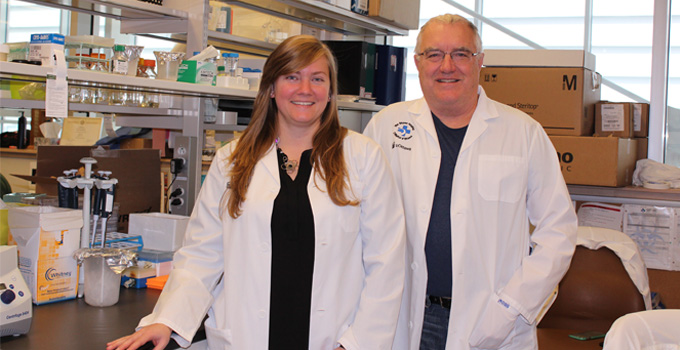
Drs. Marie-Claude Bourgeois-Daigneault and John Bell

Immunotherapy, which boosts the body’s immune system to kill cancer cells, has shown remarkable promise in treating many types of cancer. Now researchers have found a way to use immunotherapy against triple-negative breast cancer (TNBC), one of the most lethal forms of breast cancer. Previously, TNBC was resistant to immune checkpoint inhibitors, a common class of immunotherapies. Using a new strategy, the scientists achieved a cure rate of up to 90 per cent in mouse models.

(more…)

Large-scale study provides clearer picture of recurrence risk for ER-positive breast cancer

Dr. John Bartlett

Endocrine therapy uses hormone antagonists to greatly reduce the risk of disease recurrence in women with early-stage, estrogen-receptor (ER) positive breast cancer. However, the treatment can come with severe side effects. Around 30 per cent of women stop taking the therapy after three years largely due to these negative impacts. Usually patients receive the hormone therapy for five years following initial treatment (e.g., chemotherapy, surgery), but it can also be taken longer-term. A central question facing patients and clinicians is how to balance, in their decision making, the side effects of long-term treatment with the potential reduction in recurrence risk. In short, they want to know: ‘is it worth it?’ 

(more…)

Study shows virus-boosted immunotherapy can be effective against aggressive breast cancer

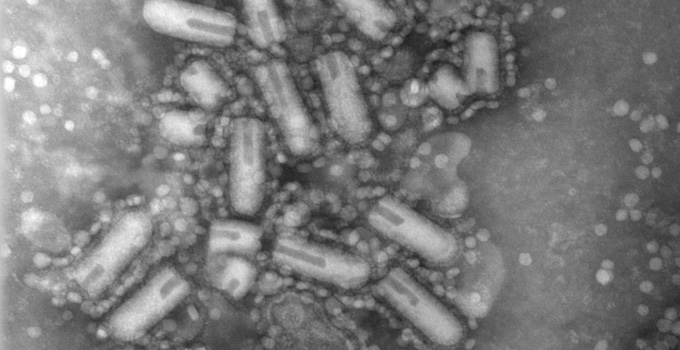
The Maraba virus is seen under an electron microscope

Researchers at The Ottawa Hospital and the University of Ottawa have found that a combination of two immunotherapies – oncolytic viruses and checkpoint inhibitors – was successful in treating triple-negative breast cancer in mouse models. Triple-negative breast cancer is the most aggressive and hard-to-treat form of the disease.

(more…)

Happy holidays from OICR

The holidays are filled with traditions old and new, whether it’s a turkey dinner, a movie with friends, a long flight home or an annual trip south to get away from the cold. At OICR we have staff and collaborators from all over the world, and it is always amazing to hear about everyone’s unique plans as they gear up for the end of the year.

(more…)

Strict e-cigarette policies are meant to keep non-smokers from smoking. But they may also be preventing many smokers from quitting

A person holds a cigarette in one hand and an electronic cigarette in the other.

Regulatory strategies on electronic cigarettes vary from country to country. The International Tobacco Control Policy Evaluation Project, led by Dr. Geoffrey Fong, explored how different regulatory environments might influence the effectiveness of e-cigarettes for smoking cessation. This research could be used to help shape e-cigarette control policies that minimize the potential health risks and recognize the potential benefits of e-cigarettes as a smoking cessation aid.

(more…)

Finding new ways to prevent virus-induced stomach cancers

An illustration of the Epstein-Barr virus

The link between some viruses and cancer has long been established. Now, researchers like OICR’s Dr. Ivan Borozan are using genomic sequencing to analyze common viruses like Epstein-Barr (also called human herpes virus 4). This knowledge could ultimately be used to develop new therapeutic vaccines to keep these viruses from taking hold in the body and prevent associated cancers from ever developing in the first place.

(more…)

CCRC brings Canadian cancer researchers together

A view of Vancouver's skyline

The 4th Canadian Cancer Research Conference, held at the beginning of November in Vancouver, was a major success. OICR was proud to support and participate in the conference, which brought together over 1,000 cancer researchers from across Canada.

(more…)

Novel approach yields four robust biomarkers for breast cancer drug response

Dr. Benjamin Haibe-Kains and Zhaleh Safikhani pose for a photo

Biomarkers that can help predict a patient’s response to a given drug are central to testing new therapies in clinical trials as well as selecting which drugs to use in the clinic. Some of the biomarkers in use today rely on the overall expression of a given gene to predict if a drug will be of benefit. While these types of biomarkers have aided cancer research and treatment, a group led by Dr. Benjamin Haibe-Kains recently published research that is ushering in a new class of biomarkers – those based on gene isoforms (the different expression of the same gene within an individual). This work opens the door to more precise biomarkers.

(more…)

Researchers discover genes behind the spread of lung cancer to the brain

Mohini Singh works in the lab

Brain tumours resulting from the spread of cancer from its primary location, known as brain metastases (BM), are the most common form of brain tumours in adults. A team of Ontario-based researchers recently identified two genes that seem to play a central role in BM in lung cancer patients – findings that could lead to improved biomarkers and treatments for BM.

In a study published in the journal Acta Neuropatologica, Mohini Singh and her collaborators focused on a class of cells they have termed Brain Metastases Initiating Cells (BMICs), which leave the primary site of cancer and migrate to the brain.

Singh, a biochemistry PhD candidate in the lab of Dr. Sheila Singh at McMaster University, explains the approach the team took to study these cells. “There was a lack of preclinical models that we could use to comprehensively study BMICs and understand the mechanisms behind them. To conduct our study we used brain metastases from lung cancer patients, which we cultured in conditions to enrich for BMICs, and then transplanted them into mice. This method allowed us to study BMICs within a living host, which provides a more accurate representation of the development of brain metastasis in humans.”

The researchers performed in vitro and in vivo RNA interference screens utilizing their unique BM models, and found two genes that were essential to the regulation of BMICs: SPOCK1 and TWIST2. “We discovered that SPOCK1 is a regulator of self-renewal in BMICs, playing a role in the initiation of lung tumours and their metastasis to the brain,” explains Singh. Furthermore, the results were clinically relevant. “Increased SPOCK1 expression was seen in lung cancer biopsies of patients with known brain metastases, and was correlated with poor survival.” Through protein-protein interaction mapping the researchers also identified new pathway interactors of the two genes that could be used as novel targets in treatment of BM in lung cancer patients.

“Identifying these two genes could be of great use in improving the treatment of lung cancer. In the future we could predict those patients who are most at risk of developing a brain metastasis and use drugs to target BMIC regulatory genes such as SPOCK1 and TWIST2 to destroy the initiating cells and to block the spread,” says Singh. “This would result in keeping the lung cancer locally controlled and therefore more treatable.”

OICR funding was used to establish this study with further significant funding coming from the Canadian Cancer Society and the Brain Canada Studentship.