
The 4th Canadian Cancer Research Conference, held at the beginning of November in Vancouver, was a major success. OICR was proud to support and participate in the conference, which brought together over 1,000 cancer researchers from across Canada.
Receive the latest news, event invites, funding opportunities and more from the Ontario Institute for Cancer Research.

The 4th Canadian Cancer Research Conference, held at the beginning of November in Vancouver, was a major success. OICR was proud to support and participate in the conference, which brought together over 1,000 cancer researchers from across Canada.
Biomarkers that can help predict a patient’s response to a given drug are central to testing new therapies in clinical trials as well as selecting which drugs to use in the clinic. Some of the biomarkers in use today rely on the overall expression of a given gene to predict if a drug will be of benefit. While these types of biomarkers have aided cancer research and treatment, a group led by Dr. Benjamin Haibe-Kains recently published research that is ushering in a new class of biomarkers – those based on gene isoforms (the different expression of the same gene within an individual). This work opens the door to more precise biomarkers.
Brain tumours resulting from the spread of cancer from its primary location, known as brain metastases (BM), are the most common form of brain tumours in adults. A team of Ontario-based researchers recently identified two genes that seem to play a central role in BM in lung cancer patients – findings that could lead to improved biomarkers and treatments for BM.
In a study published in the journal Acta Neuropatologica, Mohini Singh and her collaborators focused on a class of cells they have termed Brain Metastases Initiating Cells (BMICs), which leave the primary site of cancer and migrate to the brain.
Singh, a biochemistry PhD candidate in the lab of Dr. Sheila Singh at McMaster University, explains the approach the team took to study these cells. “There was a lack of preclinical models that we could use to comprehensively study BMICs and understand the mechanisms behind them. To conduct our study we used brain metastases from lung cancer patients, which we cultured in conditions to enrich for BMICs, and then transplanted them into mice. This method allowed us to study BMICs within a living host, which provides a more accurate representation of the development of brain metastasis in humans.”
The researchers performed in vitro and in vivo RNA interference screens utilizing their unique BM models, and found two genes that were essential to the regulation of BMICs: SPOCK1 and TWIST2. “We discovered that SPOCK1 is a regulator of self-renewal in BMICs, playing a role in the initiation of lung tumours and their metastasis to the brain,” explains Singh. Furthermore, the results were clinically relevant. “Increased SPOCK1 expression was seen in lung cancer biopsies of patients with known brain metastases, and was correlated with poor survival.” Through protein-protein interaction mapping the researchers also identified new pathway interactors of the two genes that could be used as novel targets in treatment of BM in lung cancer patients.
“Identifying these two genes could be of great use in improving the treatment of lung cancer. In the future we could predict those patients who are most at risk of developing a brain metastasis and use drugs to target BMIC regulatory genes such as SPOCK1 and TWIST2 to destroy the initiating cells and to block the spread,” says Singh. “This would result in keeping the lung cancer locally controlled and therefore more treatable.”
OICR funding was used to establish this study with further significant funding coming from the Canadian Cancer Society and the Brain Canada Studentship.
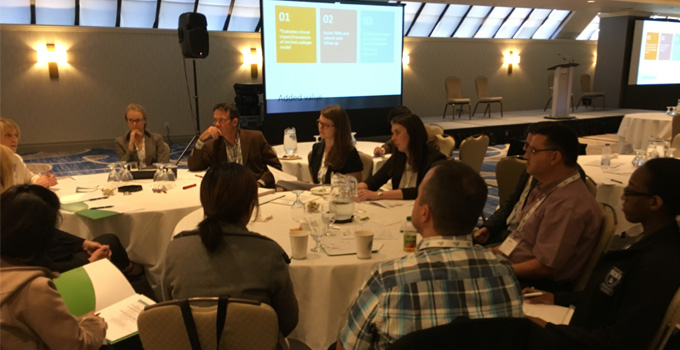
In this post, Monique Johnson shares how the Ontario Molecular Pathology Research Network’s (OMPRN) 2017 Pathology Matters Meeting provided her with new insights into the field and introduced her to Ontario’s molecular pathology community.

The Toronto Bioinformatics User Group’s (TorBUG) 2017-2018 season continues this Wednesday, October 23 with two presentations that promise to be of interest to anyone involved in bioinformatics. Dr. Quaid Morris, Associate Professor at the University of Toronto (U of T) will present “The Genetic Archaeology of Individual Cancers”. Brendan Innes, a PhD Candidate in the Bader Lab at U of T will cover “Cell types in single-cell RNAseq.”
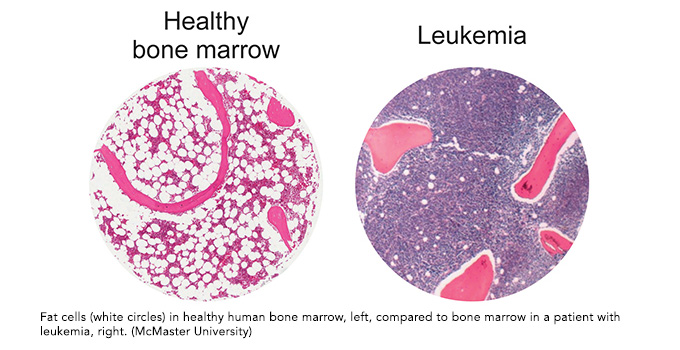
Researchers have discovered a new potential treatment for acute myeloid leukemia (AML). They found that boosting fat cells (adipocytes) within bone marrow with the use of a common diabetes drug slowed the growth of cancerous cells and promoted the regeneration of healthy blood cells.
Orlando, Florida (October 17, 2017) – The Global Alliance for Genomics and Health (GA4GH) has struck formal collaborations with 15 international genomic data initiatives as 2017 Driver Projects, including Genomics England, Australian Genomics and the U.S. All of Us Research Program. The announcement, made at the GA4GH 5th Plenary Meeting, comes as part of the launch of GA4GH Connect: A 5-year Strategic Plan. GA4GH Connect aims to drive uptake of standards and frameworks for genomic data sharing within the research and healthcare communities in order to enable responsible sharing of clinical-grade genomic data by 2022.

The Global Alliance for Genomics and Health (GA4GH) has launched a new five-year strategic plan to develop international standards that will enable the responsible and secure sharing of genomic data for both scientific and clinical purposes. The plan, known as GA4GH Connect, was launched at the organization’s 5th Plenary Meeting in Orlando, Florida.
Addition of new investors builds on Ontario’s next-gen radiotherapies and cancer innovations
One of the main steps in analyzing cancer genomic data is to find somatic mutations, which are non-hereditary changes in DNA that may give rise to cancer. To identify these mutations, researchers will often sequence the genome of a patient’s tumour as well as the genome of their normal tissue and compare the results. But what if normal tissue samples aren’t available?