
OICR 2016/17 Annual Report

OICR Annual Report 2016/17

We are pleased to share the Ontario Institute for Cancer Research (OICR) Annual Report for 2016/17.

We are living in an era of unprecedented innovation in cancer research. Recent advances have helped us to better understand cancer and allowed for collaboration on a scale that was previously not possible. This work is happening now and it is happening right here in Ontario.
(more…)

New study uncovers the role of mitochondrial DNA in prostate cancer

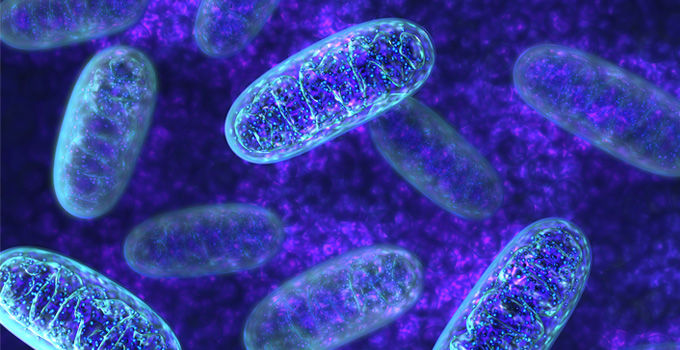
An image of mitochondria

Since mitochondria are inherited maternally, it may strike some as an odd place to go looking for connections to prostate cancer. But recently an international research team explored that relationship by looking at how the small amount of DNA contained in mitochondria, a cellular structure, is involved in prostate cancer.

(more…)

OICR launches Tissue Portal to support tissue-based research projects

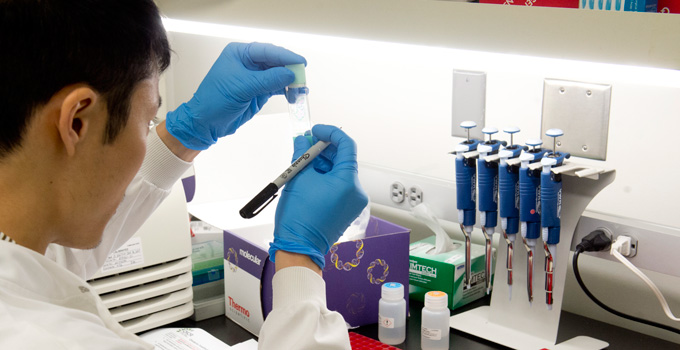
Fu Yan - In the lab.

OICR’s Tissue Portal is a new central entry and exit point for human tissue derived samples handled at OICR. This will serve as a gateway for tissue-based research projects to access over 100 services and resources at OICR being made available through the OICR Collaborative Research Resources on a cost-sharing basis. The Tissue Portal will standardize and streamline the storage, processing and distribution of samples for collaborative research studies at OICR.

(more…)

Ontario Tumour Bank collaborating to improve biobanking globally

Monique Albert

Biorepositories (or biobanks) play an important role in many types of research. But biobanking is a complex process requiring careful management of a whole range of scientific, legal, technical and ethical issues. We spoke to Monique Albert, Director of the Ontario Tumour Bank, about the importance of good biobanks, how the Ontario Tumour Bank is working with international partners to improve biobanking globally and why this type of international collaboration is benefitting researchers in Ontario.

(more…)

Large-scale genomic study helps set new course for paediatric brain cancer research

Dr. Michael Taylor

Today’s therapies for medulloblastoma, a highly aggressive form of childhood brain cancer, bring benefits to young patients but also come with serious side effects. Dr. Michael Taylor and a team of international collaborators recently published results in Nature of an ambitious project that analyzed the genomes of around 500 cases of medulloblastoma. Their goal was to identify gene mutations that are commonly mutated in the cancer, but not in the normal cells of patients.

(more…)

Innovative study brings next-generation genomic sequencing to more Ontario cancer patients

Toronto (September 6, 2017) – Understanding a cancer’s genetics is key to selecting targeted therapies that are likely to be of the most benefit to a patient. The Ontario Institute for Cancer Research (OICR) today announced a new study, called Ontario-wide Cancer TArgeted Nucleic Acid Evaluation (OCTANE). OCTANE will use next-generation genome sequencing technology to bring a unified molecular profiling approach to five Ontario cancer centres.

(more…)

New genes discovered regulating brain metastases in lung cancer

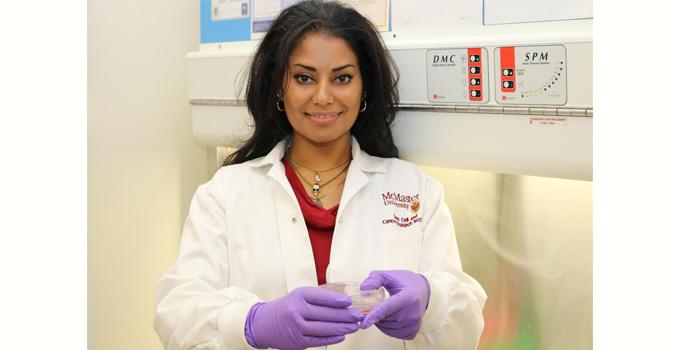
Mohini SinghResearch from McMaster University has identified new regulators of brain metastases in patients with lung cancer.

These regulators are the genes called SPOCK1 and TWIST2.

(more…)

New data resource centre will help better understand links between birth defects and childhood cancer

Researchers from the Ontario Institute for Cancer Research playing major role in the design and development of the new initiative.

Toronto (August 15, 2017) – Children with structural birth defects are at a much higher risk of developing certain types of childhood cancers but scientists currently lack vital information about why this occurs.

(more…)

Mutation in prostate tumours shown to change epigenetic identity, the make-up of DNA

Prostate cancer researchers have mapped the impact of an acquired mutation that alters epigenetic identity, the make-up of DNA, in about 50 per cent of patient tumour samples. The discovery also identifies a new opportunity for targeted therapy.

(more…)

CIMTEC appoints Justin Leushner as new CEO

The Centre for Imaging Technology Commercialization (CIMTEC) has appointed Mr. Justin Leushner as Chief Executive Officer. CIMTEC was established to accelerate the development of medical imaging technology and commercialize new technologies. Leushner brings extensive experience in both the private and public sectors. Most recently he was the Vice President at the TechAlliance of Southwestern Ontario, where he and his team worked with more that 300 companies in the region.

(more…)