Ovarian cancer research team working to exploit disease’s vulnerabilities

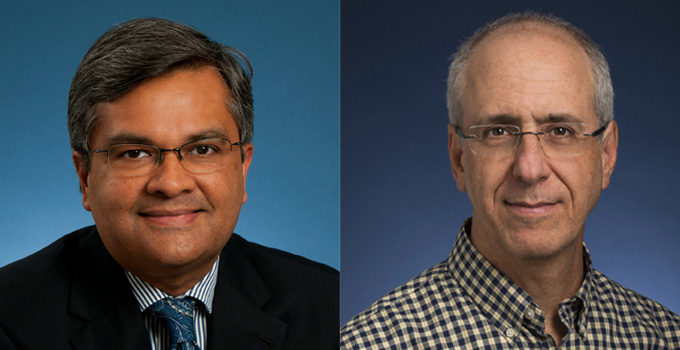
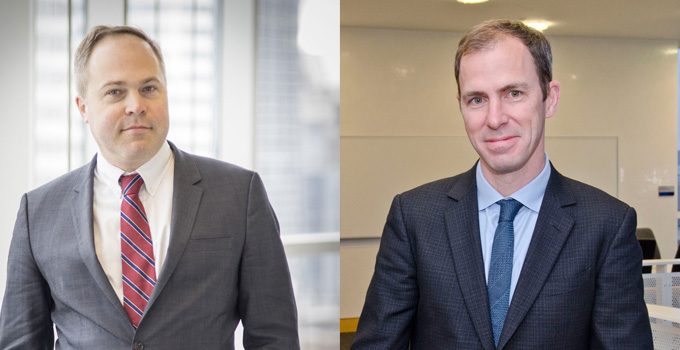
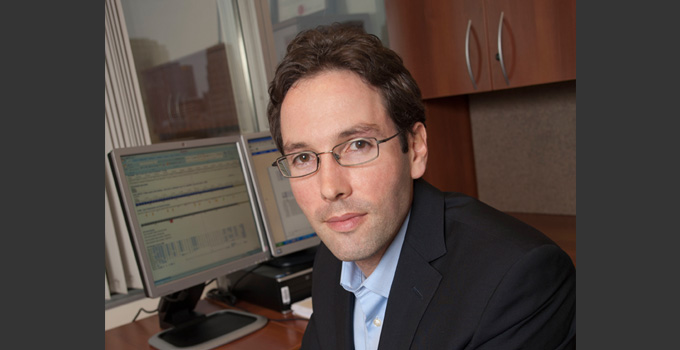
Drs. Amit Oza and Rob Rottapel

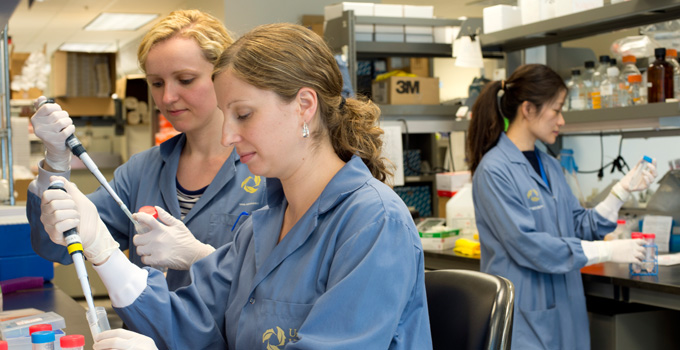
Given the advancements in treating many other types of cancer, it may come as a surprise that outcomes for patients with the most deadly form of ovarian cancer have not improved in 50 years. This form, known as High Grade Serous Ovarian Cancer (HGSOC), accounts for 80 per cent of ovarian cancer deaths in Canada. Surgery and chemotherapy can be effective, but ultimately three-quarters of women with HGSOC will see their disease return. To deliver better outcomes for patients, OICR has launched a new ‘all star team’ of ovarian cancer researchers.

(more…)

How OICR is helping to boost the body’s ability to fight cancer

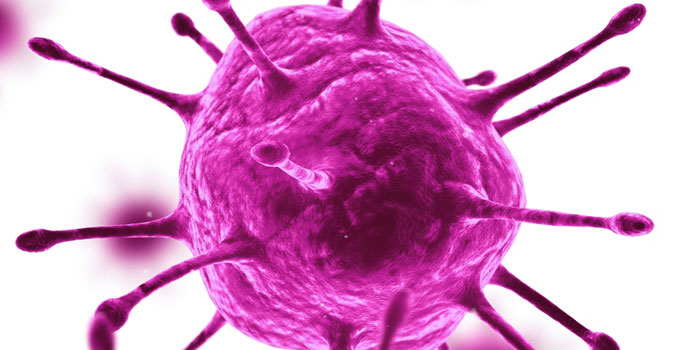
Oncology Viruses - Image of a cell.

The body’s immune system is incredibly powerful. Its ability to detect and destroy various pathogens makes it central to maintaining good health. While we all know the role it plays in fighting the common cold or flu, many do not know that it has recently been enlisted by scientists in the fight against cancer. Researchers in a field known as immuno-oncology are working to find ways to turn on the body’s defences to locate and destroy tumour cells. OICR recently established a team of expert scientists and clinicians to develop and test new immunotherapies to help patients.

(more…)

New research group aims to exploit genomic differences within brain cancer to develop new treatments

Drs. Taylor and Dirks

This year, almost 3,000 Canadians will be diagnosed with brain cancer – one of the hardest forms of cancer to treat. In May, OICR launched its Brain Cancer Translational Research Initiative (TRI) to leverage recent insights into the genomic heterogeneity in two common types of brain cancer – Medulloblastoma (MB) and Glioblastoma Multiforme (GBM). Developing a better understanding of the genes and pathways central to MB and GBM will enable the development of new drugs and provide a much needed improvement in treatment options for patients, many of whom are children and young adults and are particularly susceptible to long-term side effects from treatment.

(more…)

New multi-disciplinary team taking a stem cell-based approach to target acute leukemia

TEchnicians work in a stem cell research lab.

The rising use of stem cell-based therapies has illustrated the power of stem cells to treat a number of diseases. Now a group of Ontario researchers are looking at the promise of stem cells from a different perspective. Amongst other efforts, they are developing and testing new therapies that target and kill leukemic stem cells to lessen the chances of acute leukemias (AL) coming back following standard treatment.

(more…)

Oncologist and OICR researcher pens step-by-step guide to getting high-quality cancer care

Dr. David Palma

As a radiation oncologist in London, Dr. David Palma spends a lot of his time speaking with patients about their treatment. But a personal experience helped him realize more needed to be done to inform patients about the importance of seeking out high-quality care, and to empower them to seek out the best care for their specific cancer. Palma, who is also an OICR clinician-scientist, just published a book called “Taking Charge of Cancer: What You Need to Know to Get the Best Treatment”, available in bookstores across North America. We spoke to Palma about the story behind the book, why such a book is needed and what he hopes to achieve with it. Palma is donating all royalties from the sales of the book to his local cancer foundation.

(more…)

Ontario researchers identify rare therapy-resistant stem cells linked to AML patient relapse

By combining new knowledge from the fields of stem cell biology and genetics, a group of Ontario researchers led by Dr. John Dick have solved the mystery of why some acute myeloid leukemia (AML) patients relapse after initial treatment.

(more…)

EAGLE will help cancer research soar

Dr. Hilary Edgington

 Researchers from OICR and other institutions have created a new software program called EAGLE that mines data to understand the interactions between a person’s environment and their genetics. The tool has far-reaching uses, including oncology, and can provide researchers and clinicians with important information that can help personalize treatments for patients.

To learn more we spoke to Dr. Hillary Edgington, a Postdoctoral Fellow in OICR’s Informatics technology platform, which is led by Dr. Lincoln Stein. Edgington and her collaborators recently shared their research in the journal Nature Methods.

(more…)

New grant program boosts molecular pathology research in Ontario

Two lab technicians work in a lab.

The Ontario Molecular Pathology Research Network (OMPRN) recently awarded $675,000 of funding to support molecular cancer pathology research in Ontario. The 11 funded projects will involve 22 investigators and seven trainees and address clinically-relevant questions in bladder, brain, breast, endometrial, cervical, renal, pediatric and hematological cancers. The 26 applications that were submitted for review demonstrate the high quality and rich diversity of cancer pathology research in the province. Please visit the Funded Projects page for more information.

OMPRN’s mission is to enhance molecular pathology research capacity across the province by fostering collaboration and cooperation between Ontario academic pathologists, increasing the participation of pathologists in high-quality translational cancer research, and providing opportunities for residents, fellows and early career pathologists to obtain training and mentorship in cancer research. In line with these objectives, all of the research projects funded through OMPRN’s Pathology Translational Research Grants (CPTRG) program are led by pathologists, address questions of clear relevance to cancer care and incorporate important elements of transdisciplinary collaboration and mentorship. Trainees and early career researchers involved in these projects will be supported in their research through attending regular meetings of OICR’s Pathology Club.

The next round of the CPTRG program will be announced in the fall of 2017. Information may be found here: https://ontariomolecularpathology.ca/research-funding

OICR donates sequencer to Fleming College for high-tech training

Individuals from OICR and Fleming College pose for a photo in front of the sequencer.

Fleming’s Biotechnology-Advanced students have received a significant boost to their career preparation with the help of The Ontario Institute for Cancer Research (OICR). Their investment in people is recognized through a very generous donation of an Illumina HiSeq DNA Sequencer to the Biotechnology-Advanced program, a benefit to Fleming College valued at $600,000. This new equipment will provide students with hands-on experience using cutting-edge automated instruments that are utilized widely across the biotechnology industry.

“Some of the best technicians in OICR’s genomic labs are Fleming College graduates. We are proud to pay-it-forward by helping the College give future life sciences researchers in Ontario hands-on training opportunities on real genomics equipment.” says Paul Krzyzanowski, Program Manager of Genome Technologies, OICR. “Illumina equipment is the backbone of most sequencing labs and it’s essential for today’s students to become familiar with the complexity around these machines with hands-on experience.”

The remarkable relationship between OICR and Fleming College has flourished over the last nine years. With its state of the art facilities and research, OICR has become a highly sought after internship agency for Fleming students since the first placement student in 2008. The support from OICR and Illumina helps Fleming College to lead the way in biotechnology training; contributing to excellence in academic programming that includes relevant experiences. The hands-on learning creates a positive impact towards the future of Fleming students and alumni, the success of employers and especially those who benefit from cancer research.

“We are very grateful for the Ontario Institute of Cancer Research for their investment in our students,” says Biotechnology Program Coordinator Ashvin Mohindra. “OICR provides a practical training component through their in-kind gifts and placement opportunities for our students. With their help, we are also pleased to meet OICRs employment needs which is proven with the hiring of more than 18 Fleming College graduates to fill their high-tech positions.”

The in-kind donation would have not been possible without the tireless effort of OICR and Illumina, the sequencer manufacturer and third party liquid handler software provider. The College would like to specifically recognize and thank everyone at OICR who made these donations possible (Lee Timms, Jessica Miller, Paul Krzyzanowski, Tom Hudson, Mike Kostiuk, Susan Hockley, Jeremy Johns, and Howard Simkevitz) and the staff at Illumina for their tireless help and expertise in setting up the equipment (Lisa Lock, Peter Ayache and Mike Ramsey).

OICR, a global leader in healthcare, research and innovation, is dedicated to exploring the prevention, early detection, diagnosis and treatment of cancer. Their commitment to exploring cancer extends beyond the lab; OICR invests in people who can make novel discoveries.

Note: This story originally appeared in the Spring 2017 edition of Fleming Ties magazine and has been reproduced with the permission of Fleming College. The original can be found here (PDF): https://flemingcollege.ca/PDF/FlemingTies/fleming-ties-spring-2017.pdf

Ontarians come together to help Ontario Health Study collect 41,000 blood samples

Ontario Health Study logo

The samples will be combined with data from OHS’s online questionnaire to help researchers in the fight against chronic disease.

With the help of dedicated Ontarians across the province, The Ontario Health Study (OHS) has finished its blood collection phase, bringing the total number of samples donated by participants to over 41,000. This happened just in time to help the Canadian Partnership for Tomorrow Project, of which the OHS is part, reach the 150,000-sample mark for Canada’s 150th birthday.

Now the OHS is focusing on updating and augmenting its data from 230,000 Ontario participants who have completed the OHS online questionnaire to date (participants who provide a blood sample also had to complete the questionnaire). The OHS will be sending out follow-up questionnaires that will gather additional important details on the health and lifestyle of participants. The combination of data gathered from the blood sample collection program and the questionnaires will be used to generate information to help researchers fight chronic diseases such as cancer.

“In early February we let Study participants know that we were nearing the end of our blood collection program and the response from participants looking to donate before it ended was outstanding,” says Ms. Kelly McDonald, Program Manager of the OHS. “I think the fact that people were motivated by this deadline shows how interested the public is in helping health research and being part of something positive.”

The follow up questionnaires will help to make the information collected so far even more relevant for researchers by adding new fields and tracking developments in participant’s health and behaviour. “There are areas where we could use more information,” says McDonald. “We can now address ‘blind spots’ such as the use of over-the-counter medications, marijuana and e-cigarettes.”

The OHS database would be a powerful resource on its own, but the Study has taken steps to make it even more useful for scientists. They are working on cleaning up the data to eliminate inconsistencies and are linking OHS data with those at the Institute for Clinical and Evaluative Sciences and Cancer Care Ontario, which hold OHIP claims records and the Ontario Cancer Registry.

The OHS is currently working to increase awareness amongst researchers about the availability of its samples and data, and some researchers are already taking advantage of its potential. A group of Toronto-based researchers have used OHS data in a study looking at the mental health status of ethnocultural minorities in Ontario and their mental health care. In addition, another study called the Canadian Alliance for Healthy Hearts and Minds included OHS participants as a partner cohort.

OHS data will also be supporting research in several of OICR’s new Translational Research Initiatives, which were announced on May 25, 2017.

More information about the Study and further updates can be found at https://ontariohealthstudy.ca/