
 (TORONTO, Canada – July, 14, 2016) – Dr. Gang Zheng and a team of biomedical researchers have discovered a “smart” organic, biodegradable nanoparticle that uses heat and light in a controlled manner to potentially target and ablate tumours with greater precision.
OICR informatics researchers play key role in newly launched Genomic Data Commons
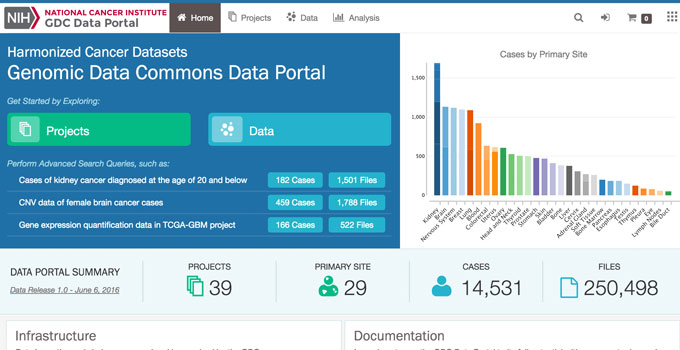
Researchers have been given a powerful new tool to search for the mutations behind the development of cancer, leading to a better understanding of the disease, and ultimately, better care for patients. On June 6, U.S. Vice President Joseph Biden announced the launch of the Genomic Data Commons (GDC), an ambitious new project that is making a staggering amount of data available to scientists for analysis while also allowing researchers to share their own data with the wider research community.
Dr. Lincoln Stein is named an International Society of Computational Biology Fellow
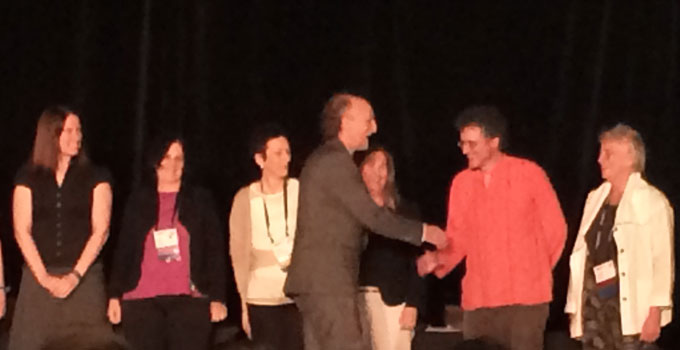
OICR’s Scientific Director (Interim) and Program Director for Informatics and Bio-computing Dr. Lincoln Stein was officially named an International Society of Computational Biology (ISCB) Fellow this past weekend at the Intelligent Systems for Molecular Biology 2016 conference in Orlando, Florida.
Stein and the rest of the class of 13 Fellows from this year join an illustrious group of 56 existing members who have been conferred with this status since the program was inaugurated in 2009.
For more information about Dr. Stein’s Fellowship, please see the announcement of the award from earlier this year.
Bioinformatics.ca is keeping Canadian bioinformaticians at the top of their game
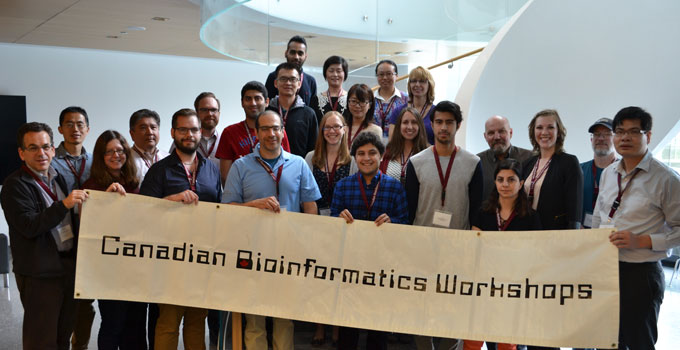
Since 1999, the Canadian Bioinformatics Workshop series has been training the next generation of Canadian bioinformaticians and helping current bioinformaticians keep their skills up to date. This year’s series is well underway with a summer session of classes in Toronto and Vancouver recently wrapped and another session set to launch in the fall. The bioinformatics.ca workshop series is funded by registration fees paid by participants, led by OICR’s Francis Ouellette and facilitated by staff at OICR, including Ann Meyer, Manager, Knowledge and Research Exchange. We spoke to Ann about the series, why it is necessary and what the next steps for bioinformatics.ca will be.
FACIT Falcons’ Fortunes pitch competition helps Ontario ideas take flight
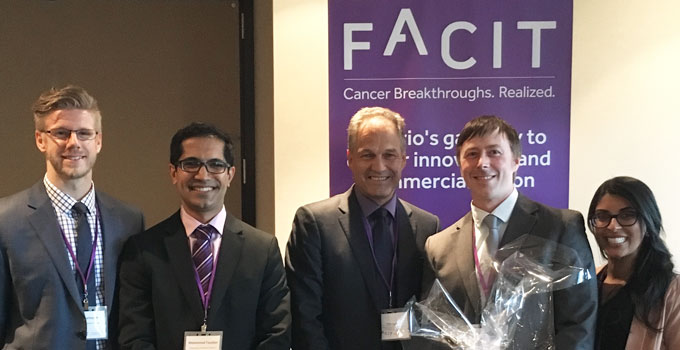
(from left to right) John Matheson, Medical Innovation Fellow, Western University, Mohammad Tavallaei, Medical Innovation Fellow, Western University, Jeff Courtney, CCO, FACIT, Nicholas Power Surgeon, London Health Sciences Centre, Asha Parekh Medical Innovation Fellow, Western University
Millions worldwide watch Dragons’ Den and Shark Tank where ambitious entrepreneurs try to convince deep-pocketed investors to provide funding for their innovative ideas. On June 1, 2016, a lucky group of cancer researchers from across Ontario had the opportunity to take part in a similar and perhaps ‘kinder’ pitch competition – the FACIT Falcons’ Fortunes event. The Fight Against Cancer Innovation Trust (FACIT) holds the competition every year to learn about some of the most exciting ideas in oncology research, provide funding for the best pitch, and to enhance, support and celebrate a culture of commercialization within Ontario.
OICR congratulates Drs. Mark Levine, Eduardo L. Franco and Gerald Batist, new recipients of the Order of Canada

Three cancer researchers were invested into the Order of Canada over the weekend, including Dr. Mark Levine, C.M., who was honoured for his contributions as an oncologist, researcher and clinician and because he has developed several new treatments for cancer patients that are now used as standard of practice in Canada.
Levine is Director of the Ontario Clinical Oncology Group (OCOG), Chair of the Department of Oncology for the Michael G. DeGroote School of Medicine at McMaster University and a medical oncologist at Juravinski Cancer Centre at Hamilton Health Sciences.
OICR in the News for June 2016
Prostate cancer diagnosis
Clinical trial will test use of MRI to improve prostate cancer diagnosis and management
From EurekAlert!
Clinical trial will test use of MRI to improve prostate cancer diagnosis and management
From Medical Xpress
OICR welcomes Dr. Christine Williams

This April OICR welcomed Dr. Christine Williams as Deputy Director and Vice-President, Outreach. Williams joins OICR from The Canadian Cancer Society, where she was the Chief Mission Officer, responsible for overall leadership of the organization’s activities in research, policy, advocacy, information and support programs. Prior to that she was the national Vice-President, Research at the Society where she oversaw a cancer research budget of $40 million each year.
OICR’s Dr. Clare Jeon discusses how the discovery of protein signatures could lead to cheaper, easier diagnostic tests for prostate cancer
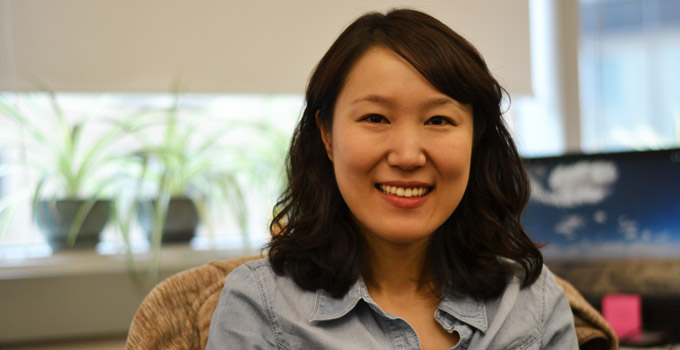 Researchers at the Ontario Institute for Cancer Research, University Health Network and Eastern Virginia Medical School, in a paper published today in the journal Nature Communications, have identified protein signatures in urine that can accurately diagnose aggressive prostate cancer. The signatures could be used to develop a test for prostate cancer that uses a patient’s urine sample to determine whether he has prostate cancer and another test that could identify how aggressive the disease is. This would help to replace more invasive tests such as PSA test and biopsy, which also have high rates of over-diagnosis and in many cases lead to over-treatment.
Researchers discover protein signatures for accurate non-invasive diagnosis of aggressive prostate cancer
 Toronto (June 28, 2016) – Researchers at the Ontario Institute for Cancer Research (OICR) and University Health Network (UHN) in Toronto, along with researchers at the Eastern Virginia Medical School, have created protein signatures that accurately diagnose prostate cancer and can distinguish between patients with aggressive versus non-aggressive disease using a simple urine sample. The findings could be developed into a non-invasive “liquid biopsy” that could provide a faster, cheaper and easier method to detect prostate cancer with fewer complications for patients. The findings were published today in the journal Nature Communications.