Blood samples over biopsies: Developing a less invasive way to find and track cancers

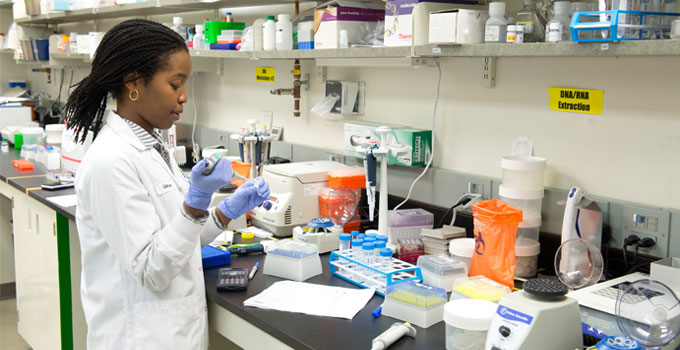
A lab technician works to extract DNA from a sample in OICR's Genomics lab.

Researchers find a new way to detect small traces of tumour DNA in blood and determine the tumour’s tissue of origin

A blood sample can be used to detect and monitor certain cancers in select patients, but there are significant technical barriers that prevent the widespread adoption of this “liquid biopsy”. This type of blood test analyzes the rare traces of tumour DNA that are circulating in the blood, but distinguishing tumour DNA from healthy DNA is both difficult and expensive. New methods are needed to improve the accuracy, sensitivity and cost-effectiveness of liquid biopsies so that more patients can benefit from this less-invasive test.

(more…)

Gene signature discovery may predict response to immune therapy

Dr. Daniel De Carvalho discusses his study published in Nature Communications, which found a gene signature biomarker that may help predict which patients will respond to immune therapy.

(more…)

Discovering new ways to deploy the immune system against hidden cancers

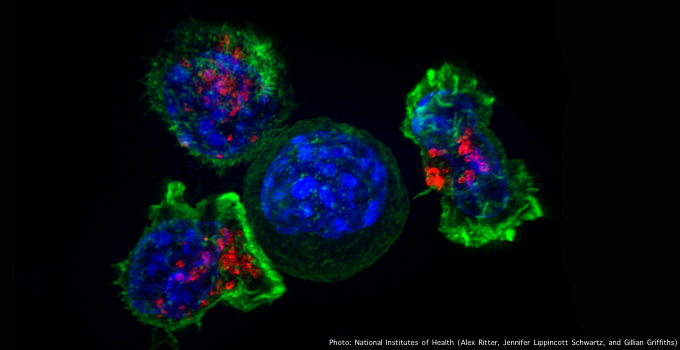
Superresolution image of a group of killer T cells (green and red) surrounding a cancer cell (blue, center). When a killer T cell makes contact with a target cell, the killer cell attaches and spreads over the dangerous target. The killer cell then uses special chemicals housed in vesicles (red) to deliver the killing blow.

Researchers studying ovarian cancer identify adapter protein 3BP2 as a key component of immune system function and a powerful tool that could be used to activate the immune system against hidden tumour cells.

(more…)

Researchers investigated almost 200,000 cases of breast cancer: Here’s what they found

Dr. John Bartlett poses for a photo at a table next to a laptop computer displaying lines of code.


Research team finds aggressive breast cancers are less frequent than previously thought, and less aggressive breast cancers need more of our attention.

Different subtypes of breast cancer respond to treatment differently and require different treatment approaches. Understanding the distribution of these subtypes and their respective clinical outcomes allows researchers to better understand the disease and identify key research priorities that may have been previously overlooked.

(more…)

Researchers find a new way to address the challenge of brain tumour “stiffness”

Brain tumour tissue is often stiffer than normal tissue. New research funded by OICR helps to explain how this occurs – and how this knowledge can be used to help slow tumour development.

Uncontrolled cell growth in solid tumours, such as brain tumours, causes tumour tissue to be stiffer than healthy tissue, creating an advantageous environment for tumour cells to proliferate rapidly, avoid cell death and develop resistance to drugs. But how tumour tissue stiffens is not well understood. A research group based at the The Hospital for Sick Children (SickKids) recently discovered how tumour cells sense and respond to tissue rigidity. Their findings, recently published in Neuron, show that stopping the mechanism that drives tumour stiffness could slow cancer growth.

(more…)

Bringing cutting-edge imaging techniques to clinical trials

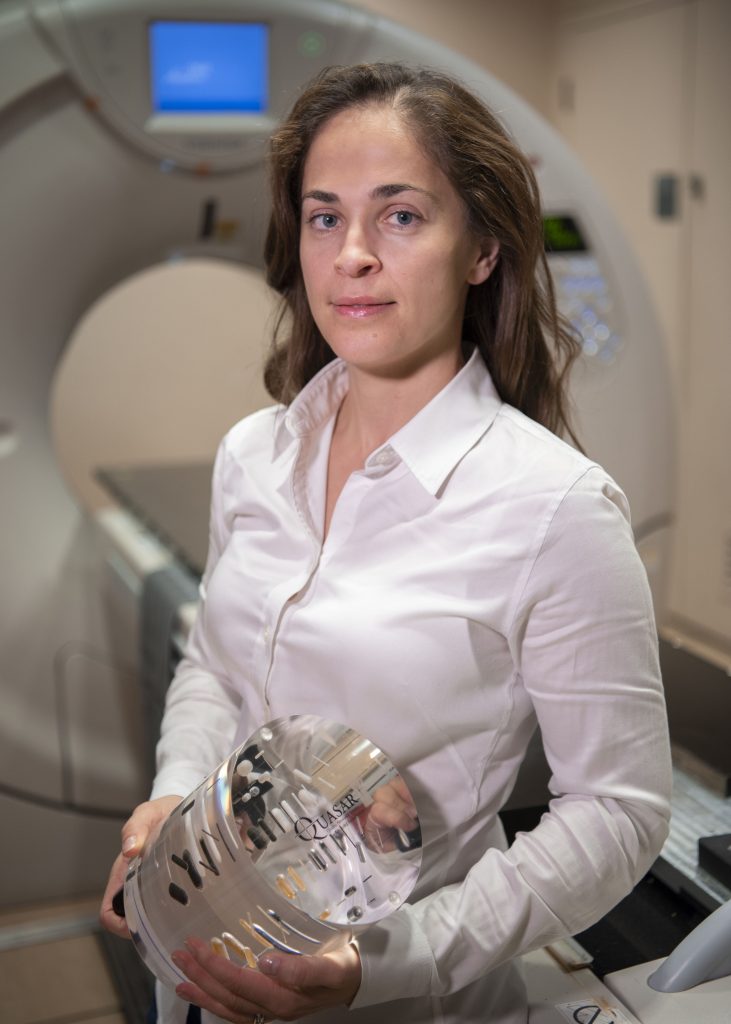
Dr. Catherine Coolens with new DCE-CT calibration device

OICR offers new CT calibration service as part of its Collaborative Research Resources portfolio

Using imaging devices to help make treatment decisions in the clinic requires rigorous testing, quality assurance and routine calibration of the imaging machinery. These standards are especially important when the imaging technology is novel or unique, such as in the case of perfusion imaging – a relatively new technique used to diagnose a cancer’s stage by showing how blood flows through the tumour.

(more…)

FACIT Welcomes Har Grover and Ken Lawless to the Board

Strategic appointments of seasoned entrepreneurs add expertise and strengthen governance

TORONTO, ON (October 11, 2018) — FACIT announced the appointment of two new members to its Board, Mr. Har Grover and Mr. Ken Lawless. Both leaders are passionate supporters of the Ontario life science sector, have broad industry experience and decades of work with entrepreneurial ventures. As FACIT drives oncology innovations to the marketplace and highlights Ontario as a top-tier destination for biotech investment, strong governance by its Board is critical to achieving this mandate.

(more…)

Understanding how cancer differs between sexes

Connie Li

OICR researchers uncover sex-linked genetic differences that may be able to predict cancer severity and response to therapy

Cancer differs in males and females but the origins and mechanisms of these sex differences remain unresolved. A better understanding of sex-linked differences in cancer could lead to more accurate tests and treatments that are personalized for patients based on their sex.

(more…)

Breast cancer radiotherapy in a single visit provides more convenient option to patients, reduces burden of therapy

Seeds used in radiation therapy are shown, along with a penny to provide scale.

Cross-Canada research team moves image-guided ultrasound system into clinical development

Traditional breast cancer radiation treatment requires multiple hospital visits over a period of weeks or months, which may be onerous to patients who live far from hospitals or in remote communities. An alternative radiotherapy technique, Permanent Breast Seed Implantation (PBSI), requires only a single hospital visit, but it involves the implantation of multiple small radioactive metal pellets into the breast of the patient within millimetres of a target. The procedure to administer this treatment is difficult to plan and complex to execute – impeding the adoption of PBSI in the clinic.

(more…)

Breaking down barriers to translation: A case of standardization in digital pathology

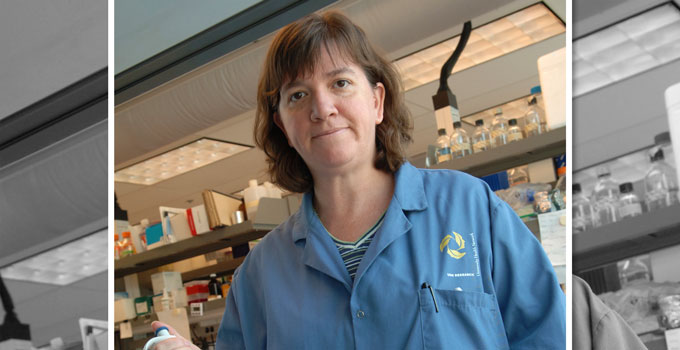
Jane Bayani In the lab.

OICR takes part in international multicentre study to standardize promising breast cancer digital pathology test

The Ki67 immunohistochemistry assay is a test that can help evaluate the aggressiveness of breast tumours, predict disease outcomes, monitor cancer progression and identify patients who are more likely to respond to a given therapy. Despite its potential to help patients with breast cancer, the analysis of Ki67 has not been widely adopted in the clinic, mostly due to the lack of standardization across laboratories.

(more…)